What You'll Learn
Here's a secret that rarely makes it into the brochures: the best part of senior living often isn't the meals, the activities calendar, or even the peace of mind. It's the person who knocks on your door to ask if you'd like to walk to lunch together.
If you're reading this and thinking, That sounds nice, but I'm not exactly the social butterfly type, you're in good company. Nearly every person who moves into a senior living community carries some version of that same quiet worry. And nearly every one of them is surprised by what happens next.
Why Does "Starting Over" Feel So Daunting?
Let's not brush past this. The idea of leaving a place you've lived in for decades, especially if you're in the Suwanee, Alpharetta, or Johns Creek area where you've built a lifetime of memories, and walking into a community where you don't know a soul? That's not a small thing. It's completely natural to feel nervous about it.
Maybe you've lost a spouse. Maybe your closest friends have moved away or passed on. Maybe the phone doesn't ring as often as it used to, and the days have started to blur together. When someone lives alone, the social fabric can unravel so gradually they don't even notice. What aging at home alone is slowly erasing is something many families don't recognize until it's already happened.
None of that means you've stopped wanting connection. It just means the opportunities have gotten smaller. And that's exactly what community living is designed to change.
What Do Researchers Know About Friendship and Aging Well?
This isn't just about having someone to chat with at dinner, though that matters more than most people realize. A study published in Personal Relationships found that friendships are actually a stronger predictor of health and happiness in older adults than relationships with family members. And research from Brigham Young University showed that social isolation carries a health risk comparable to smoking 15 cigarettes a day.
Friendships aren't a luxury at this stage of life. They're essential.
The challenge is that when you're living alone in Cumming, Duluth, or Buford, those friendships don't just happen on their own anymore. You have to drive somewhere. You have to plan something. And on the days when energy is low or the weather is bad, it's easier to just stay put.
How Does Connection Happen Without a Grand Plan?
One of the things that surprises people most about community living is how effortless connection becomes. Not because anyone forces it, but because the structure of daily life gently puts you in proximity to other people.
You sit down for coffee in the morning and someone at the next table compliments your sweater. You both discover you grew up listening to the same radio shows. Before you know it, that table becomes your table.
Or maybe it's a gardening group, a book discussion, a watercolor session, or a walking club. The activities aren't the point; the shared experience is. When you're doing something side by side with someone, conversation happens without the pressure of small talk. You're not trying to make friends. You're just living your life, and friendships form around the edges.
For families weighing whether a parent would have more daily connection with a caregiver at the house or in a community setting, this side-by-side comparison can help clarify what each option looks like day to day.
What If You're Not the Social Type?
Many senior living communities understand that the first few days are the hardest. That's why so many have resident ambassador programs, where friendly, established residents volunteer to welcome newcomers. These aren't staff members reading from a script. They're people who remember exactly what it felt like to be the new person, and they make it their mission to help you feel comfortable.
A resident ambassador might save you a seat at lunch, introduce you to someone who shares your love of crossword puzzles, or simply stop by to say hello during that first quiet afternoon. It's a small gesture that makes an enormous difference.
Think of it this way: someone in that community is already looking forward to meeting you. They just don't know your name yet.
What Does Friendship Look Like Later in Life?
You don't need to find your next lifelong best friend. Friendship at 80 or 85 doesn't have to look the way it did at 30. Sometimes it's the woman who always waves from her favorite chair by the window. Sometimes it's the gentleman who saves the crossword section of the newspaper for you. Sometimes it's a whole table of people who cheer when you walk into the dining room.
These connections don't require you to be outgoing, energetic, or constantly available. They just require you to be there, to be present in a community where people see you, know your name, and notice when you're not around.
That's something that's hard to replicate living alone, no matter how many family members check in by phone.
Is It OK to Take It at Your Own Pace?
If the idea of moving still feels overwhelming, that's OK. Nobody is asking you to decide everything at once. Some people warm up quickly; others take weeks to find their rhythm. Both are perfectly fine.
What matters is knowing that the opportunity for connection exists, not as something you have to chase, but as something woven into the fabric of everyday life in a community.
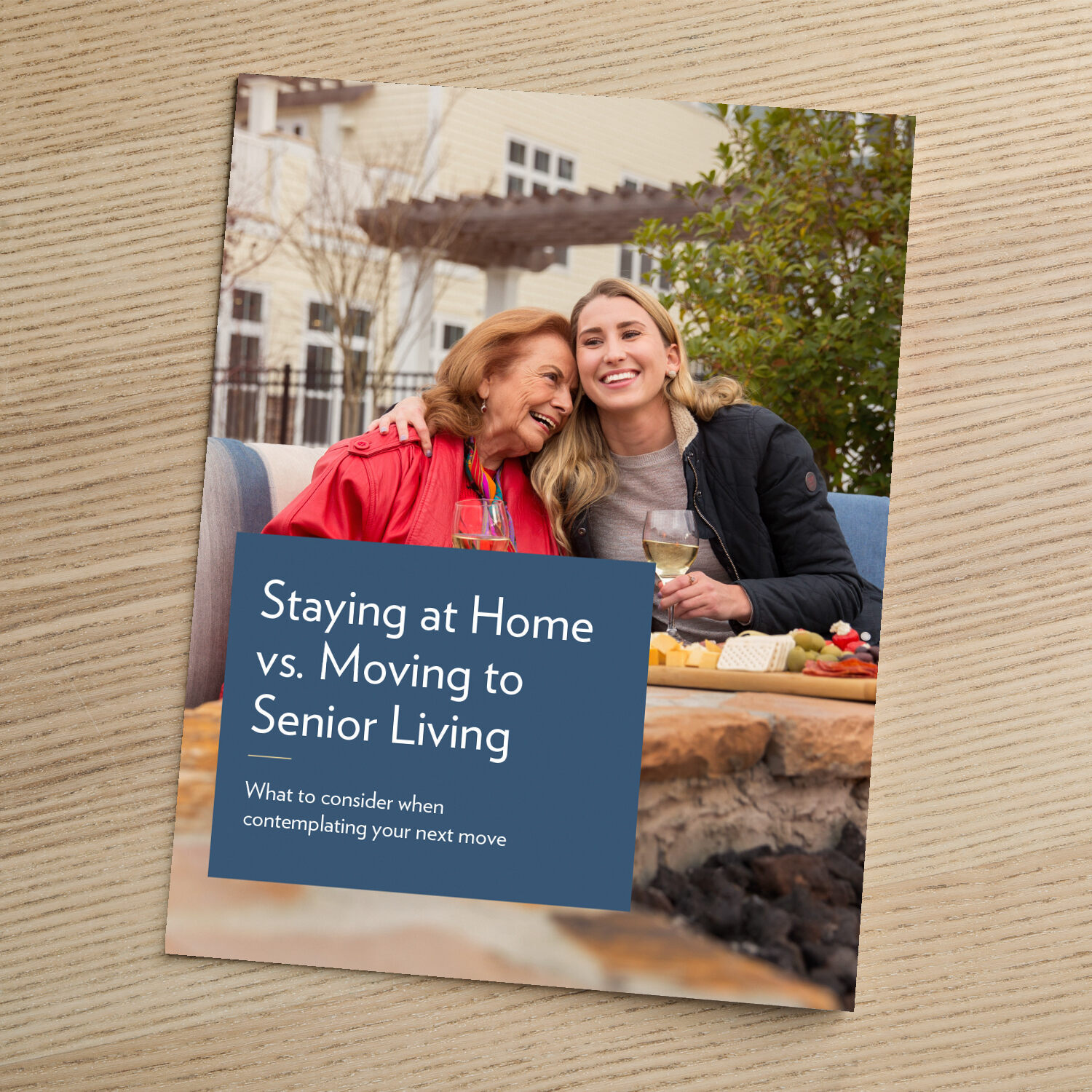
For families in the Suwanee, Roswell, Peachtree Corners, or Milton areas who are exploring options, sometimes the best next step is simply learning more. For a fuller picture of how daily life compares between staying at your current residence and moving to a community, including the social dimension many families overlook, download this free guide.
The friendships you don't expect are often the ones that matter most. And they might be closer than you think.