Bridges and Evergreen: Understanding the Two Pathways of Memory Care at The Arbor at Lake Worth
Understanding Memory Care Pathways
What helps one person living with dementia feel comfortable and connected may overwhelm someone else. So how can memory care meet each person where they are?
Watch now as host Jenay Sherman and AJ Cipperly, Vice President of Memory Care at The Arbor Company, explore that question through the two-pathway approach at The Arbor at Lake Worth.
AJ explains how the Bridges and Evergreen pathways work within one connected memory care neighborhood. She also shared how GEMS™ helps the team understand each resident’s strengths and guide them to the pathway that fits best.
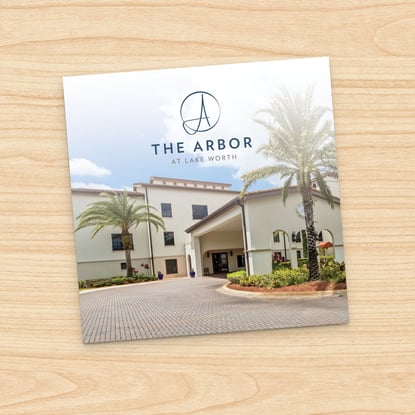
Download the Brochure
Take a closer look at daily life in our community. Our digital brochure includes everything you need to know about lifestyle, care, dining, activities, and more.
Tour Our Community
Explore our beautiful spaces, meet residents and team members, and get answers to your questions. Schedule a visit at a time that's convenient for you.Video Transcript
Introduction [0:00]
Jana Sherman: Hello and welcome to Senior Living Live. I'm Jana Sherman, and thank you for joining me for today's webinar. Our special guest is AJ Cyperly from The Arbor Company, and she will be explaining two unique memory care pathways at The Arbor at Lake Worth and how programming can evolve as a resident's needs change. AJ, thanks for joining us today.
AJ Cyperly: Absolutely. Thanks, Jana, and thanks to all of you for spending part of your day with us.
Jana Sherman: Before we jump in, I just want to remind anyone watching that this is a perfect time to get your questions answered by a real expert. While you're listening, click the Q&A button at the bottom of your screen to submit your questions throughout the presentation. When AJ is finished, I'll read her your questions and we'll get them answered live. I'll also jump back in at the end with information on how to get a replay of this webinar. AJ, sorry to interrupt you. The floor is yours.
Why This Work Matters [1:01]
AJ Cyperly: Thank you, Jana.
A lot of people ask me, "AJ, why is this so important to you? Why are you so passionate about it?" For me, it's personal. It's not just my career path. I have had close loved ones who lived with dementia, and I helped support them. And one day it may be me. I think it's really important that we all think not only about what we want for our loved ones, but what we want for ourselves and our own future care. So I'm really excited to be here talking with you about these two pathways.
We're going to cover four areas: why one size doesn't fit all; what the Bridges and Evergreen pathways are at The Arbor at Lake Worth; what a day in Bridges looks like; and how we find the right fit. Then, as Jana said, we'll take questions at the end.
Why One Size Doesn't Fit All [2:00]
What we hear from families a lot is, "My mom's not like that yet," or "She's not like the rest of the people here." And that's correct. That's really where this idea came from.
We know that people living with dementia don't all experience it the same way. They may have the same diagnosis, but how they experience it is very different. Think about the person you love or care about. What lights them up? What gets them going? What wears them out? Take a second to think about that. If there are multiple people watching this webinar, you're all going to have different answers. Different things wear us out, different things light us up, and we find meaning and purpose in different things, regardless of our diagnosis.
The diagnosis the doctor writes on the paper may be exactly the same as the next person's, but we can be very, very different. Two people can have very different days while experiencing the same cognitive change. Some people enjoy being social: a lively gathering, a full room, busy days, lots of things to choose from all the time. Another person may be happy just sitting and listening to music on their own, in a comfortable chair they're familiar with, with maybe one other person to talk to. Maybe they don't enjoy big crowds. So the right support and the right engagement can look very different from one person to the next, and everything we built at The Arbor at Lake Worth starts from that idea.
In a lot of memory care settings, everyone is offered the same programming and the same engagement. Picture a former teacher who wants conversation and a full schedule. She's sitting in a slow-paced group and getting restless or bored, because this really isn't for her. Now picture a gentleman who does best with quiet, familiar surroundings and people, but he's in a busy, noisy activity, and he's starting to get anxious. Two people, same diagnosis, sitting in the same activity, having very different experiences.
Introducing the Two Pathways [4:57]
That's the whole idea behind why we developed these two pathways. The Bridges pathway is for someone who thrives in a social environment, enjoys having lots of things to choose from, and needs a light level of structure and support. Our Evergreen pathway is built more around sensory experiences, familiarity, and small groups.
Both pathways exist in the same neighborhood, and we'll talk more about why that's important in a minute. So how is this different? In some of our other Arbor communities, Bridges is its own dedicated neighborhood. At The Arbor at Lake Worth, Bridges is a pathway that lives inside the memory care neighborhood, alongside the Evergreen pathway, which offers different engagement opportunities designed for people who will find success there, built around both their strengths and their interests.
At other Arbor communities, when a person's needs change, it typically means a move to a different neighborhood, because that's where we can better support that person's success, maintain their independence, and honor their dignity. Those are the three goals we have for each person. But here at Lake Worth, with the Bridges and Evergreen pathways, it's just the programming that adjusts. The person doesn't have to move away from their friends and neighbors or go through the big upset of leaving the space they're used to living in. I can still live where I live even though my needs change, but the pathway I participate in will be different based on my strengths, my abilities, the type of support I need, and the type of environment where I'll do best for engagement throughout the day.
A Day in the Bridges Pathway [7:19]
So what does a day in the life of the Bridges pathway look like? Think about a person, as I mentioned earlier, who is very social, enjoys conversation, and enjoys being around people. They really want to stay active socially, physically, and intellectually. Maybe they've always been that way, but now they've started to isolate themselves. We see that sometimes: someone who has always participated in everything, but because they're experiencing cognitive changes, they're starting to pull away.
A lot of that comes from their awareness of their own changes. They don't want other people to pick up on it. They know they're not as sharp as they used to be, so rather than be around others who might notice, they keep to themselves. We know that's not good, and that's why we're going to talk about cognitive peers and the importance of being with them.
This is a person experiencing those early changes. They still want to be social, but they need a little more structure. They need a routine that gives them the confidence to get through their day and from one thing to the next, a routine that's familiar and that they can count on. They feel most like themselves when they can find meaning and purpose: Why am I still here? What value can I still add? Those are really important questions. So we describe fit by how somebody engages day to day, not by their diagnosis or their stage.
Bridges is built to foster purpose: What's the reason I'm still here? What value can I add? What is my role in this neighborhood?
It's built to foster independence, with support only where it's needed. I call this the "just right" amount of help. Another catchphrase I like to use is the old Home Depot slogan: "You can do it. We can help." That's where we want to be with someone in Bridges. You can do this, and we're going to be there to help where help is needed. We don't want to take over and do it for you, but we'll provide just the help you need to be successful.
And it's built to foster connection: making friends with peers in the same pathway, people I can have a deep relationship with, and participating in things I feel successful at rather than getting frustrated. Sometimes it's other people getting frustrated with me. If I'm not in the right pathway, I may not be doing the activity the way it's supposed to be done, the people around me notice and get frustrated, and I pick up on that. That's another good reason to have people in the right pathway, so they can experience success and maintain their dignity with their friends and peers.
A day in Bridges follows a familiar routine. I get up and have breakfast with the neighbors and friends I always have breakfast with. That helps me ease into the day and kind of resets my circadian rhythm, with that coffee or whatever I choose to start my day. Then I go into the Bridges pathway, which might be a music group, a cognitive therapy group where I'm working my brain in different ways, or something creative. It might be our Tovertafel table, which has a variety of games for people at different levels, from popping virtual bubbles on the table, to Whac-A-Mole, to musical notes that make a sound when I hit them. Lots of different opportunities there.
Then comes lunch. Our Dining with Dignity program supports people in having a dignified, as-independent-as-possible mealtime, again providing just the right amount of assistance.
In the afternoon, we follow the same routine but start to lower the energy level. The first part of the day focuses on high-energy, high-activity things, and as the day goes on, we match the time of day and that person's rhythm. We might still do some physical activity, but a little less intense than the drum circle or weight training we do in the morning. It might be seated yoga, stretching, or tai chi. It could be another creative or social group. Then in the evening we wind down, going through the familiar evening routines the person is used to, based on their preferences, to close out their day.
Programs Shared Across Both Pathways [12:59]
Some programs are open to everyone, whether they're in Bridges or Evergreen, but how they're delivered and what happens in them may differ.
Our SingFit program is based on the science that the brain gets more benefit from singing when we're not reading the words. It has a lyric coach who says the words before you sing the next line, so there's no need for lyric or song sheets, which is nice. Participants are guided through the session with some movement, conversation, and trivia. The beauty of it is that there are different levels. For the Bridges pathway, we can use a higher-level playlist. The music is designed by music therapists based on where the person is cognitively, to help the brain get the most benefit from it.
Our Tovertafel table, as I mentioned, offers many different opportunities for engagement, from simple touch activities to more interactive games like Whac-A-Mole or even soccer.
And there are other creative activities, again based on each person's abilities and strengths, because we want to support their success. Even with something as simple as trivia, it's important that it's not so easy that everybody knows all the answers and finds no challenge in it. But we also don't want it to be so difficult that people don't feel they can be successful. Otherwise they think, "Why should I attend? I don't want to be here. This isn't doing anything for me."
Why Cognitive Peers Matter [14:58]
You heard me mention the term "cognitive peers" earlier. Think about how you would feel in a space surrounded by people who were talking about things you didn't understand. Maybe they were all speaking a different language, or talking about a topic you knew nothing about. How would you feel if you were in that environment for a long period of time? Do you think you'd be able to make connections? Would you feel confident? Would you be at your best? Or would your brain be in overdrive trying to keep up? "I've got to understand what these people are talking about. I've got to figure it out so I can communicate and be part of the group." It would be exhausting.
That's often what we see when people are surrounded by others who are at a different place in their journey through cognitive change. When I'm with people who are similar to me cognitively, my brain can relax, and I can be at my best because I'm not on edge. My brain isn't working in overdrive to keep up, and I'm not worried about people realizing I'm not as sharp as I used to be. So people can relax, and their brains can work at maximum efficiency.
That's what we want, and it's what we see happen when people are in the right pathway, involved in programs designed to support their success, with people they can make a deep connection with, because they're not feeling the social pressure to measure up.
The Evergreen Pathway [17:10]
Then we have our Evergreen pathway. As I said earlier, it's designed for people who may be a little further along in their journey of cognitive change and who benefit most from experiences that engage all their senses, things that are familiar to them, and smaller groups or even one-on-one interactions. Programs may also be shorter, because my attention span has changed and I don't have the cognitive ability to stay focused on one thing for a long period of time.
We developed the Evergreen pathway because we know this is what happens along the journey of dementia as the brain changes. So we designed a pathway that supports these individuals in still doing the same activities, based on their interests. I think it's important to note that despite the progression of my dementia, I'm not going to lose my interest in reading, doing crafts, playing bingo, or baking for people. What changes is my ability to do some of those things and to be successful at them. So you might see the same activity in both the Bridges and Evergreen pathways, but how it's presented and how people are helped is different, because we want people to find success and meaning in doing it.
Bridges and Evergreen Side by Side [18:58]
Here's a side-by-side look at the two. The ideal Bridges participant enjoys connection and wants to stay engaged. The Evergreen participant will likely have a more successful time in a calmer, quieter environment with a more individualized pace.
From a programming perspective, Bridges offers more intellectual and wellness-focused programs with structure, because that's what that person needs. Evergreen still offers intellectual and wellness-focused programs, but they're designed around comfort and familiar environments and focus more on engaging all the senses.
In terms of group settings, cognitive peers are incredibly important in both, so we make sure people are with others they can connect with. Evergreen groups are just smaller.
One Neighborhood, Two Pathways [20:06]
And then there's the neighborhood, which is what I love. It's all the same neighborhood, just different pathways. I don't have to move. I still live at home. Just like many of us, I get up in the morning, leave home, go do something, and at the end of the day I come back. I think that's such a beautiful, normal thing to do. What we want to support for people living with dementia is very normal, familiar experiences. And what's more familiar than getting up at home, leaving to go do something, and coming back to be with your family?
That's what people get to do at The Arbor at Lake Worth. They get up and are with their family in their home neighborhood. Then they go to their pathway, where they may be with different people during the day, and in the evening they come back and are with their family and neighbors again. Friendships stay intact. I don't have to move. I still see familiar faces and keep my familiar routine.
It's also really important to note that these pathways aren't permanent. We know people living with cognitive changes are changing; it's progressive. As my needs change, my engagement and programming needs will change too, and with these pathways we can adapt in the moment without uprooting someone's living environment. And with both pathways, the care stays the same. We're still providing compassionate, individualized care based on each person's needs and the best way to support them.
Finding the Right Fit [22:08]
So how do we get to know the person and figure out where they'll fit best? We want to identify their strengths: what abilities still remain? We do this through our very comprehensive, individualized assessment process. We also use the GEMS model of looking at progression, which is based on the Allen Cognitive Levels and identifies a person's strengths and best ability to function. Looking at that, we can identify what support will be best to help this person continue to succeed, including taking care of themselves (the activities of daily living we all think about) and the activities of the day. What strengths and abilities can we support through engagement, and what level of assistance will they need to be successful?
We also ask: what is their preferred way of engaging? Have they always been that social person? Or have they always been more of an introvert who keeps to themselves, with deep connections but not as many as an extrovert?
So it's not just about knowing a person's physical abilities. We really want to know the essence of who they are: their preferences, their values, and what has meaning for them, because that's different for each person. It goes beyond knowing that this person has dementia, also has high cholesterol, takes these medications, walks with a walker, and needs assistance in the restroom because they're incontinent. All of those things are important, and we will identify them. But it's just as important for me to know what gets AJ up in the morning. What is her "simple pleasure," as we call it?
For me, it's making coffee. I love drinking coffee, but what I enjoy even more is the act of making it. I look forward to it. I feel like it's the most adult thing I do every day. It's silly, I know, but it's my simple pleasure. So if I move into a memory care neighborhood, you can give me coffee just the way I like it and I'll enjoy it, but not as much. I won't find as much meaning and purpose in it as I would if you engaged me in helping make it. Can I help make my own cup of coffee? These are the things we really want to dig into and work with families to identify. What are those simple pleasures? What is the "AJ-ness" of AJ? What gets her going in the morning? What makes her tick? These are really important things to know about the people we're caring for.
Team Training [25:29]
Speaking of people, we train our teams to care for people living with cognitive change: how to identify the right support and that "just right" amount of help, how to provide it with respect, how to help a person maintain their independence, and how to offer engagement opportunities in a way that helps the person find success. This training applies across both pathways, so no matter which pathway a person is in or where they live, they're getting specialized support from people who are trained and who care deeply.
Summary [26:10]
To summarize what we offer at The Arbor at Lake Worth:
• Engagement matched to how your loved one engages
• The support they need to be successful
• Peers who engage in similar ways
• The structure and routine they need to succeed
• The ability to change as needs change, without having to move
• One connected, safe memory care neighborhood: a place that feels like home, where I can find familiarity and comfort and feel safe
Jana, I'll turn it back over to you to close us out and see if there are any questions.
Q&A [27:11]
Jana Sherman: Thank you. It's really great to hear about these unique pathways at The Arbor at Lake Worth. It sounds like you've built a very personal approach to memory care. You mentioned what happens when someone's needs change, but one question that came in is: how does your team figure out which pathway is the right fit at the outset? What will a family go through to determine the best place for someone when they come to The Arbor at Lake Worth?
AJ Cyperly: That's a great question. It starts with that comprehensive assessment. We definitely want to sit down with the prospective resident, talk to them, and hear from them. But we also rely heavily on the family to tell us about that person. Where are they stepping in to help? What do they find works? What gets their loved one excited, and what wears them out? The family is a huge partner in this, and that's really what helps us determine the best fit, so we can place each person in the right pathway where they'll find success.
Jana Sherman: It sounds like a real team effort. For the adult children watching today who are just starting to notice changes in a parent, what's one thing you'd like to leave them with?
AJ Cyperly: If you're seeing changes, get curious. Ask questions. Get a good workup from a physician, and if you're not happy with that physician, find another one, because we really want to dig in and find out why these changes are happening. What's the underlying cause? Is it dementia, or is it something else? Then keep asking questions and learning more. Arm yourself with knowledge. Knowledge is power.
Closing [29:20]
Jana Sherman: Thank you, AJ, for joining us today and sharing all of this. This is really valuable information for anyone on the journey of memory loss, and it's great to hear what The Arbor is doing to give people options.
For those of you watching, this webinar will be sent shortly to the email address you used to RSVP. You can share that link with friends or family and rewatch as needed. We also have many more videos and webinars like this one on all kinds of senior living topics at www.seniorlivinglive.com. All of that content is free and available on demand, so please browse and use as much as you need.
Thank you so much for being part of our conversation today on Senior Living Live. Have a great day, everybody.