

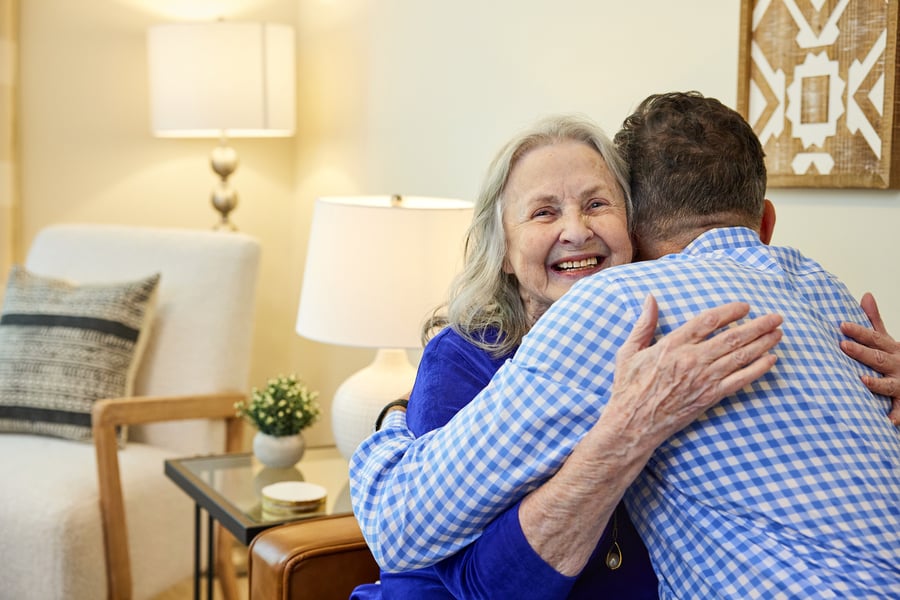
You moved away years ago, maybe for a job, maybe for a partner, maybe because life just carried you somewhere else. And for a long time, the distance didn't matter much. Your parent was healthy, independent, and thriving near Acworth or Kennesaw or wherever they've built their life in Cobb County.
But lately, things have shifted. The phone calls feel different. You're Googling "signs it's time for assisted living" at midnight. You're wondering how other families manage care when hundreds of miles separate them. It's common, though, and can be done with great care, and does not have to be a source of guilt. Here is all you need to know about how it is done.
The Emotional Weight of Distance
Before we talk about logistics, let's talk about what no one warns you about: the specific, gnawing guilt that comes with being the family member who isn't there.
You might feel it after a phone call that ended too quickly. Or when a sibling who lives closer mentions something about your parent you didn't know. Or during a holiday visit when you notice the house looks different, smaller, quieter, less maintained.
That guilt is normal. But it's worth examining, because guilt left unchecked can push you toward two unhealthy extremes. You might overcompensate with constant check-ins (which can feel intrusive to your parent) or pull away emotionally because the worry is too much to carry.
Neither extreme helps. What does help is building systems, maintaining communication, and accepting that effective caregiving looks different from a distance, but it's still caregiving.
Putting Together a Trusted Local Network
The most important thing you can do as a long-distance caregiver is make sure your parent has reliable people nearby. This isn't about replacing yourself. It's about creating a web of support that holds even when you can't be there in person.
Consider assembling a team that includes:
-
A geriatric care manager. These professionals (sometimes called aging life care specialists) can coordinate medical appointments, assess your parent's changing needs, and serve as your eyes and ears on the ground. They're especially valuable in areas like northwest Georgia, where your parent may need help navigating local healthcare systems.
-
A primary care physician who communicates well. Make sure you have HIPAA authorization to speak with your parent's doctor. This one step can eliminate a huge amount of anxiety.
-
A trusted neighbor or friend. Someone who sees your parent regularly and can flag changes, not as a surveillance system, but as a caring observer.
-
A local point of contact for emergencies. This could be a family friend, a faith community leader, or a professional caregiver. Make sure this person has your number.
If your parent is already living in an assisted living or memory care community, much of this network is built in. Staff members become part of that circle. The key is making sure you know who to call and that they know who you are.
Technology That Connects Without Controlling
Technology can be a powerful bridge between you and your parent, but only if it's used thoughtfully. The goal isn't surveillance. It's connection and peace of mind.
Some tools worth considering:
-
Video calling apps like FaceTime or Zoom. Seeing your parent's face, their expressions, their surroundings tells you more than any phone call.
-
Medication management apps or automatic pill dispensers. These can send you alerts if a dose is missed, without requiring you to nag.
-
Fall-detection wearables. Devices like the Apple Watch or medical alert systems can notify you and emergency responders if your parent takes a fall.
-
Smart devices. Motion sensors, smart thermostats, and doorbell cameras can offer gentle reassurance without feeling invasive, as long as your parent is comfortable with them.
The most important rule: involve your parent in choosing the technology. Nothing erodes trust faster than discovering your adult child has been monitoring you without your knowledge. If you're curious about how communities in the Acworth area are using these tools, you can explore how technology is transforming the senior living experience for a deeper look.
Visiting With Intention and With Grace
When you live far from your parent, every visit carries weight. It's tempting to pack the trip full of tasks: doctor's appointments, paperwork, maintenance, difficult conversations about the future.
But here's what experienced long-distance caregivers will tell you: the most important visits are the ones where you also make time to just be together.
Try splitting your visits into two categories:
Purposeful tasks:
-
Attend a medical appointment and take notes.
-
Review finances, insurance, or legal documents.
-
Meet with your parent's care team to get a clear picture of their daily routine. Understanding what your parent's daily life actually looks like can ease a lot of worry.
-
Tour senior living communities near Acworth if a transition is on the horizon.
Restorative moments:
-
Share a meal without an agenda.
-
Take a drive around Lake Acworth or enjoy the trails near Kennesaw Mountain.
-
Look through old photos together.
-
Simply sit on the porch and talk.
If your parent is adjusting to a new living situation, your presence during that period is especially meaningful. Even a short visit can make a difference when it comes to helping your parent adjust to their new community.
When Siblings Don't Share the Load Equally
This may be the most emotionally charged part of long-distance caregiving, and it rarely gets the attention it deserves.
If you have a sibling who lives closer to your parent, there's a natural imbalance. They handle the day-to-day. You handle the worry. Neither of you fully understands what the other is carrying.
A few strategies that can help:
-
Have an honest conversation early, not when you're already frustrated, but before resentment builds. Talk about who is doing what, what feels fair, and what each person can realistically contribute.
-
Divide responsibilities by strength, not just geography. Maybe your sibling handles in-person visits and appointments, while you manage finances, insurance, or research. Both are valuable.
-
Use shared tools. A shared Google Doc, a group text, or a caregiving app can keep everyone on the same page without relying on one person to relay information.
-
Acknowledge each other's contributions. The sibling who lives nearby may feel burdened. The sibling who lives far away may feel sidelined. Both feelings are valid.
If these conversations feel difficult to start, you might find it helpful to download our free guide to having productive family conversations about senior care. Sometimes having a framework makes the hard talks a little easier.
You're Already Doing More Than You Think
Long-distance caregiving is exhausting in ways that don't always show. The mental load of worrying, researching, and coordinating is invisible labor, but it's labor all the same.
Give yourself credit for what you're doing. And remember that caring well from a distance is absolutely possible. It just takes planning, communication, and a willingness to let go of the idea that good care only happens in person.
Whether your parent is living independently in Cobb County, considering assisted living near Acworth, or already settled in a memory care community, your involvement matters. Every phone call, every coordinated appointment, every visit planned with love counts.
If you're beginning to explore senior living options in the Acworth area, take your time. Read, learn, and ask questions. Download our free guide to having productive family conversations about senior care to help your family start the conversation together, no matter where each of you lives.