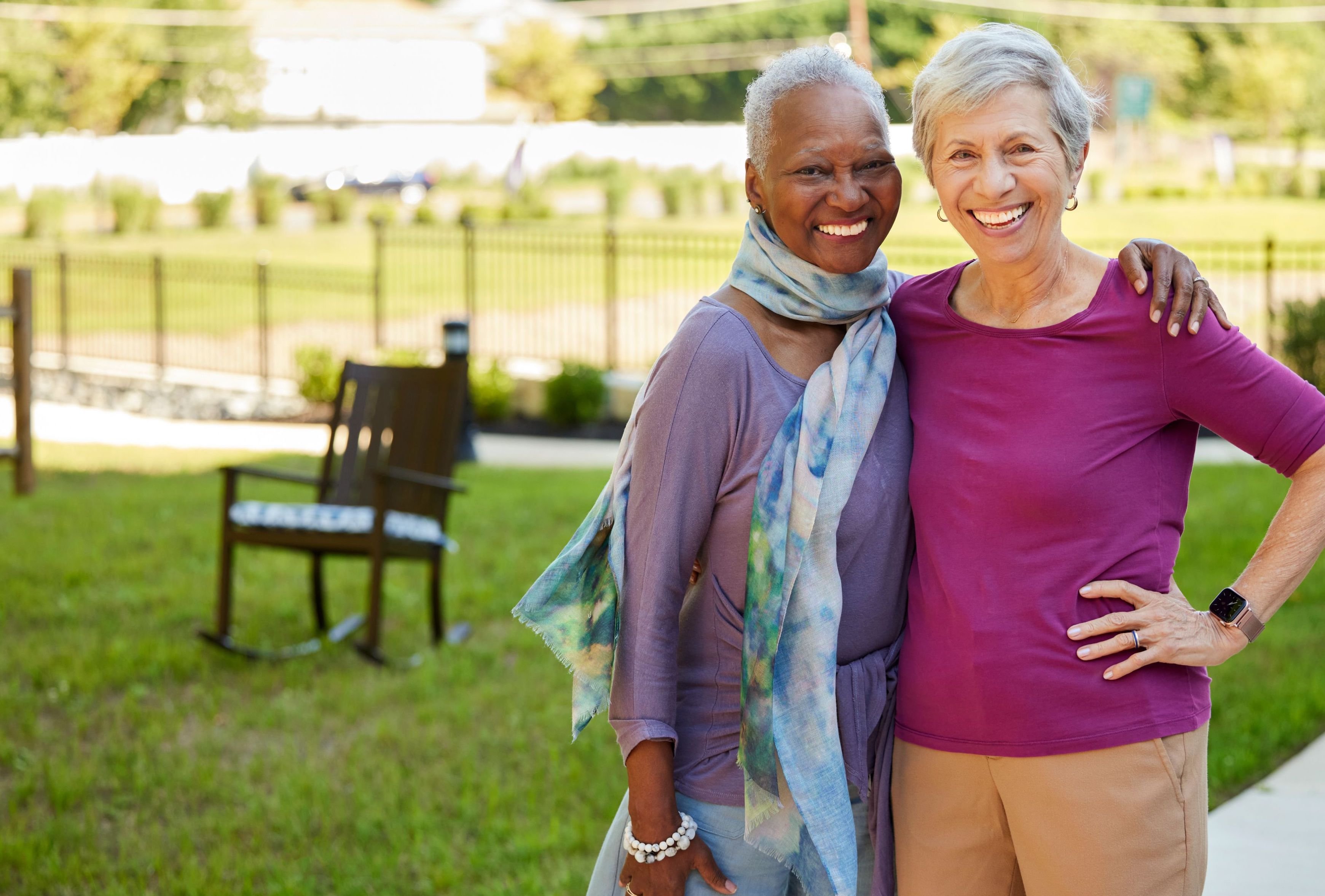

A doctor prescribes medication to manage blood pressure. A physical therapist designs exercises to improve balance. But what if one of the most powerful tools for healthy aging doesn't come from a pharmacy or a clinic at all? What if it comes from the person sitting across from you at breakfast?
That's the question a growing body of research is answering with striking clarity. Social connection isn't just pleasant. It's protective. And the data behind that claim is strong enough to reshape how families, healthcare systems, and senior living communities think about what older adults actually need to thrive.
If you've started noticing that a parent or loved one in the Athens, GA, area seems more withdrawn, less engaged, or increasingly isolated, this research may help explain why that matters and what can be done about it.
What Do the Numbers Say About Social Connection?
Most people understand intuitively that loneliness feels bad. But the health consequences go far beyond a feeling. According to research supported by industry experts including the VP of Engagement at The Arbor Company, Brandi Blizzard, and compiled in a comprehensive LifeLoop report on social wellness, the data paints a picture that's hard to ignore:
-
Strong social relationships are associated with a 50% greater likelihood of survival. That's not a marginal benefit; it's a dramatic one.
-
Social connection is linked to a 38% reduced risk of dementia, a finding that carries particular weight for families watching for early cognitive changes.
-
Higher social connectedness is associated with a 27% reduced risk of depression and an 18% reduced risk of anxiety.
These aren't soft outcomes. They're measurable health markers, the kind clinicians and researchers take seriously.
Perhaps the most sobering comparison comes from a widely cited meta-analysis: social isolation has been compared to the health impact of smoking up to 15 cigarettes a day. That single statistic has shifted how policymakers, physicians, and senior care providers frame the conversation around loneliness.
Why Is Isolation a Quiet Crisis Among Older Adults?
The research also reveals a gap between what older adults need and what many currently experience. The LifeLoop report found that nearly 24 percent of adults age 65 and older are socially isolated, and 43 percent of adults age 60 and older report feeling lonely.
Those numbers represent millions of people, including, potentially, someone you love.
Isolation doesn't always look dramatic. It often unfolds gradually. A parent stops attending church. Weekly phone calls with friends dwindle. Driving becomes uncomfortable, so errands shrink to only what's essential. Meals get eaten alone. The calendar empties.
For families in communities like Athens, Watkinsville, or Winterville, GA, this can be especially hard to spot from a distance. A parent may sound fine on the phone but spend most of their hours without meaningful interaction. Research tells us that living alone increases mortality risk by 32 percent, a statistic that becomes personal when you recognize the signs that living alone may be putting your parent at risk.
Is Connection Infrastructure or an Amenity?
Here's where the conversation shifts. For a long time, social programming in senior living was treated as a nice addition: bingo nights, holiday parties, optional outings. Something to fill time.
The research says otherwise. When social wellness is woven into daily life with intention and consistency, it functions more like infrastructure, the foundation that supports everything else, from cognitive health to emotional resilience to physical well-being.
This distinction matters. A calendar full of events isn't the same as a culture of connection. What the data supports is daily engagement that fosters emotional wellness, the kind of sustained, purposeful interaction that helps people feel known, valued, and part of something.
That's true whether someone is living independently, receiving assisted living support, or navigating memory care. The need for connection doesn't diminish with a dementia diagnosis. If anything, it becomes more essential.
What Are Senior Living Communities Already Doing?
One of the most important takeaways from the current research is this: senior living communities are already delivering social wellness at scale. While public health agencies and policy groups are still debating how to address the loneliness epidemic, well-designed communities have been building the answer into their daily operations for years.
This includes structured programming, shared meals, group activities, intergenerational events, and spaces designed to encourage spontaneous interaction. It also includes something harder to measure but equally important: a sense of belonging.
What Does This Mean If You're Watching a Parent Live Alone?
If you've picked up on changes, more silence, less laughter, a shrinking world, the research validates what you're sensing. Isolation is not a minor lifestyle inconvenience. It carries measurable health risks that compound over time.
That doesn't mean every family needs to make a major decision right now. But it does mean the question is worth asking: Is my loved one getting enough meaningful connection to support their health?
Some steps you can take:
-
Pay attention to patterns, not just single moments. A quiet week might be normal. A quiet six months is a signal.
-
Look beyond physical health. Ask about friendships, daily routines, and how your parent spends their time, not just how they're feeling physically.
-
Learn about the options. Senior living has evolved significantly, and understanding the differences between staying at home and moving to a community can help you think more clearly. You can download a free guide comparing senior living with staying at home to explore what each path looks like.
-
Trust what the research shows. Social wellness isn't a soft benefit. It's a health outcome, one that shapes how long and how well someone lives.
The evidence is clear: connection protects. And for families navigating this chapter with a parent or loved one, knowing the research can help you make more informed, more confident choices, whatever those choices turn out to be.
For families weighing options near Athens, GA, or surrounding areas like Crawford, Hull, or Bogart, understanding what wellness really looks like in senior living can change the way you evaluate communities. It's not just about the quality of medical care. It's about whether the environment treats social connection as a core part of health, because the science says it is.