
Assisted living supports daily life and independence; a skilled nursing home provides ongoing medical treatment. Understanding this core difference can save your family time, money, and stress, even if a decision is still years away.
Let's say your parent's doctor casually mentions that they might benefit from "a little more help." You nod, make a mental note, and that evening you open your laptop to start researching. Within five minutes, you're overwhelmed. Assisted living. Skilled nursing. Long-term care. The terms blend together, and half the websites you visit seem to use them interchangeably.
You're not alone. One of the most common sources of confusion for families in the Dacula, GA area is the difference between assisted living and a skilled nursing home. They are not the same thing, and understanding the distinction can save you time, money, and a lot of unnecessary stress down the road.
This guide breaks it all down so you can feel confident and informed, even if a decision is still years away.
What Is Assisted Living Really About?
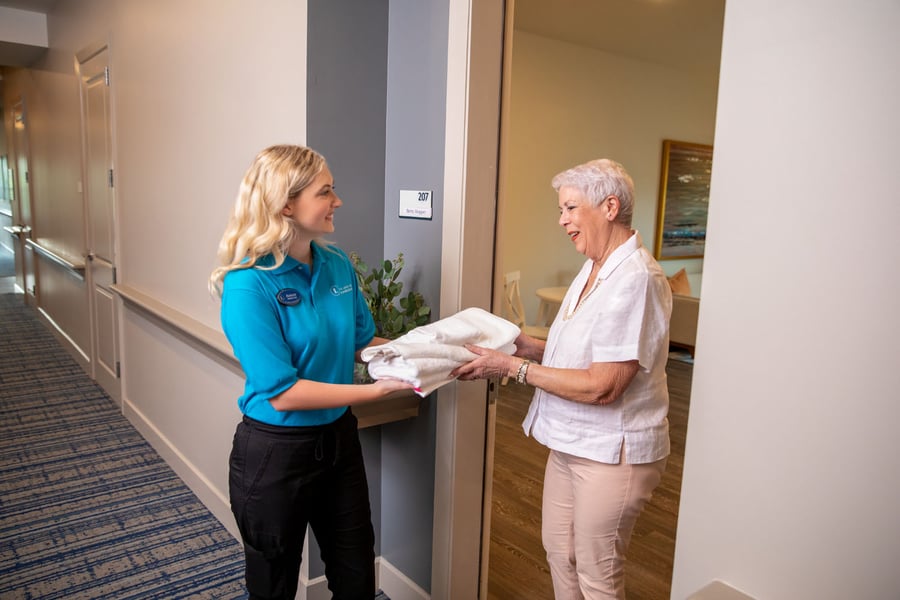
Assisted living is designed for older adults who are mostly independent but need a hand with certain daily activities. Think of things like bathing, getting dressed, managing medications, or preparing meals. Residents typically live in their own private apartment, eat in a shared dining area if they choose, and have access to social activities, fitness programs, and outings.
The emphasis in assisted living is on lifestyle. Staff are available around the clock to help when needed, but the goal is to support a senior's independence, not replace it. Many communities feel more like an apartment complex or a small neighborhood than a medical setting.
For families in areas like Dacula, Buford, Lawrenceville, and Suwanee, assisted living can be an excellent fit when a parent is generally healthy but struggling to manage a household on their own. It offers safety, social connection, and just enough daily support to make life easier.
What Does a Skilled Nursing Home Provide?
A skilled nursing home serves a very different purpose. It's built around medical care. These communities are for older adults who need daily, hands-on clinical support from licensed nurses, such as wound care, IV therapy, physical rehabilitation after surgery, or management of complex chronic conditions.
The environment reflects that medical focus. Spaces are often shared, and the daily schedule may revolve around treatments and therapy sessions rather than social activities. Skilled nursing home are regulated more like hospitals, with strict staffing and oversight requirements.
Some people move into a skilled nursing home temporarily, for example, after a hip replacement, and then transition back to their own residence or into assisted living once they've recovered. Others need this level of care on an ongoing basis.
The key difference? Assisted living supports daily life. A skilled nursing home provides ongoing medical treatment. If your parent needs help remembering to take their blood pressure medication, that's an assisted living conversation. If they need a registered nurse to administer injections or monitor a feeding tube, that's skilled nursing.
How Do Costs and Payment Differ?
Cost is one of the biggest concerns families have, and the financial picture looks quite different for each option. Assisted living tends to cost less than skilled nursing.
How families pay also differs:
-
Assisted living is most often paid for through private funds, long-term care insurance, or Veterans' benefits. Medicaid coverage for assisted living varies by state and is more limited in Georgia.
-
Skilled nursing is more commonly covered by Medicare (for short-term rehabilitation stays) and Medicaid (for longer-term care once other resources are exhausted).
Understanding these financial differences early gives you time to plan. Wondering how families in the Dacula area actually pay for senior living? We break down the financial options here.
Where Does Memory Care Fit Into the Picture?
If your parent is living with Alzheimer's disease or another form of dementia, you may have come across the term "memory care." This is a specialized type of assisted living, not skilled nursing, designed specifically for people living with dementia.
Memory care communities offer a secure environment to prevent wandering, along with structured routines and activities tailored to cognitive abilities. Staff receive specialized training in dementia care techniques, and the overall approach focuses on comfort, dignity, and engagement.
Memory care fills an important gap: many people living with dementia don't need the intensive medical services of a skilled nursing home, but they do need more specialized support than traditional assisted living provides.
For a broader look at all the senior care options available in the Dacula area, check out our complete guide.
How Can You Start Thinking About What Your Parent Needs?
You don't have to make a decision right now. But asking the right questions early can make the process much less stressful when the time comes. Here are a few to consider:
-
Can your parent handle daily tasks safely? If they need help with bathing, dressing, or meals but are otherwise in good health, assisted living is likely the right fit.
-
Do they have complex medical needs? If they require daily nursing care, wound management, or rehabilitation therapy, a skilled nursing home may be necessary.
-
Are there cognitive changes? If your parent is showing signs of dementia, memory care may offer the best combination of safety and quality of life.
-
What does their doctor recommend? A physician's assessment can clarify the level of care your parent actually needs, which may be different from what you're imagining.
-
What matters most to your parent? Independence, social connection, and lifestyle matter. For many families in Hamilton Mill, Auburn, Braselton, and the surrounding communities, preserving a parent's sense of autonomy is a top priority.
Not sure if your parent needs assisted living? Download our free guide: 10 Signs Your Parent Could Benefit from Assisted Living.
Take Your Time and Trust the Process
The fact that you're reading this article means you're already doing something important: learning. Even if a move is months or years away, understanding the difference between assisted living and a skilled nursing home puts you in a stronger position to support your parent when the time is right.
There's no single "correct" answer for every family. The best choice depends on your parent's health, preferences, and the kind of life they want to live. Families across Gwinnett County and the greater Dacula area face these same questions, and there's no shame in taking your time to sort through the options.
Start by having an honest conversation with your parent and their doctor. Explore the resources linked throughout this post. And remember: planning ahead isn't rushing a decision. It's giving yourself and your family the gift of time.
Want to learn even more about what assisted living includes and how it works? Download The Complete Guide to Assisted Living.