

If you asked most people what keeps the brain healthy after 70, they'd probably say crossword puzzles. And while puzzles aren't a bad idea, the full picture is far more interesting—and far more within your control.
In 2022, a large-scale review published in Nature Reviews Neurology found that lifestyle interventions targeting multiple risk factors simultaneously are more effective at protecting cognition than any single habit alone. In other words, brain health isn't about one magic bullet. It's about how your daily choices work together.
For families in the Dacula, Suwanee, and greater Gwinnett County area who are thinking ahead about cognitive wellness—whether for themselves or a loved one—this is genuinely good news. It means there's a lot you can do, starting today.
Nutrition: What Goes on Your Plate Shapes How Your Brain Functions
Your brain accounts for only about 2% of your body weight, but it consumes roughly 20% of your daily calories. That makes what you eat one of the most direct ways to support—or undermine—cognitive function.
The MIND diet (Mediterranean-DASH Intervention for Neurodegenerative Delay) was developed specifically to target brain health. It emphasizes:
-
Leafy greens — at least six servings per week
-
Berries — especially blueberries and strawberries, twice a week
-
Nuts, whole grains, fish, and olive oil as dietary staples
-
Limited red meat, butter, cheese, and fried foods
A 2015 study from Rush University Medical Center found that people who followed the MIND diet closely had a rate of cognitive decline equivalent to being 7.5 years younger than those who didn't. Even moderate adherence showed measurable benefits.
The encouraging part? You don't need a complete dietary overhaul. Small, consistent shifts—swapping out a side dish, adding a handful of walnuts to your afternoon snack—add up over time.
Want to dive deeper into age-specific nutrition strategies? Our guide, Eating Healthy as You Age, offers practical tips you can start using today.
Physical Activity: The Most Underused Brain Health Tool
When most people think about exercise, they think about muscles, joints, and heart health. But the brain may be the organ that benefits most.
Here's why: physical activity triggers the release of a protein called brain-derived neurotrophic factor (BDNF). Think of BDNF as fertilizer for your brain's neural pathways. It helps existing neurons survive and encourages the growth of new ones—even in your 70s and 80s.
A 2023 meta-analysis in the British Journal of Sports Medicine found that 150 minutes per week of moderate aerobic activity was associated with a 28% lower risk of developing dementia. That's about 20 minutes a day of brisk walking, swimming, or even dancing.
For seniors in the Dacula area, opportunities for movement are plentiful. Whether it's walking the trails at a local park or joining a fitness class designed for older adults, the key is consistency over intensity.
Physical activity is one of the most powerful tools for brain health at any age. For a comprehensive guide to staying active, check out Stay Active, Stay Young: A Senior's Handbook to Vibrant Living.
The Social Brain: Why Isolation Is a Cognitive Threat
Here's a statistic that doesn't get enough attention: a 2020 report from the National Academies of Sciences, Engineering, and Medicine found that social isolation increases the risk of dementia by approximately 50%. That places it in the same risk category as physical inactivity and smoking.
The brain is fundamentally a social organ. Conversation, collaboration, humor, even friendly disagreement—all of these activities require complex cognitive processing. When those interactions disappear, the brain loses critical stimulation.
This is especially relevant in communities like Dacula, Suwanee, and Sugar Hill, where retirees may find their social circles naturally shrinking as neighbors move, friends relocate, or driving becomes less comfortable. Staying socially engaged doesn't happen by accident after 70. It requires intention.
Some practical strategies:
-
Join a group with a shared interest — book clubs, gardening groups, faith communities, or volunteer organizations
-
Schedule regular calls or visits with family and friends
-
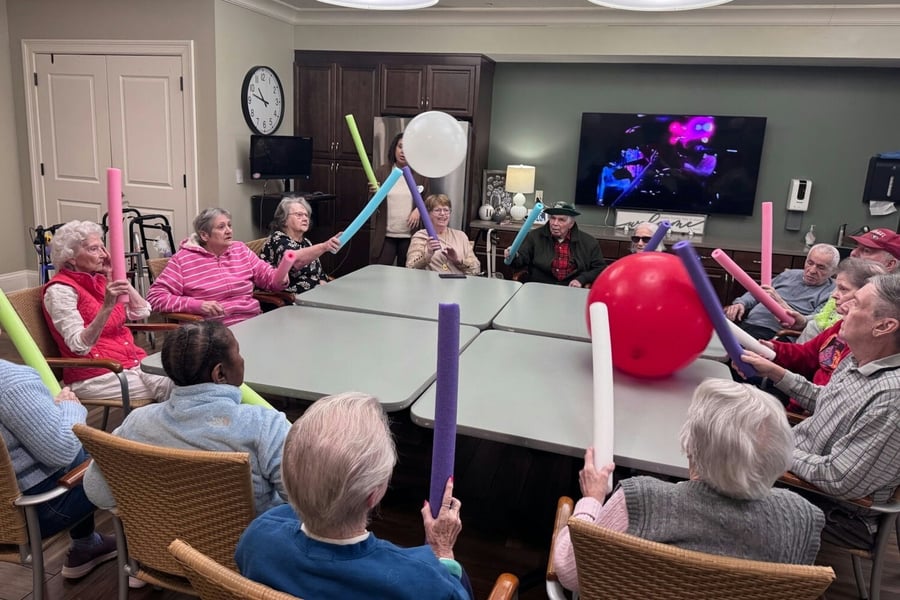
Seek environments that build connection into daily life — structured social opportunities designed for older adults can make a meaningful difference
Cognitive Stimulation: Why Your Brain Craves the Unfamiliar
There's an important distinction between using your brain and challenging it. Doing the same crossword puzzle format every day uses your brain, but once it becomes automatic, the cognitive benefit diminishes. Your brain benefits most from novelty—activities that push you into unfamiliar territory.
Research from the University of Texas at Dallas showed that older adults who learned a complex new skill—like digital photography or quilting—demonstrated greater memory improvement than those who did familiar, low-demand activities like watching documentaries or doing word searches.
Ideas for meaningful cognitive challenge:
-
Learn a musical instrument or a new language
-
Take a class in something completely outside your comfort zone
-
Try strategic games like chess, bridge, or even new card games
-
Write—whether it's a memoir, letters, or poetry
The goal isn't to exhaust yourself mentally. It's to keep your brain encountering something it hasn't mastered yet.
Sleep and Stress: The Maintenance Crew That Works Overnight
While you sleep, your brain activates a waste-clearing system called the glymphatic system. It flushes out toxins—including beta-amyloid, a protein associated with Alzheimer's disease—at a rate that's dramatically higher during deep sleep than during waking hours.
This means poor sleep isn't just about feeling tired. It's about depriving your brain of essential maintenance.
For older adults, sleep challenges are common but not inevitable. A few evidence-backed strategies:
-
Keep a consistent sleep schedule, even on weekends
-
Limit screen time in the hour before bed
-
Keep the bedroom cool and dark
-
Address sleep apnea or restless leg syndrome with a healthcare provider—these are treatable conditions that significantly impact sleep quality
Stress management matters, too. Chronic stress floods the brain with cortisol, which over time can damage the hippocampus—the brain region most critical for memory. Mindfulness practices, time outdoors, and meaningful social engagement all help regulate the body's stress response.
Putting It All Together
Brain health after 70 isn't about perfection. It's about building a handful of protective habits and sticking with them. The research is clear: what you eat, how you move, who you spend time with, what you challenge your mind to do, and how well you sleep all work together to shape your cognitive future.
For families in the Dacula, Hamilton Mill, and Gwinnett County area who are planning ahead, understanding these habits is a powerful first step. Whether you're thinking about your own health or exploring options that could support a loved one's wellness down the road, knowledge is the foundation.
If you'd like to keep learning, explore our free guides on nutrition, fitness, and cognitive wellness—all designed with seniors and their families in mind. For a visual breakdown of everyday habits that support mental sharpness, download our free guide: The Visual Guide for Keeping an Older Mind Sharp.