

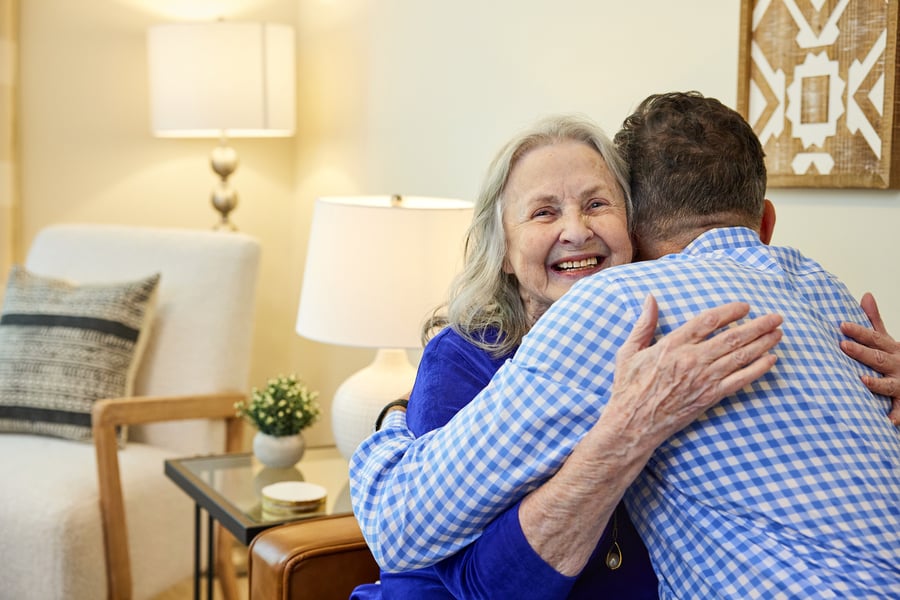
You've just landed back after a weekend visit to see your parent near Dacula, GA. The mental load you're carrying is enormous. Did their kitchen look messier than last time? Were they taking all their medications? And who's going to notice if something goes wrong on a Tuesday afternoon when you're hundreds of miles away?
If this sounds familiar, you're far from alone. Many Americans are long-distance caregivers, providing care or coordinating support for an aging loved one while living an hour or more away. It's a growing reality, and it comes with a unique kind of emotional weight.
The good news: distance doesn't have to mean disconnection. With the right systems, relationships, and mindset, you can play a meaningful, active role in your parent's well-being, no matter where you live.
Name the Guilt, Then Set It Aside
Let's start here, because everything else becomes harder when guilt is running the show. Many family caregivers who live far from a parent carry a quiet belief that distance equals failure. Whether they're across the state in Duluth or across the country, they worry that if they truly cared enough, they'd move closer or figure out a way to be there in person.
That's simply not true. Distance is a circumstance, not a character flaw. What matters is how you show up within the reality of your situation.
Some of the most effective caregivers are long-distance ones, precisely because they've had to be intentional about systems, communication, and planning rather than relying on proximity alone. Give yourself permission to be a great caregiver from where you are.
Create a Local Team Around Your Parent
You can't be your parent's eyes and ears in Gwinnett County every day, but you can build a network of people who are. Think of it as assembling a care circle, a group of trusted people who each play a small but important role.
Here's who to consider:
-
A geriatric care manager. These professionals (sometimes called aging life care managers) can conduct in-home assessments, attend doctor's appointments, and serve as your local point of contact. They're especially valuable if your parent lives in the Hamilton Mill or Lawrenceville area and you need someone who knows the local healthcare landscape.
-
Your parent's primary care physician. Ask your parent to sign a HIPAA release so you can communicate directly with their doctor. This one step can save weeks of frustration.
-
Trusted neighbors and nearby friends. A neighbor who checks in casually, noticing if the newspaper piles up or the lights stay off, can be an invaluable early-warning system.
-
Local faith communities or senior centers. Many churches and community organizations in areas like Suwanee, Buford, and Braselton offer regular check-in programs or volunteer visitor networks for older adults.
You don't need to manage everything yourself. You need to know who to call.
Use Technology to Stay Connected (Not Just Informed)
Technology is most powerful when it does two things: keeps you informed about your parent's safety and keeps you emotionally connected.
For safety and health monitoring:
-
Medication management apps like Medisafe or CareZone can send reminders to your parent and alerts to you if a dose is missed.
-
Fall-detection wearables from companies like Medical Guardian or Apple Watch can automatically notify emergency contacts.
-
Smart devices like a video doorbell, motion-sensor lights, or a smart speaker can offer gentle check-ins without feeling intrusive.
For staying close:
- Scheduled video calls matter more than you think. Even a short, 10-minute FaceTime call over morning coffee can maintain your connection.
- Shared photo albums through Google Photos or Apple's Shared Albums let you exchange everyday moments, not just milestone events.
The key is choosing technology that matches your parent's comfort level. A tool they won't use doesn't help anyone.
Work With Care Staff as a Teammate
If your parent lives in, or is considering, an assisted living community, your relationship with the care team is one of your most important long-distance tools. The best way to build that relationship is to approach it as a partnership, not an audit.
Here are some practical ways to do that:
-
Introduce yourself early. Let staff know you're a long-distance family member and share your preferred method of communication (phone, email, or a family portal).
-
Ask about regular updates. Many communities offer scheduled care conferences or monthly updates. Request to attend by phone or video.
-
Share what you know. You know your parent better than anyone: their preferences, their history, what calms them down, and what makes them laugh. That information helps care teams provide better, more tailored support.
-
Resist the urge to micromanage. It's natural to want control when you feel far away. But trust, built over time through honest communication, will serve your parent better than a checklist of demands.
If your parent is transitioning into a senior living community, here's what to expect in their first month and how you can stay involved even from a distance.
When You Visit, Balance Purpose With Presence
Long-distance caregivers often try to cram every visit with errands, appointments, and to-do lists. That's understandable because your time is limited. But visits that are nothing but logistics can leave both you and your parent feeling drained instead of connected.
Try splitting your visit time roughly in half:
-
Purpose time: Schedule medical appointments, review finances, organize the medicine cabinet, and meet with care staff or a geriatric care manager.
-
Presence time: Go for a drive through Flowery Branch. Sit on the porch. Look through old photo albums. Have a meal together with no agenda.
Your parent needs to feel like your career, your family, and your other responsibilities haven't made them just another task on your list. And honestly? You need that unhurried time together, too.
Have Honest Conversations With Siblings
If you have siblings, especially ones who live closer to your parent in the Dacula, Hoschton, or Winder area, caregiving dynamics can get complicated fast. The sibling nearby may feel overburdened. The sibling far away may feel left out of decisions. Resentment builds quietly when expectations aren't spoken aloud.
A few ground rules can help:
-
Divide responsibilities by strengths, not just geography. The long-distance sibling might handle finances, insurance claims, and research. The nearby sibling might manage in-person appointments and social visits.
-
Communicate regularly. A shared family group chat or a simple weekly email update can prevent the "nobody told me" frustration.
-
Acknowledge the imbalance. If one person is doing more, say so and find ways to offset it, whether that's financial support, taking over during visits, or simply expressing gratitude.
Don't Overlook the Financial and Legal Details
Long-distance caregiving comes with financial layers that are easy to overlook. Travel costs add up quickly. You may be helping pay for care or coordinating insurance across state lines. And certain expenses, including travel specifically for caregiving, may be tax-deductible under some circumstances (consult with a tax professional to determine how it might affect you).
A few essentials to address sooner rather than later:
-
Power of attorney and healthcare directives. These are critical when you can't be there in person to make decisions. Download our step-by-step legal planning guide to make sure the essentials are in place.
-
A clear picture of your parent's finances. Know where accounts are held, what insurance covers, and what out-of-pocket costs look like.
-
Understanding care costs. If you're exploring how to fund your parent's care, understanding the full range of financial options can ease some of the logistical burden of long-distance caregiving.
Consulting with an attorney or financial planner who understands Georgia-specific regulations can save you significant stress down the road.
You're Doing More Than You Think
If you're reading this article, researching options, and worrying about your parent's well-being, you're already deeply involved in their care. The miles between you don't diminish that.
Long-distance caregiving is hard. It asks you to trust other people, to let go of control you never really had, and to accept that love doesn't require a short commute. But with the right people, the right tools, and the willingness to communicate openly, you can make a meaningful difference in your parent's life from anywhere.
Having honest conversations about shared caregiving responsibilities is one of the hardest parts of long-distance care. Our guide to talking to your family about senior care can help you start those conversations productively.