
What You'll Learn
Halfway between Atlanta, the state capital, and Athens, the home of the University of Georgia, lies the town of Dacula, Georgia. Many people who pass through may think of it as nothing more than a quaint Southern city with a scenic downtown and an unusual name. However, Dacula has a long and rich history that dates back more than 100 years.
While many cities in Georgia have experienced rapid growth over the past few decades, Dacula has managed to preserve its small-town charm, blending the comforts of modern living with historical roots. For residents and visitors, Dacula offers a unique blend of quiet living and meaningful connections to the past.
Native American Roots
The area that is now Dacula was originally part of the Muscogee (Creek) Nation. Much of the land was ceded to the state of Georgia in the 1790 Treaty of New York following the Oconee War. However, the region remained sparsely settled until the early 19th century due to the presence of the Cherokee Nation in parts of Gwinnett County. The forced removal of the Cherokee people during the Trail of Tears in the 1830s opened the area to white settlers.
Early Settlements and Industries
In 1809, three men named Elisha Winn, Roger Pugh, and Elijah Pugh purchased 7,000 acres of land from Jackson County, which became part of Gwinnett County in 1818. Winn became the county's first judge, and his home, built in 1812, once served as the seat of Gwinnett County's government. That home, the Elisha Winn House, is still standing on what is now known as Dacula Road. The house and its surrounding grounds now host tours and events that celebrate Dacula's heritage.
The area was primarily rural farmland until 1891 when the Seaboard Air Line Railroad expanded through the area. The railroad became the lifeblood of the town. It spurred the growth of local businesses, helped farmers transport crops like cotton more efficiently, and put Dacula on the map as a stop between larger metropolitan areas like Atlanta and Athens. Even though the railroad no longer runs through town, its legacy continues to influence the community's layout and spirit of progress.
What's in a Name?
The small community had many different names before it became known as Dacula. In the 1840s, it was named Chinquapin Grove after some of the area's native trees. In 1891, contractors laying railroad track set up camp in the area, which they named Hoke after a railroad executive.
At one point, residents had started calling it Freeman Town, after Dr. Samuel Freeman, a Civil War surgeon who built a hospital in their community and donated land for a church and a school. In 1905, the town was incorporated and needed a permanent name.
Hoke didn't work because it was the name of another Georgia town. The postman, a man named John Freeman (no relation to the doctor), decided against calling the new municipality Freeman Town. Instead, he created the unique name Dacula, using letters from the names of two other cities: Decatur and Atlanta.
Growth Through the 20th Century
For much of its early history, Dacula remained a small, rural town. In 1910, just five years after its official incorporation, the population was only 169. Over the next several decades, Dacula maintained its quiet character while larger cities around it grew.
But in the 1980s, the town began to experience significant development, and the growth hasn't slowed since. According to World Population Review, Dacula's population reached 6,897 in the 2020 Census and has grown by over 18% in the years since. The increase reflects the town's growing appeal to families, professionals, and retirees who value both accessibility and a strong sense of community.
Science, Music, and a Strong Sense of Place
Today, Dacula is more than a suburb; it's a key player in Georgia's future. Located at the center of the state's Innovation Crescent, Dacula is surrounded by world-renowned research institutions, life sciences companies, and cutting-edge healthcare facilities.
This area has become a southeastern hub for scientific and technological advancement, linking organizations such as Emory University, Georgia Tech, the CDC, and the University of Georgia. For residents, this means access to top-tier medical care, educational programs, and economic opportunities just minutes away.
In addition to the Innovation Crescent, Dacula also celebrates its artistic roots. The town has long held a significant place in Georgia's cultural narrative, particularly in music. Dacula was once home to Gid Tanner and the Skillet Lickers, a legendary bluegrass string band from the 1920s and '30s whose influence can still be felt today. The descendants of the Skillet Lickers continue to perform in Dacula, preserving a legacy of community-centered music that brings residents together.
A Great Place to Retire in Georgia
From its deep cultural roots to its exciting future, it's no surprise that more retired seniors are discovering that Dacula is a wonderful place to call home. Although it continues to grow, the city has never lost its small-town feel, where you'll find historic homes, family-run businesses, and friendly neighbors. But it's also less than an hour away from the conveniences of a major city, including a world-class international airport.
Want to Learn More About Senior Living in Dacula?
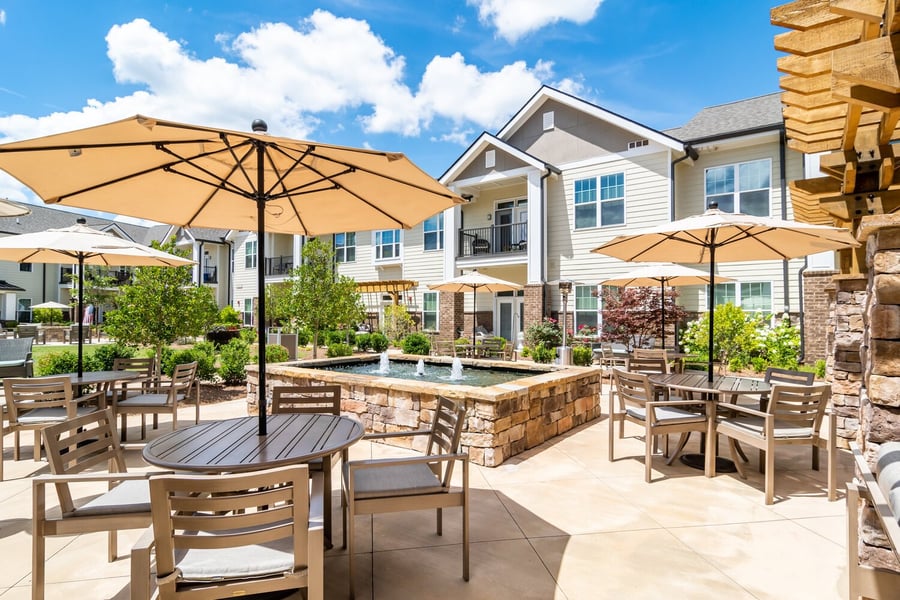
Luxury senior living communities like Arbor Terrace Hamilton Mill make retiring in Dacula easy. Seniors have the opportunity to make new friends and participate in a full calendar of enjoyable activities while someone else takes care of the cooking and cleaning for them.
If you're considering a move for yourself or a loved one, we invite you to schedule a tour of Arbor Terrace. We'd love to show you how our senior living community fits beautifully into the story of Dacula — and how we can help you write your next chapter here.