What You'll Learn
You've probably heard yourself say it, or at least think it: I'm too old to make new friends. Maybe you said it after declining an invitation, or while flipping through channels on a quiet Wednesday evening. It feels like a fact, as solid and unmovable as your favorite armchair.
But what if it isn't true?
Research from the National Academies of Sciences, Engineering, and Medicine tells us that more than one-third of adults older than 45 experience loneliness, and nearly one-quarter of adults older than 65 are considered socially isolated. Those numbers aren't just statistics. They describe real afternoons that stretch on too long, real mornings without anyone to talk to over coffee.
The good news? Friendship doesn't come with an expiration date. And for many older adults in the Marietta, GA, area, from East Cobb to Roswell, Sandy Springs, and beyond, moving into a senior living community has opened doors to connection they never expected.
How Does Isolation Build Up at Home?
It usually doesn't happen all at once. A neighbor moves away. A friend stops driving. Your spouse passes, and suddenly the house that used to feel full of life feels very, very still.
You might talk to family on the phone. Your family member might call every evening. But even the most loving phone call can't capture the full picture of what daily life alone really looks like, the missed meals, the hours spent without hearing another voice, the way a whole week can pass without a face-to-face conversation.
This kind of quiet isolation is common among older adults aging at home in Kennesaw, Smyrna, Dunwoody, and throughout the East Cobb area. And it doesn't mean something is wrong with you. It means the world around you has changed, and the opportunities to bump into people and strike up a conversation have slowly disappeared.
Why Does Proximity Change Everything?
Here's something social scientists have understood for decades: the single biggest predictor of friendship isn't shared interests, personality type, or effort. It's proximity, simply being near other people on a regular basis.
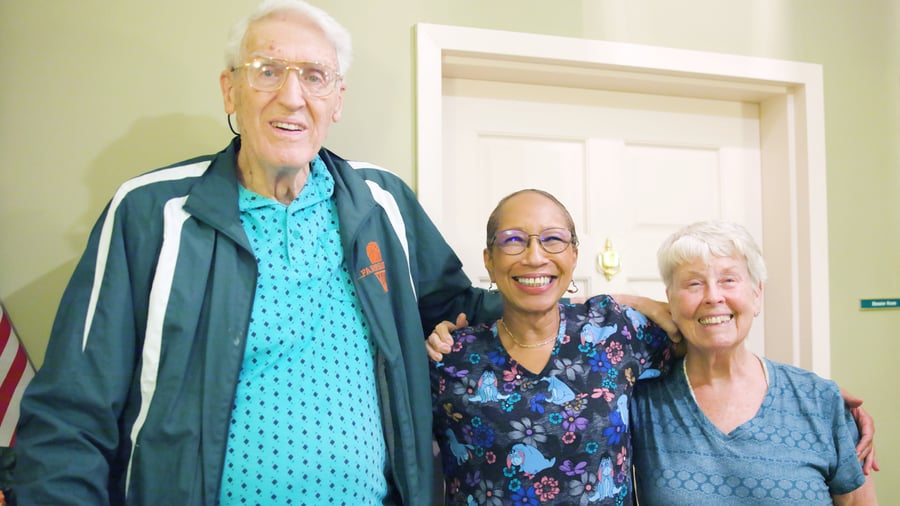
In a senior living community, proximity is built into everyday life. Your neighbor is just across the hall. The person who likes the same corner seat in the library is there most afternoons. The woman who always orders tea instead of coffee at breakfast is sitting two tables over, and one morning, she catches your eye and smiles.
No one forces it. No one schedules a "friendship appointment." It just happens, the way it always has, when people share a space and a routine.
This is one of the key quality-of-life advantages that community living offers compared to staying at home. If your family is weighing the options, comparing in-home care with assisted living can help put the social side of the decision into perspective.
What Do the First Few Days Really Look Like?
Let's talk about the part that concerns people most: the first few days.
Everything is unfamiliar. The hallways, the dining area, the faces. You might feel like the new kid at school, except you're 84, and the stakes feel higher.
Many senior living communities understand this deeply, which is why they have resident ambassador programs. These are fellow residents, people who have already made the same transition, who volunteer to welcome newcomers. They might knock on your door to introduce themselves. They might walk with you to lunch so you don't have to figure out where to sit. They might simply stop by to say, "I know exactly how you're feeling, because I felt it too."
That kind of reassurance, from someone who has been in your shoes, can make all the difference during those first uncertain days.
How Do Shared Activities Open Doors?
You don't have to be the social butterfly of the community to find connection. In fact, many of the best friendships in senior living start through quiet, shared activities, a book club, a gardening group, a painting class, or a morning walking group.
The beauty of these activities is that they give you something to focus on besides the awkwardness of being new. You're not just making small talk. You're arranging flowers together, or debating which mystery novel to read next, or laughing because someone keeps losing at cards.
A study published in the Journal of Social and Personal Relationships found that it takes roughly 50 hours of time together for an acquaintance to become a casual friend, and more than 200 hours to become a close friend. In community living, those hours accumulate naturally, over meals, during activities, and in the comfortable overlap of daily routines.
Staying socially and physically active plays a significant role in overall wellbeing, too. For a closer look at how staying engaged supports health as we grow older, this guide on active living for seniors is a helpful resource.
Does Friendship Need to Look the Way It Used To?
Here's something worth saying plainly: the friendships you make at 80 or 85 won't look like the friendships you made at 30. And that's perfectly fine.
Maybe your new friend is the person who saves you a seat at dinner every night. Maybe it's someone who knocks on your door when they haven't seen you at breakfast. Maybe it's a quiet companionship, two people reading in the same room, not saying much, but glad the other one is there.
These connections don't require you to be outgoing or energetic. They don't require you to join every club or attend every event. They just require you to be present, and to be open to the possibility that someone nearby might be looking for the same thing you are.
A study from Brigham Young University found that strong social connections increase the likelihood of longevity by 50 percent. Friendship isn't just nice to have. It's genuinely good for your health.
What if You're Not Ready Yet?
If you're living in the Marietta, East Cobb, Woodstock, or Alpharetta area and the idea of moving to a senior living community still feels overwhelming, that's completely understandable. Change is hard. Leaving a place full of memories is hard. No one is asking you to feel excited about it right away.
But consider this: the loneliness you might be feeling right now isn't something you have to accept as permanent. There are people, kind, interesting, funny people, who you simply haven't met yet. And they might be closer than you think.
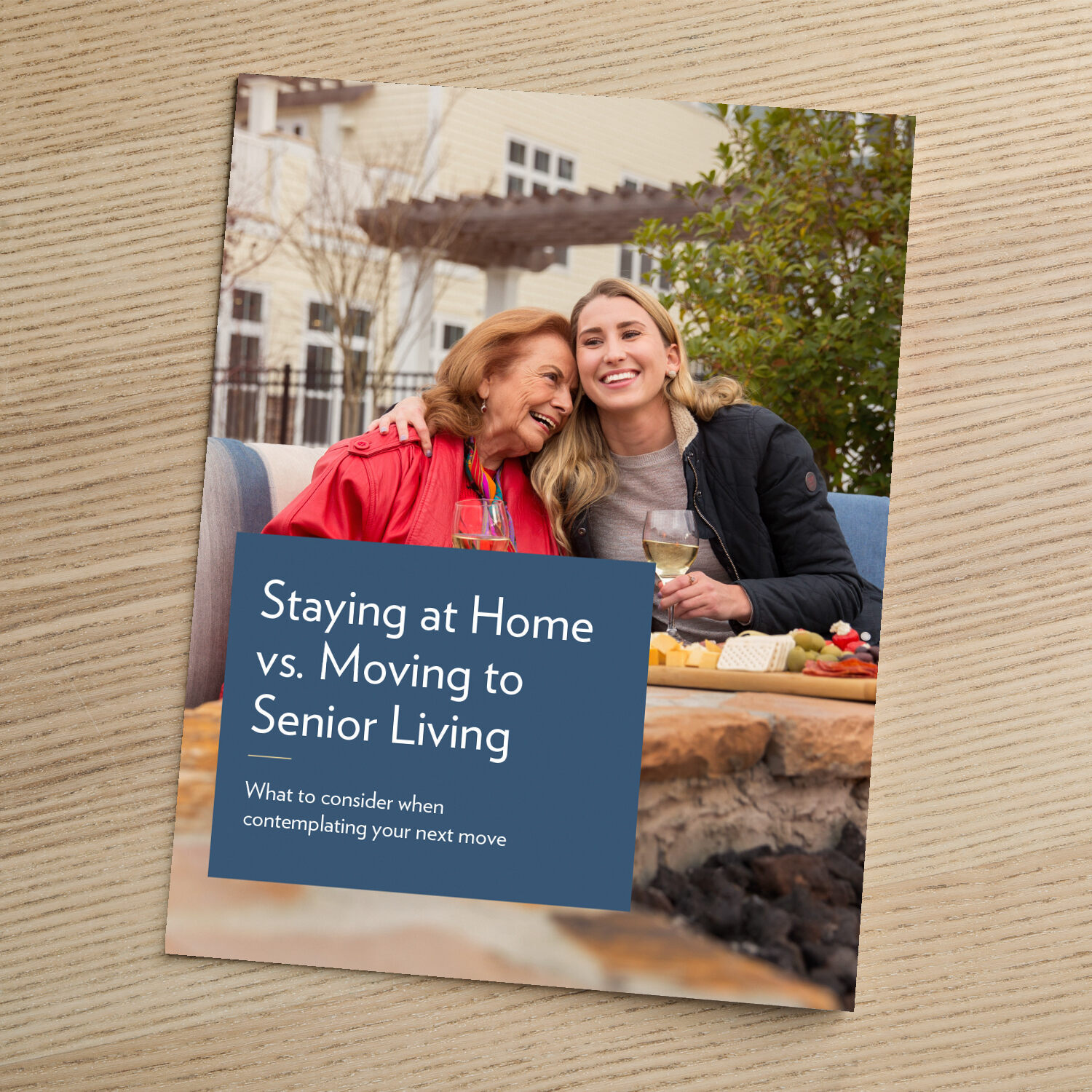
If you'd like to explore the differences between staying at home and living in a community, this free guide comparing the two options can help you think through what matters most.