Your parent's physician might say everything looks stable. But you see what the chart doesn't capture: the gym membership gathering dust, the friends they no longer meet for coffee, the afternoons spent sitting in a quiet house in Suwanee or Alpharetta with nothing pulling them forward. Health isn't only what shows up in lab work. It's momentum, purpose, and the daily rhythms that keep someone engaged with life.
That's exactly why wellness programming has become one of the most important factors families weigh when comparing assisted living and memory care communities in the Suwanee, GA area. But not all wellness programs are created equal. Some communities offer a packed calendar that looks impressive on paper but lacks structure. Others build wellness into the architecture of daily life, with professional guidance, intentional variety, and a whole-person philosophy that touches mind, body, and spirit.
Here's how to tell the difference, and why it matters for your parent's future.
Are a Busy Calendar and a Wellness Strategy the Same Thing?
When you tour communities in Cumming, Johns Creek, Duluth, or Sugar Hill, you'll almost certainly see a printed activity calendar. Bingo on Mondays. A movie on Thursdays. Maybe a craft hour in between. Activities like these aren't bad, but by themselves, they aren't wellness.
A genuine wellness strategy treats health as interconnected. Physical fitness, cognitive stimulation, emotional well-being, social connection, and spiritual reflection all feed into one another. When one dimension is neglected, the others suffer. A resident who feels isolated is less likely to show up for exercise class. A resident who never moves is more likely to experience cognitive decline.
The communities worth considering are the ones that understand this relationship and design programming around it, not as an afterthought, but as a core commitment. Wondering what a typical day really looks like? Here's what to expect in assisted living in Suwanee and how wellness weaves into every part of it.
How Should Fitness Be Structured in a Senior Living Community?
One of the clearest signs of a strong wellness program is what happens in the fitness space. Look beyond whether a community has a gym. Ask who's leading the programming.
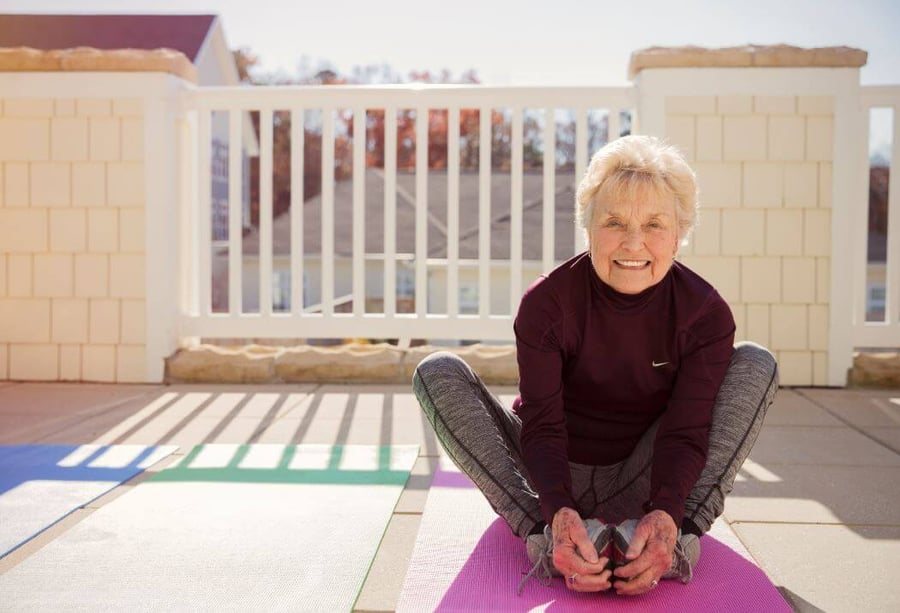
The best communities employ certified fitness professionals who understand the specific needs of older adults. That means exercise classes designed to improve balance, build functional strength, and increase mobility, the things that help your parent get out of a chair confidently, walk without fear of falling, and maintain independence longer.
Look for communities that offer a range of options:
-
Group fitness classes like chair yoga, stretch and strength sessions, or walking clubs
-
Guided one-on-one sessions tailored to a resident's current ability level
-
Partnerships with physical therapy providers for residents recovering from surgery or managing chronic conditions
-
Resident-led fitness clubs where neighbors motivate each other
This isn't about intensity; it's about consistency and professional oversight. A resident who participates in guided movement three or four times a week can see measurable improvements in strength and balance within months.
Want a deeper dive into staying physically vibrant? Download our free guide to active, healthy living for seniors.
What Does Cognitive Wellness Look Like Beyond Word Searches?
Cognitive health doesn't hold still. The brain responds to stimulation, novelty, and social interaction, and it responds to the absence of those things, too. Research suggests that older adults who regularly engage in new learning activities may experience slower rates of cognitive decline compared to those who don't.
That's why the strongest wellness programs include structured cognitive engagement, not just puzzle books left on a table, but programming with intention and variety:
-
Music therapy programs that use rhythm, melody, and participation to activate memory and emotional response
-
Discussion groups and current events circles that encourage critical thinking and social exchange
-
Creative arts programming such as painting, writing, and storytelling that challenges the brain in different ways
-
Technology classes that introduce new skills and keep residents connected to loved ones
Neuroscience research shows that the brain remains remarkably adaptable well into our 70s and beyond. Learn more about what that means for your parent's cognitive health. The takeaway is clear: cognitive wellness isn't about preserving what's left. It's about continuing to build.
For families exploring memory care specifically, ask how cognitive programming is adapted for residents living with dementia. The best communities use evidence-based approaches, including music therapy and sensory engagement, designed to meet each person where they are.
Why Do Spirit and Connection Predict Longevity?
Spirit and connection are the dimensions families most often overlook during their search. They focus on medical care, meals, and safety, all essential, but forget to ask about the things that give a day meaning.
Wellness programs that address the whole person include:
-
Spiritual and reflection programming such as meditation, devotional groups, chaplain visits, or quiet spaces for contemplation
-
Social gaming and recreation that brings residents together around shared interests like card tournaments, trivia nights, and gardening clubs
-
Volunteer opportunities and intergenerational activities that reinforce a sense of purpose
-
Health education workshops that empower residents to understand and participate in their own well-being
Communities in the Suwanee, Peachtree Corners, and Roswell areas that invest in these dimensions aren't just filling time. They're building the kind of environment where residents feel like they belong, and belonging, it turns out, is one of the most powerful predictors of health.
How Should You Compare Wellness Programs During Your Search?
As you visit assisted living and memory care communities across Gwinnett County, Forsyth County, and the surrounding areas, from Buford and Lawrenceville to Milton and Norcross, use these questions to evaluate what you're seeing:
-
Is there a dedicated wellness director or team? A single activities coordinator is very different from a team that includes fitness professionals, engagement specialists, and therapy partners.
-
How are programs tailored? Ask how the community adapts wellness offerings for residents with different abilities, including those living with dementia.
-
What does participation look like? Request data or anecdotes about how many residents regularly engage. High participation suggests programming that residents actually value.
-
Is wellness woven into daily life or scheduled in a silo? The best programs aren't confined to a single hour. They're part of how the community operates from morning to evening.
-
Can residents improve, not just maintain? Ask for examples of residents who gained strength, re-engaged socially, or showed cognitive improvements after moving in.
These questions will help you move past the glossy brochure and understand what a community is actually delivering.
Your Parent Deserves More Than Maintenance
The right wellness program doesn't just keep your parent safe. It helps them feel stronger, sharper, and more connected than they may have felt in years. That's the difference between a community that manages decline and one that actively supports growth.
If you're exploring senior living options near Suwanee, GA, we'd love to show you how wellness works at our community, from certified fitness programming to music therapy, cognitive engagement, and everything in between. Schedule a tour today!