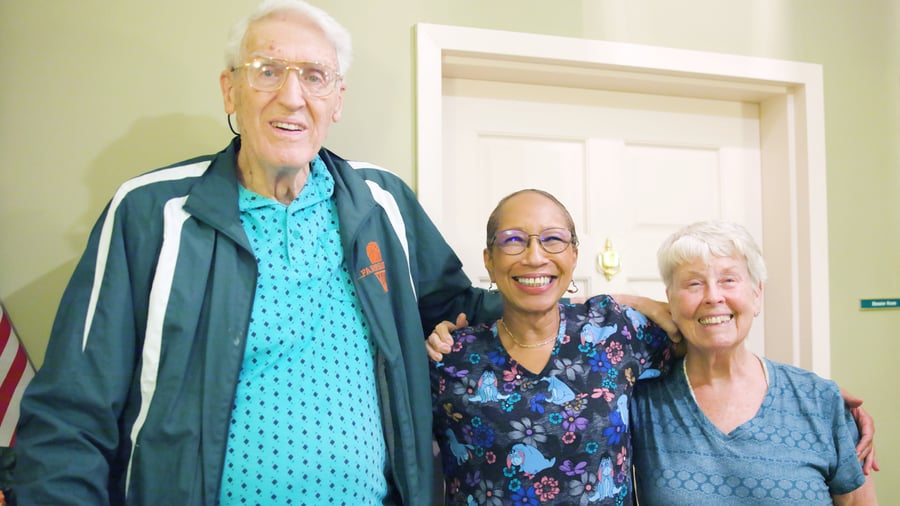
You've had the same morning routine for years, maybe decades. Coffee in the same mug. The news at the same time. A glance out the same window. It's familiar and comfortable, and there's nothing wrong with that.
But somewhere along the way, the phone stopped ringing as often. The neighbors you used to chat with moved away or aren't around anymore. The days started blending together, and it got harder to remember the last time you laughed with someone over something silly.
If that sounds familiar, you're not alone. And if you've ever thought, I'm too old to make new friends, it might be time to rethink that.
How Common Is Loneliness Among Older Adults?
Here's a number worth sitting with: the National Academies of Sciences, Engineering, and Medicine found that more than one-third of adults aged 45 and older feel lonely, and nearly one-fourth of adults 65 and older are considered socially isolated. For people living alone in communities around Naperville, IL, and throughout DuPage County, those numbers can feel personal.
Loneliness isn't just an emotion. It affects your health. A 2023 advisory from the U.S. Surgeon General compared the health effects of chronic loneliness to smoking up to 15 cigarettes a day. Meanwhile, research published in PLOS Medicine found that strong social connections are associated with a 50 percent increased likelihood of living longer.
Friendship isn't a luxury at any age. It's essential.
But knowing that doesn't make the idea of walking into a new place and meeting strangers any less daunting. Let's talk about what actually happens when people make that move.
What Moments Spark Friendships in Senior Living?
Here's what surprises most people about senior living: the friendships don't usually start at organized events or big group outings. They start in the in-between moments.
A compliment on a cardigan in the hallway. Sitting near someone at breakfast who happens to love the same old detective shows. Noticing that the person two doors down always has classical music playing softly.
In a community setting, you're naturally around people throughout the day, not because someone scheduled it, but because that's how daily life works. You share a dining area, a garden path, a reading nook. These small, repeated interactions are exactly what researchers call "proximity and frequency," and they're the two most powerful ingredients in forming friendships at any age.
Living alone, you might go days without a meaningful conversation. In a senior living community near Naperville, you'd have to try pretty hard to avoid one. There's a richness to daily life that families don't always see, from quiet cups of tea shared between neighbors to inside jokes that develop over weeks, to someone saving you a seat because they noticed you like the chair by the window.
How Do New Residents Get Welcomed?
One of the biggest fears about moving to a new community is that first day, and the days right after. Everything is unfamiliar. You don't know where anything is. You don't know anyone's name.
Many senior living communities understand this deeply, which is why resident ambassador programs exist. These are fellow residents, people who've already been through the transition themselves, who volunteer to welcome new neighbors. They might knock on your door to introduce themselves, invite you to sit with them at meals, or simply walk with you to an activity so you don't have to find the space on your own.
It's not a formal program with clipboards and checklists. It's a neighbor being kind because they remember exactly how it felt to be the new person. That kind of warmth makes the unfamiliar start to feel comfortable much sooner than you might expect.
The staff play a role too. In communities offering assisted living and memory care, team members often know residents by name within the first week. They notice if someone seems quiet or uncertain, and they gently create opportunities for connection, introducing people with shared interests or encouraging someone to try a group they might enjoy.
Can Shared Hobbies Lead to Real Friendships?
You don't have to be outgoing to make friends. You don't have to be the person who tells stories at the dinner table or leads the conversation. Some of the strongest connections in senior living form between people who are simply doing something they enjoy, side by side.
Book clubs. Gardening groups. Painting classes. Chair yoga. Card games that somehow stretch from 30 minutes to two hours because nobody wants to leave. These shared activities create a natural way to spend time together without the pressure of making conversation from scratch.
For those exploring what an active senior lifestyle in Naperville, IL, might look like, it helps to know that many communities offer a wide variety of clubs and programs designed for different interests and energy levels. If you're curious about the kinds of activities that fill a typical week, this guide to recreation in retirement is a helpful place to start.
The beautiful thing is that nobody expects you to do everything. You can try one thing, see how it feels, and go from there. Friendship at this stage doesn't require a packed social calendar. It just needs an open door and the willingness to walk through it when you're ready.
What If You're Still Not Sure About Leaving Your Current Living Situation?
That's completely understandable. The thought of leaving a place where every corner holds a memory is hard. Nobody should rush you, and nobody should minimize what that feels like.
But it's worth asking yourself an honest question: How many hours did I spend talking to someone today? Not on the phone for five minutes with a family member checking in, but really talking. Laughing. Sharing a thought that's been on your mind.
If the answer makes you pause, that's worth paying attention to.
Comparing life on your own with life in a community often reveals gaps that aren't about care or safety. They're about connection. About having someone nearby who's glad to see you. About mattering to people beyond your own family.
Senior living communities in the Naperville area, including those serving families from Wheaton, Lisle, Glen Ellyn, Warrenville, and throughout DuPage County, are designed to make that kind of connection possible every single day.
How Can You Take the Next Step?
You don't have to be a social butterfly. You don't have to change who you are. You just have to be open to the possibility that the next chapter might include people you haven't met yet, people who'll make your days brighter in ways you can't predict.
If you or someone you love is weighing this decision, we understand how much courage it takes. For families exploring whether the move makes sense, this free resource on senior living versus staying at your current residence can help you think through what matters most, including the social benefits that so many families wish they'd discovered sooner.
The best friendships of your life might still be ahead of you. And that's a wonderful thing to look forward to.