

What You'll Learn
If you're thinking about senior care for a parent, you're likely comparing two terms that appear on nearly every senior living website: assisted living and memory care.
They're not interchangeable. They're designed for different needs, staffed differently, and priced differently. Understanding those distinctions matters when you're making a decision for someone you love. Here's a clear breakdown to help you compare.
What Does Assisted Living Provide, and Who Is It Built For?
Assisted living is designed for older adults who are largely independent but need support with some daily activities. That might include help with bathing, dressing, medication reminders, meals, and housekeeping.
Residents in assisted living communities typically:
-
Come and go with relative freedom
-
Manage their own daily schedules
-
Participate in community activities at their own pace
-
Live in private apartments with their own furniture and personal touches
For many families in the Shrewsbury and Tinton Falls area, assisted living is the right fit when a parent can no longer safely manage life on their own but doesn't require round-the-clock supervision. If you're weighing whether a move makes sense at all, it's worth reading about how assisted living compares to in-home care for a fuller picture.
You can also learn more about what assisted living includes in our complete guide.
How Does Memory Care Differ in Purpose, Staffing, and Design?
Memory care is a specialized level of support built specifically for people living with dementia, including Alzheimer's disease. It goes well beyond what assisted living offers, not because assisted living is inadequate, but because dementia creates needs that require a fundamentally different approach.
Here's where the differences become most visible:
Staffing ratios and training. Memory care communities employ higher staff-to-resident ratios. Caregivers receive specialized training in dementia communication, behavioral cues, and de-escalation techniques. This training matters because a person living with dementia may not be able to articulate what they need. Staff must be able to read nonverbal signals and respond with patience and skill. For families who want to learn more, our complete guide to Alzheimer's and dementia care offers a deeper look at what quality dementia support involves.
Safety and security. Memory care neighborhoods are designed with secured entrances and exits to prevent wandering, one of the most common and dangerous behaviors associated with dementia. Hallways are often arranged in loops rather than dead ends, reducing confusion. Visual cues, lighting, and color contrasts are used intentionally to help residents navigate their environment.
Structured daily programming. Rather than offering open-ended activity calendars, memory care programs build routines around cognitive engagement, sensory stimulation, and moments of connection. Activities are adapted to meet residents where they are cognitively, not where they used to be.
Apartment layout. Memory care apartments are typically simpler in layout and designed to minimize confusion. Kitchenettes may be removed for safety. The focus is on creating a calm, secure space that supports orientation.
What Drives the Cost Difference?
Memory care costs more than assisted living, and it's important to understand why. The difference isn't about luxury finishes or square footage. It's about the level of support your parent receives every hour of every day.
The primary cost drivers include:
-
Higher staffing ratios, which mean more caregivers per resident around the clock
-
Specialized dementia training for all team members, not just nurses
-
Secured environments that require specific building design and monitoring systems
-
Tailored programming developed by staff trained in cognitive engagement
In the Monmouth County area, including communities near Lincroft, Colts Neck, Eatontown, and Long Branch, memory care typically costs more per month than assisted living. But families often find that when they factor in the cost of private aides, emergency room visits from falls or wandering, and the toll on family caregivers, memory care can be a more sustainable option.
Download our free guide comparing Alzheimer's and dementia care options for a detailed breakdown to share with your family.
How Do You Know Which Level of Care Fits Right Now?
This is the question families wrestle with most. Your parent may not fall neatly into one category. Dementia is progressive, and the line between "needs some help" and "needs specialized support" isn't always obvious.
Here are signs that memory care, rather than assisted living, may be the better fit:
-
Wandering or getting lost, even in familiar places
-
Difficulty recognizing family members or close friends
-
Increased agitation, anxiety, or sundowning in the late afternoon or evening
-
Inability to follow multi-step instructions, such as getting dressed or preparing a simple meal
-
Safety incidents like leaving the stove on, falling repeatedly, or leaving the residence unattended
-
Assisted living staff expressing concern that your parent needs more support than they can provide
If you're still early in this process and trying to sort through your options, our guide to deciding on senior care for a parent can help you think through the decision alongside your family.
What Does Arbor Terrace Monmouth Offer Families in Shrewsbury?
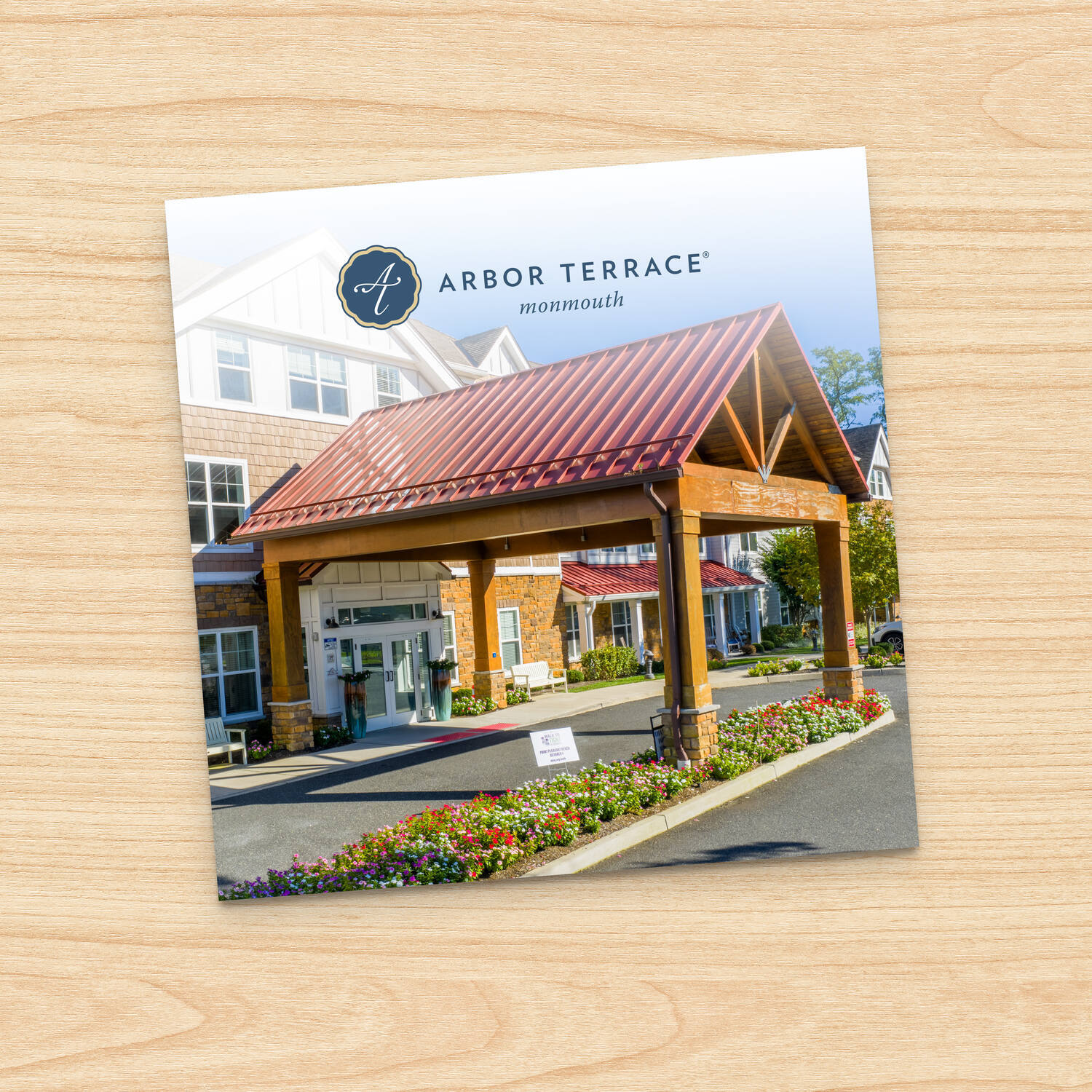
At Arbor Terrace Monmouth, we offer both assisted living and memory care under one roof. This gives families in Shrewsbury, Middletown, Rumson, Little Silver, Oceanport, and throughout Monmouth County the ability to find the right level of support now and adjust as needs change.
Our memory care neighborhood is built around a coordinated care approach that emphasizes meaningful engagement, dignity, and safety for residents living with dementia. Team members receive ongoing, specialized training, not a one-time orientation, so they can respond to each resident's changing needs with confidence and compassion.
Residents in assisted living benefit from tailored support plans, chef-prepared meals, a full calendar of social and wellness programming, and a welcoming community.
What matters most to the families we serve is knowing that their parent is safe, cared for, and genuinely known by the people around them. That's what we work to deliver every day.
Take the Next Step
If you're comparing assisted living and memory care options for a parent near Shrewsbury, NJ, we'd welcome the chance to walk you through what daily life looks like at Arbor Terrace Monmouth. Schedule a tour or a phone conversation with our team. We're happy to answer your questions honestly and help you think through what's right for your family.
Download our free guide comparing Alzheimer's and dementia care options to share with everyone involved in this decision.