

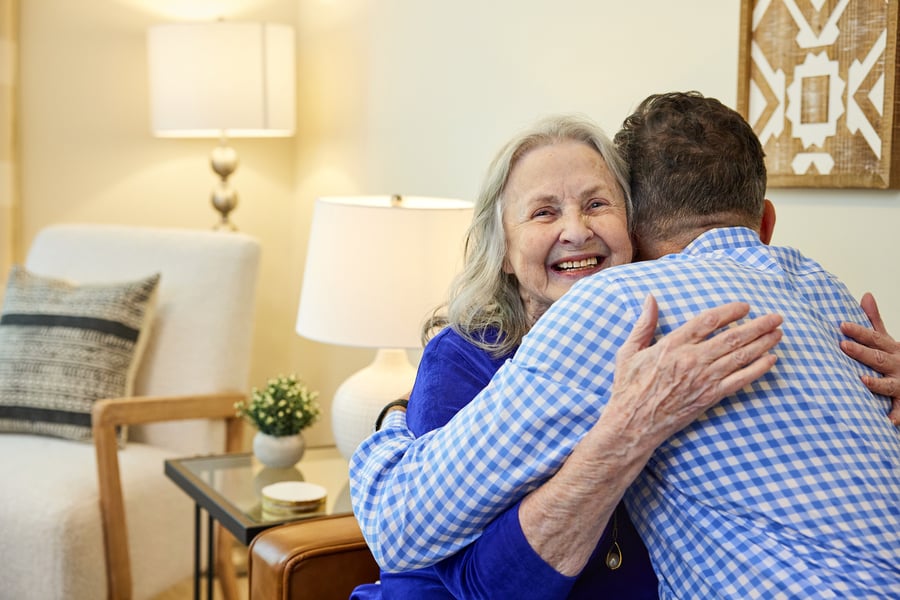
You know their pharmacy number by heart. You've memorized the hours for their doctor's office in Shrewsbury, NJ, even though you live states away. You track storms heading toward the Jersey Shore before your own local forecast. If any of this sounds familiar, you're likely one of the many Americans managing a parent's care from a distance. It's one of the most emotionally complicated roles a family member can take on.
The good news: distance does not equal disengagement. With the right systems, communication habits, and mindset, you can play a meaningful role in your parent's well-being, no matter how many miles separate you. Here's how.
First, Name the Guilt, Then Set It Down
Let's address what many long-distance caregivers carry but rarely say aloud: guilt. The feeling that you should be closer. That a phone call can't replace being there in person. That a sibling or neighbor is doing more than you are.
This guilt is understandable, but it's not a reliable compass. Research from the National Alliance for Caregiving shows that long-distance caregivers often spend more financially on a loved one's care than those who live nearby. They also frequently take on complex behind-the-scenes coordination, including managing insurance claims, researching care options, and handling legal paperwork. These contributions matter, even when they don't look like the hands-on help happening locally.
Distance is a logistics challenge, not a moral failing. Treating it that way frees you to focus on what you can do effectively from wherever you are.
Assemble a Local Team: Your Eyes, Ears, and Advocates
You can't be in Red Bank or Fair Haven every day, but you can build a network of people who are. Think of this as your parent's local support circle, and be intentional about who fills each role.
-
A geriatric care manager (also called an aging life care professional) can serve as your on-the-ground coordinator. They can attend medical appointments, assess your parent's living space for safety risks, and flag changes you might miss over the phone. This is especially valuable if your parent lives independently in areas like Colts Neck or Lincroft, where neighbors may be farther apart.
-
Your parent's primary care physician should know you exist. Ask your parent to sign a HIPAA release so the doctor can speak with you directly. A five-minute call after an appointment can give you information your parent may forget to share.
-
Trusted neighbors and nearby friends are often the first to notice subtle changes: skipped meals, a car that hasn't moved, or mail piling up. Don't be shy about exchanging phone numbers and checking in with them periodically.
-
Local faith communities or senior centers in towns like Tinton Falls, Eatontown, or Long Branch can provide social connection and informal check-ins that supplement your remote caregiving.
Use Technology as a Bridge, Not a Surveillance System
Technology can dramatically reduce the anxiety of distance when used thoughtfully. A few tools worth considering:
-
Video calls remain one of the simplest and most powerful connectors. A weekly FaceTime or Zoom chat lets you see your parent's face, gauge their energy, and maintain emotional closeness.
-
Medication management apps like Medisafe can send reminders and alert you if a dose is missed.
-
Fall-detection wearables provide peace of mind without requiring your parent to do anything after setup.
-
Smart devices such as motion sensors or smart plugs can tell you whether your parent is moving around the house or turning on the coffee maker each morning, offering low-key daily reassurance.
A word of caution: discuss these tools with your parent openly. Framing technology as a way to stay connected rather than keep tabs makes a significant difference in whether they'll accept it.
Navigate Sibling Dynamics Honestly
If you have siblings who live closer to your parent, in towns like Middletown, Oceanport, or Little Silver, tension can build. The sibling nearby may feel overburdened. You may feel excluded from decisions. Both feelings are valid.
A few strategies that help:
-
Divide responsibilities by strength, not geography. The long-distance family member can manage finances, insurance, and research. The nearby sibling can handle transportation and in-person check-ins.
-
Communicate regularly and proactively. A shared group chat or a simple weekly email update prevents the "nobody told me" resentment.
-
Acknowledge each other's contributions. Caregiving isn't a competition, but it can start to feel like one if nobody expresses gratitude.
Don't Overlook the Financial and Legal Details
Long-distance caregiving often comes with hidden costs: flights, hotel stays, lost work hours, and the financial support you may provide directly. A tax professional can help you determine if there are any deductions you may be elligible for pertaining to caregiving.
Beyond taxes, make sure critical legal documents are in place: power of attorney, healthcare proxy, and advance directives. These are easier to arrange before a crisis than during one. Understanding the full picture of senior living costs and funding options can also help you plan ahead.
You're Doing More Than You Think
Long-distance caregiving is demanding in ways that aren't always visible: the mental load of constant worry, the logistics of coordinating across time zones, and the emotional weight of not being there. But your involvement matters. Your phone calls matter. Your planning matters.
If you're beginning to think about what the future might look like for a parent in the Monmouth County area, start by educating yourself. Browse resources on senior living options, talk to your parent about their preferences, and take things one step at a time. Being informed now gives you and your parent more choices later.
Need help starting the senior care conversation with siblings? This free guide walks you through it.