
What You'll Learn
Life near Red Bank, NJ, can get quieter over time. Friends and neighbors move away, the phone rings a little less, and even with family calling every Sunday, the weekdays can feel long.
But new friendships have a way of showing up when you least expect them. They might start over morning coffee, a friendly debate about crossword strategy, or a disagreement over the best bakery in Shrewsbury, NJ.
If you've ever thought, I'm too old to make new friends, it might be time to rethink that. Friendship doesn't have an expiration date, and the connections that form in a senior living community can be a welcome surprise.
Why Is Loneliness a Health Risk for Older Adults?
Before we talk about friendship, let's talk about what happens without it.
A landmark study from Brigham Young University found that chronic loneliness increases the risk of early death by 26 percent, making it as harmful as smoking 15 cigarettes a day. The National Academies of Sciences, Engineering, and Medicine reported that one in four adults over 65 experiences social isolation, and the consequences go well beyond sadness. Isolation is linked to higher rates of heart disease, depression, cognitive decline, and even weakened immune function.
For many older adults living alone in Middletown, NJ, Colts Neck, NJ, or Long Branch, NJ, isolation doesn't arrive dramatically. It creeps in. A skipped lunch here, a canceled appointment there. Over time, the gaps between meaningful human contact grow wider. And those invisible gaps carry risks that don't show up on any checklist.
The good news? Friendship is one of the most powerful antidotes. Research published in the Journal of Social and Personal Relationships found that friendships are a strong predictor of health and happiness in later life. Having just one or two close friends can lower blood pressure, reduce stress hormones, and improve overall well-being.
What If You've Never Been Good at Meeting People?
Here's something worth saying out loud: making friends as an adult is hard for everyone, not just seniors. A 2021 survey from the American Enterprise Institute found that Americans of all ages report having fewer close friends than they did 30 years ago. So if the idea of walking into a dining area full of strangers makes your stomach flip, you're not alone.
What makes community living different from, say, joining a club or attending a church social is something psychologists call the mere exposure effect. Simply put, the more often you see someone, the more comfortable and familiar they become. In a senior living community, you're naturally crossing paths with the same people at meals, in hallways, during activities, and in shared spaces.
You don't have to be outgoing. You don't have to sign up for every event on the calendar. Friendship in this setting often starts with something small: a nod in the hallway, a comment about the weather, a seat saved at a table. Over time, those small moments build into something meaningful.
How Do New Residents Start Feeling Like They Belong?
One of the biggest anxieties about moving somewhere new, at any age, is the fear of not belonging. Will people be friendly? Will I fit in? What if everyone already has their group?
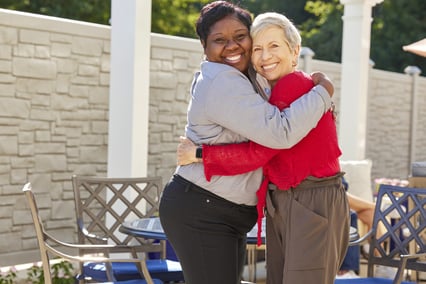
Many senior living communities have recognized this fear and done something thoughtful about it: resident ambassador programs. These are current residents who volunteer to welcome newcomers, introduce them to others, show them around, and simply be a friendly face during those first uncertain weeks.
Think of it less like a formal orientation and more like having a neighbor who says, "Come sit with us." For someone adjusting to a new community, especially after leaving a place full of memories in Fair Haven, NJ, Little Silver, NJ, or Rumson, NJ, that kind of warmth makes all the difference.
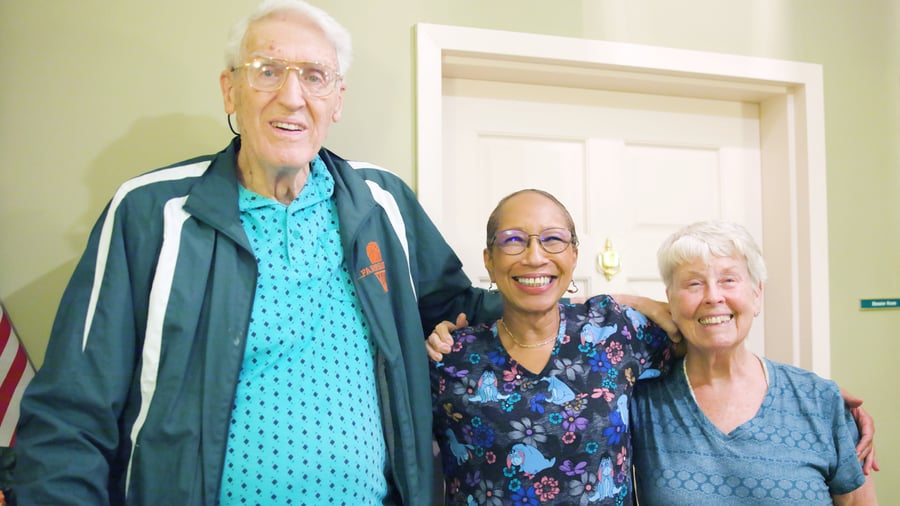
Connections extend beyond fellow residents, too. Volunteers from the broader community build meaningful relationships with residents, adding another layer of friendship that many people never expected.
How Do Shared Activities Lead to Lasting Friendships?
Activities in senior living communities aren't just about filling time. They're designed to bring people together around shared interests, and that's exactly where friendships take root.
Consider how this works: two people who both love gardening end up working side by side in a raised bed. A group of residents discovers they all grew up in Monmouth County, maybe in Eatontown, NJ, Lincroft, NJ, or Asbury Park, NJ, and suddenly there's a lifetime of shared memories to swap. A book club sparks a spirited debate that carries over into lunch.
These aren't forced interactions. They're natural opportunities for connection that simply don't exist when someone is living alone. And when you're comparing in-home care with assisted living in Shrewsbury, NJ, the built-in social fabric of community life is one of the things that's hardest to replicate, no matter how excellent the caregiving.
The variety matters, too. Whether it's art, exercise, cooking, card games, or simply gathering in a cozy common area, there's no single "right" way to participate. Some people thrive in group settings. Others prefer one-on-one conversations over afternoon tea. Both paths lead to friendship.
Is It Normal to Feel Nervous About the Transition?
If you're reading this and still feeling unsure, that's completely understandable. Leaving a place you've lived in for decades is one of the most significant transitions a person can face. No one expects you to walk through the door and instantly feel like you belong.
But here's what residents often say, looking back: "I wish I'd done this sooner."
Not because their old life was bad, but because they didn't realize how much they'd been missing. The casual conversations. The laughter at dinner. The comfort of knowing someone notices when you're having a tough day.
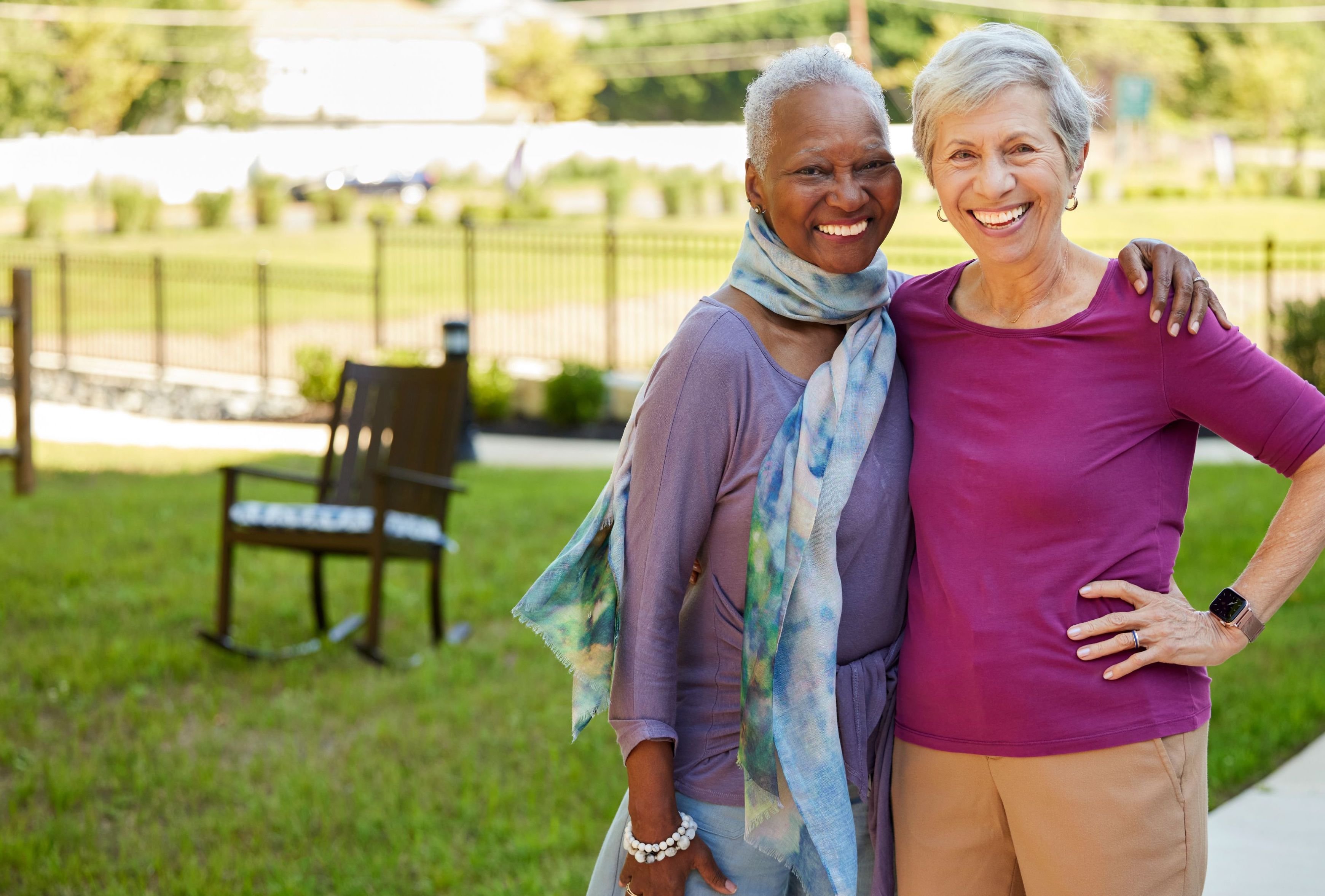
Friendship at 80 or 85 or 90 looks different than it did at 30, and that's perfectly fine. It doesn't require grand gestures or years of shared history. Sometimes it just takes a table for two, a shared smile, and the willingness to say hello.
A Gentle Next Step
If you're curious about staying socially and physically active as you explore what's next, we've put together a helpful guide. Download Stay Active, Stay Young: A Senior's Handbook to Vibrant Living for practical tips on building connection, maintaining wellness, and finding joy in everyday moments.