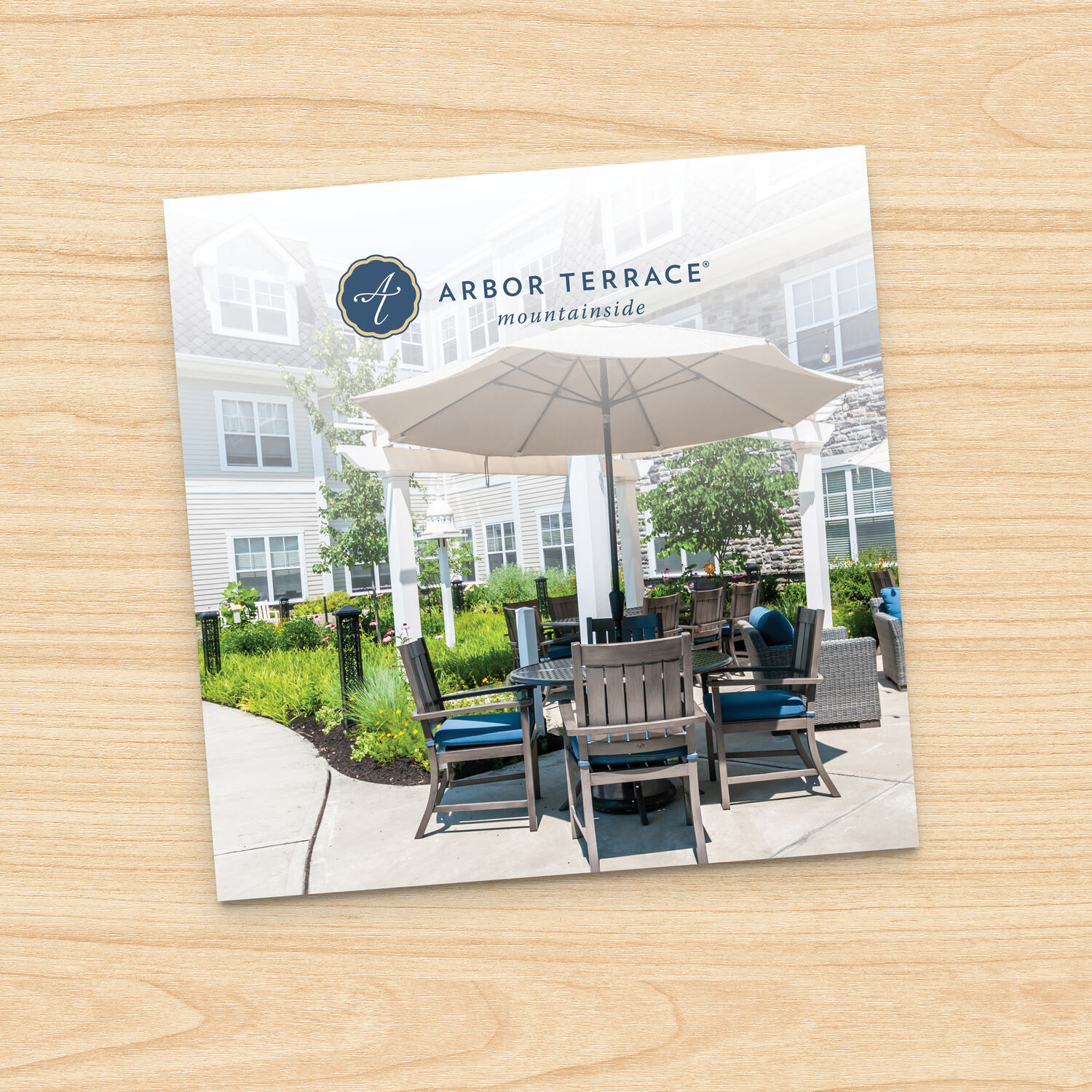

The paperwork is piling up. You've bookmarked a dozen community websites, compared pricing sheets that all seem to use different line items, and you still aren't sure whether your loved one needs assisted living or memory care. If you're caring for a parent with Alzheimer's disease or another form of dementia, our comprehensive caregiver's guide can help you navigate this process. The comparison below will give you a clear, side-by-side look at what separates these two levels of care so you can move forward with confidence.
Families across Union County, from Westfield and Summit to Cranford, Clark, and Springfield, face this same decision. Let's break it down.
What Does Assisted Living Provide, and Where Does Memory Care Begin?
Assisted living is designed for older adults who are mostly independent but need daily support with things like bathing, dressing, medication management, and meal preparation. Residents typically have their own apartment, set their own schedule, and come and go as they please. Social activities, dining, and housekeeping are built in, but the expectation is that residents can navigate their day with moderate help.
Memory care is a specialized form of senior living built specifically for people living with dementia, Alzheimer's disease, or other cognitive conditions. The physical environment, the staffing model, and the daily programming are all designed around the unique needs of someone whose cognition is declining.
Here's one way to think about it: assisted living adapts services to your loved one. Memory care adapts everything, the building, the routines, and the approach, to how your loved one's brain works right now.
At Arbor Terrace Mountainside, families have access to assisted living, our memory care neighborhood, and a Bridges transitional program between the two. That means if your loved one's needs change over time, they don't have to move to a new community.
How Do Staffing and Training Differ Behind the Scenes?
One of the biggest differences between assisted living and memory care isn't always visible during a tour. It's in the staffing.
In assisted living, staff members are trained to help with activities of daily living and to respond to medical needs. The staff-to-resident ratio supports residents who can communicate what they need and follow a general routine.
In memory care, the staffing ratio is significantly higher. Team members receive specialized training in dementia-specific communication techniques, behavioral cues, and de-escalation strategies. They learn how to redirect a resident who is frustrated or confused without causing more distress. They understand sundowning, repetitive behaviors, and how to support someone who may not recognize familiar faces.
At Arbor Terrace Mountainside, the memory care neighborhood uses a coordinated care approach where team members get to know each resident's personal history, preferences, and communication style. That level of familiarity matters, especially for a person living with dementia, where consistency and trust are essential.
Why Is Safety Often the Factor That Tips the Decision?
Safety is usually the reason families begin considering memory care over assisted living. Assisted living communities offer secure buildings, emergency call systems, and staff on-site around the clock. But they are not designed to prevent wandering, and residents are generally free to leave.
Memory care communities are built with safety features that are woven into the design:
-
Secured entries and exits that prevent wandering without feeling restrictive
-
Circular or looping floor plans that allow residents to walk freely without reaching a dead end
-
Consistent visual cues, such as color-coded hallways, clear signage, and familiar landmarks, that reduce confusion
-
Monitored outdoor spaces where residents can enjoy fresh air safely
If your loved one has wandered, gotten lost, or had safety incidents, these features aren't optional. They're essential. Families in Mountainside, New Providence, Berkeley Heights, and nearby communities often tell us that safety concerns are what finally clarified their decision.
What Drives the Cost Difference Between Assisted Living and Memory Care?
Memory care typically costs more than assisted living, and for good reason. The higher staffing ratios, specialized training, secured environments, and structured programming all contribute to the difference.
The national median for assisted living is around $5,350 per month, while memory care averages $6,200 to $7,800 or more depending on location and level of care. In northern New Jersey, costs tend to run higher than the national average for both.
When comparing costs, look beyond the monthly rate. Ask what's included (meals, medication management, activities, and personal care) and what's billed separately. Some communities use tiered pricing that increases as care needs grow; others offer all-inclusive models.
If you're also considering keeping your loved one at home with in-home care, this cost comparison of assisted living vs. in-home care in Mountainside may help you see the full picture.
How Do You Know Which Level of Care Is the Right Fit?
This is the question at the center of every family meeting and late-night group text. Here are some signs that memory care, rather than assisted living, may be the right fit:
-
Your loved one has wandered or become disoriented in familiar places.
-
They need frequent prompting or hands-on help with daily tasks.
-
Behavioral changes (agitation, aggression, or withdrawal) are increasing.
-
They struggle to follow a conversation or recognize familiar people.
-
You or other family caregivers are experiencing burnout.
If your loved one still manages most daily routines independently and their cognitive changes are mild, assisted living may provide the right amount of support for now. If you're still in the early stages of deciding what type of care is needed, this decision-making framework can help you organize your thinking.
This doesn't have to be an all-or-nothing decision. At Arbor Terrace Mountainside, we provide a dedicated memory care neighborhood, and we also offer a transitional level of support for residents whose needs fall somewhere in between assisted living and full memory care.
How Can You Take the Next Step With Confidence?
Comparing assisted living and memory care is one of the most important decisions you'll make for your loved one, and it's not one you have to make alone. If you've determined memory care is the right fit, here's how to evaluate and choose a memory care community in the Mountainside area.
We invite families from across Union County, including Scotch Plains, Fanwood, Garwood, Roselle Park, Linden, and beyond, to visit Arbor Terrace Mountainside and see both our assisted living and memory care neighborhoods in person. A tour gives you a chance to ask questions, meet team members, and get a feel for the environment your loved one would experience every day.
Ready to start evaluating communities? Use our dementia care checklist to make sure you're asking the right questions during tours. Or call our team to schedule a conversation. We're happy to help you think through which level of care fits your family right now.