

In 2023, the Global Council on Brain Health—an independent collaborative of scientists, health professionals, and policy experts convened by AARP—released an updated set of recommendations emphasizing that lifestyle choices matter more than genetics for most people when it comes to cognitive wellness after 70. Their conclusion wasn't that aging doesn't affect the brain. It does. But the pace, severity, and even the nature of cognitive change are remarkably influenced by daily habits. Habits that anyone living in Norwood, Closter, Demarest, or anywhere in Bergen County can start or strengthen today.
This article breaks down the six most impactful areas of brain health, drawn from current neuroscience, and explains what each one looks like in practical terms for older adults.
Rethinking What "Brain Food" Actually Means
The phrase "brain food" has been tossed around for decades, but the science behind it has gotten far more specific. Researchers at Rush University developed the MIND diet—a hybrid of Mediterranean and DASH eating patterns—specifically to target cognitive decline. Their longitudinal study found that participants who followed the MIND diet closely had brains that functioned as if they were 7.5 years younger than their actual age.
What does the MIND diet emphasize?
-
Leafy greens at least six times per week
-
Berries (especially blueberries and strawberries) at least twice a week
-
Nuts, whole grains, fish, and olive oil as staples
-
Limited red meat, butter, cheese, and fried foods
The good news is that the MIND diet doesn't demand perfection. Even moderate adherence showed measurable benefits in the Rush study. The key is consistency over time, not a dramatic overnight overhaul.
Want to dive deeper into age-specific nutrition? Our guide to Eating Healthy as You Age is a helpful place to start.
How Exercise Physically Reshapes Your Brain
Most people understand that exercise benefits the heart. Fewer realize it physically changes the brain. When you engage in aerobic activity—walking briskly, swimming, cycling—your body produces a protein called brain-derived neurotrophic factor (BDNF). BDNF acts like fertilizer for neurons, helping them grow, strengthen, and form new connections.
A 2022 meta-analysis published in Ageing Research Reviews examined 38 randomized controlled trials and found that consistent moderate exercise improved executive function, memory, and processing speed in adults over 65. The effect was strongest when exercise was performed for at least 150 minutes per week, the same threshold recommended by the World Health Organization.
For seniors in northern New Jersey, opportunities for movement are everywhere. Bergen County's parks, walking trails, and community centers offer accessible options year-round. The critical point isn't intensity, it's regularity. A daily 25-minute walk through your Norwood neighborhood does more for your brain than an occasional intense workout.
For a comprehensive look at staying physically active in your 70s and 80s, check out our handbook, Stay Active, Stay Young.
Social Bonds Aren't Optional, They're Neurological
Here's a statistic that may surprise you: a 2020 report from the National Academies of Sciences, Engineering, and Medicine found that socially isolated older adults have a 50% increased risk of developing dementia. That figure rivals smoking as a health risk factor.
Why? The brain is inherently social. Conversation, emotional exchange, and collaborative activity activate multiple brain regions simultaneously—language centers, emotional processing areas, memory networks. When those circuits go underused, they weaken.
Meaningful connection doesn't require a packed social calendar. It can be:
-
A weekly phone call with a close friend or family member
-
Joining a book club or volunteer group in Haworth, Cresskill, or Dumont
-
Participating in a faith community or hobby group
-
Simply sharing a regular meal with someone you enjoy talking to
The emphasis should be on quality over quantity. One deep, reciprocal friendship does more cognitive good than a dozen superficial interactions.
Cognitive Stimulation: Why Novelty Matters More Than Repetition
There's a common misconception that doing the same crossword puzzle every morning is enough to keep your brain sharp. While crosswords aren't harmful, the brain benefits most from novel challenges or activities that push you slightly outside your comfort zone.
Neuroscientists call this building "cognitive reserve." Think of it as the brain's backup system. The more varied and complex your mental engagement, the more pathways your brain develops and the better it can compensate when some pathways naturally weaken with age.
Effective cognitive stimulation includes:
-
Learning a new skill: a musical instrument, a language, a card game you've never played
-
Switching up routines: taking a different route when you walk, cooking a recipe from an unfamiliar cuisine
-
Engaging in strategy-based games: chess, bridge, or certain video games designed for cognitive training
-
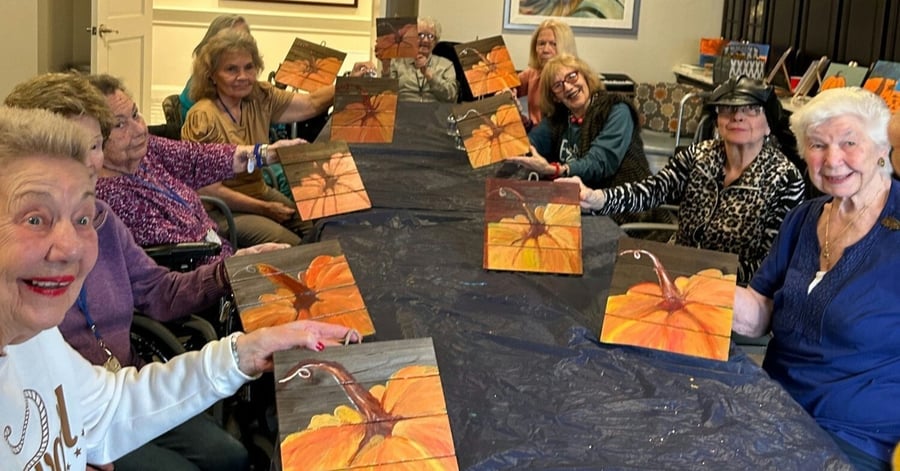
Creative pursuits: painting, writing, woodworking—anything that requires active problem-solving
The common thread is engagement. Your brain grows when it's working on something unfamiliar, not when it's on autopilot.
Sleep: The Brain's Nightly Maintenance Cycle
During deep sleep, the brain activates what scientists call the glymphatic system—a waste-clearance mechanism that flushes out toxic proteins, including beta-amyloid, which is associated with Alzheimer's disease. Without adequate sleep, this cleanup process is disrupted.
A study from the University of California, Berkeley found that older adults who consistently got fewer than six hours of sleep had significantly higher levels of beta-amyloid in their brains compared to those who slept seven to eight hours.
Practical sleep hygiene tips for seniors:
-
Maintain a consistent bedtime and wake time, even on weekends
-
Limit caffeine after noon
-
Keep the bedroom cool, dark, and quiet
-
Avoid screens for at least 30 minutes before bed
-
Talk to a doctor if snoring, restless legs, or frequent waking disrupts sleep
Sleep disorders are treatable at any age, and addressing them can have an immediate positive effect on memory and focus.
Managing Stress to Protect Cognitive Function
Chronic stress floods the brain with cortisol, a hormone that at sustained high levels damages the hippocampus, the brain region most responsible for forming new memories. A study from the journal Neurology found that middle-aged and older adults with elevated cortisol levels performed worse on memory tests and had smaller total brain volume.
Stress management isn't about eliminating stress entirely. It's about building habits that help your nervous system recover:
-
Mindfulness or meditation: Even five minutes of focused breathing can lower cortisol
-
Time in nature: Bergen County's green spaces, from Norwood's local parks to trails along the Palisades—offer accessible stress relief
-
Structured relaxation: yoga, tai chi, or guided imagery
-
Limiting news consumption: especially before bed
The relationship between stress and cognition is bidirectional. As you reduce chronic stress, your brain functions better, and a better-functioning brain handles stress more effectively. If a lack of support services is a stressor in your life, or the life of your senior loved one, read through our list of support resources for seniors near Norwood, NJ.
Where to Start
You don't need to overhaul your entire life to support your brain health. Pick one area from this list—nutrition, movement, social connection, mental challenge, sleep, or stress management—and focus on one small, sustainable change this week. The research is clear: these habits compound over time, and it's never too late to benefit from them.
If you're exploring brain health resources for yourself or a family member in the Norwood, NJ area, our free downloadable guide offers practical strategies to keep your mind sharp. Download our Visual Guide for Keeping an Older Mind Sharp now!