What You'll Learn
When a parent starts showing signs of cognitive decline, the question that keeps many families up at night isn't whether to seek help. It's what kind of help is the right fit. Should you look into personal care, or does your loved one need a dedicated memory care community?
The difference between personal care and memory care isn't just about price. It comes down to staffing, safety features, daily programming, and how well each option supports someone living with dementia. This guide walks through the key distinctions so you can feel confident about the next step for your family.
What Sets Personal Care Apart From Memory Care?
Personal care communities are designed for older adults who need help with daily activities like bathing, dressing, medication management, and meals but who can still navigate their surroundings with relative independence. Residents typically have their own apartments, come and go from common areas freely, and enjoy a calendar of social activities.
Memory care, on the other hand, is a specialized environment built specifically for people living with Alzheimer's disease or other forms of dementia. The physical space, the staff training, and the daily routines are all tailored to support residents whose cognitive abilities have changed significantly.
If you're exploring dementia care options in the Warrington, PA area, understanding these distinctions can help you narrow your search quickly. Learn more about what to look for when evaluating memory care in the Warrington area.
How Do Costs Compare, and What Drives the Difference?
One of the most common questions families ask is why memory care costs more than personal care. The short answer: it takes more resources to provide safe, effective care for someone living with dementia.
Nationally, personal care averages around $4,500–$5,500 per month, while memory care typically ranges from $6,000 to $8,000 or more. In Bucks County, PA, and surrounding communities like Doylestown, Chalfont, and Southampton, costs may vary depending on the community and level of care needed.
What accounts for the higher cost in memory care?
-
More staff per resident. Smaller ratios mean more hands-on support throughout the day and night.
-
Specialized training. Team members receive ongoing education in dementia care techniques, behavioral support, and communication strategies.
-
Secured environments. Building design includes features like controlled access doors, circular walking paths, and visual cues that help residents orient themselves.
-
Structured programming. Activities are designed to engage remaining cognitive abilities rather than simply fill time.
It's worth noting that many personal care communities also offer meaningful cognitive support for residents in earlier stages of dementia, without the full cost of a dedicated memory care setting.
For a deeper look at what's included in senior living costs in the Warrington area, see our detailed breakdown.
When Is Personal Care the Right Fit?
Not every person living with dementia needs memory care right away. In fact, many families in the Warrington and greater Bucks County area find that a well-run personal care community can provide excellent support during the early-to-moderate stages of cognitive change.
Personal care may be a strong option when your parent:
-
Can follow basic daily routines with gentle reminders.
-
Doesn't wander or attempt to leave the building unsupervised.
-
Benefits from social interaction and structured activities.
-
Needs help with medications, meals, and personal hygiene but not constant supervision.
At The Solana Doylestown, the personal care team is trained to recognize and respond to cognitive changes. The community offers coordinated care that adapts as a resident's needs evolve, so families don't have to uproot their loved one at the first sign of progression. This kind of flexibility matters, especially when your parent has already settled into a community and formed relationships with staff and neighbors.
For families searching for senior living in Bucks County, PA, or trying to find personal care in Warrington, PA, asking about a community's approach to cognitive support early on can save you from difficult transitions later.
How Do You Know When It's Time for a Higher Level of Care?
One of the most difficult parts of this process is recognizing when personal care is no longer enough. The transition to memory care often becomes necessary when:
-
Wandering behavior puts your parent at risk.
-
Sundowning episodes become frequent or severe.
-
Your loved one no longer recognizes familiar people or places.
-
Behavioral changes, like aggression or extreme agitation, are difficult to manage in a general setting.
-
Safety incidents (falls, leaving the stove on, getting lost) are increasing.
If you're weighing when to move a loved one to memory care in Warrington, PA, having an honest conversation with the current care team is a good starting point. They can share observations about how your parent functions day-to-day, details that family members may not always see during visits.
How Can You Make This Decision as a Family?
Choosing between personal care and memory care is rarely a one-person decision. Siblings, spouses, and sometimes the person living with dementia all have a voice. That can make the process feel overwhelming, but it also means more perspectives and more support.
A few steps that can help:
-
Tour communities together. Seeing the environment firsthand often answers questions that websites and brochures can't.
-
Ask about care transitions. Find out whether a community can adjust the level of support over time, or if a move to a separate building or community would be required.
-
Talk about finances early. Understanding what's included in monthly costs, and what's considered an add-on, helps you compare options fairly. Start building a financial plan for senior living with our family guide.
-
Bring your questions to the care team. Good communities welcome detailed questions. If a community seems evasive about staffing, training, or costs, that tells you something.
Families in Doylestown, Plumsteadville, Jamison, Hatboro, and the surrounding area have access to a range of senior living options. Taking the time to understand the difference between personal care and memory care puts you in a much stronger position to advocate for your parent.
What's Your Next Step?
If you're comparing dementia care options for a parent near Warrington, PA, the team at The Solana Doylestown is happy to walk you through how personal care works and help you determine whether it's the right fit for your family's situation. We're also straightforward about when a higher level of care, like memory care, might be more appropriate.
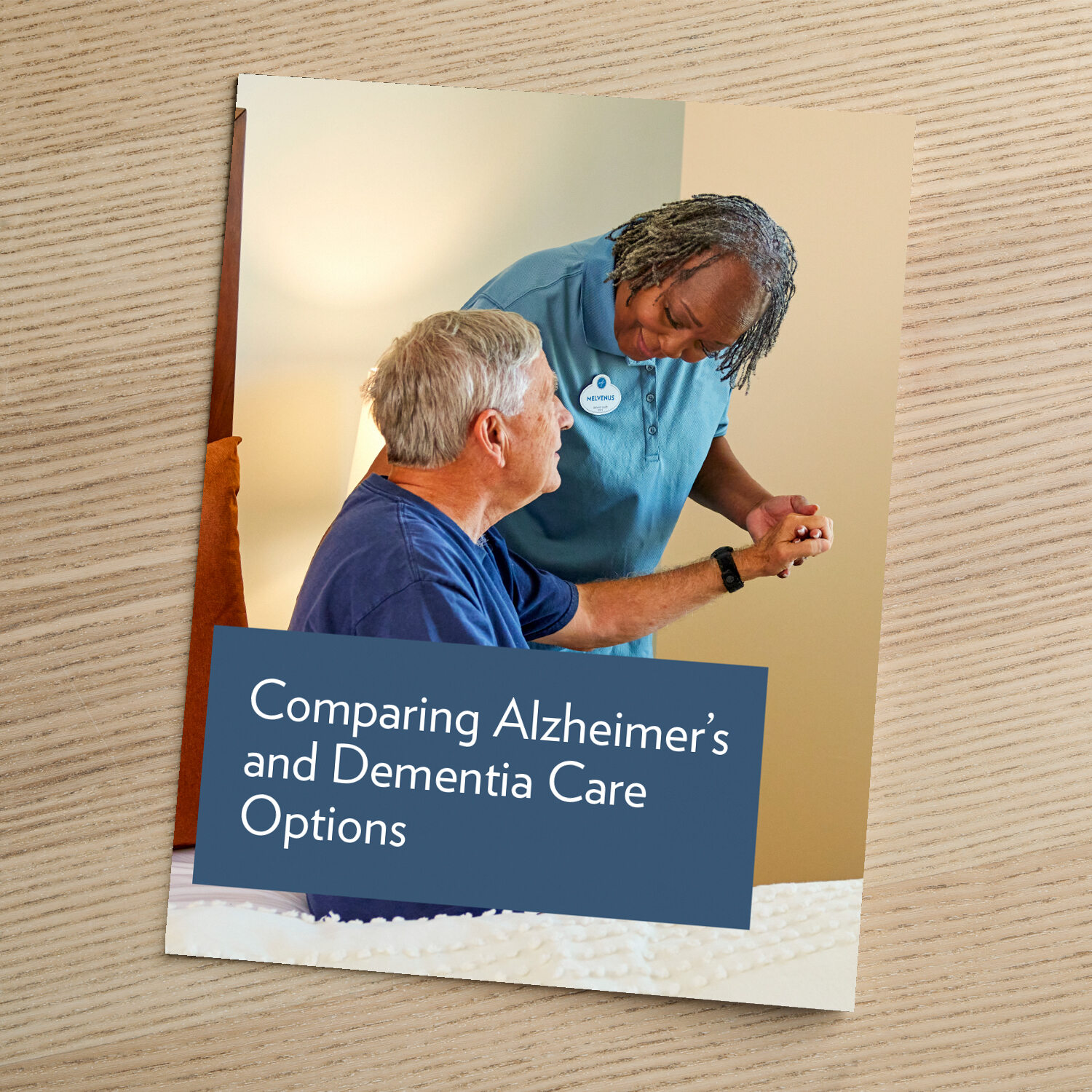
Download our free guide comparing Alzheimer's and dementia care options to help you make the best decision for your family.