

What You'll Learn
Here's a thought experiment. If a new drug hit the market that could reduce the risk of dementia by 38%, lower depression risk by 27%, and improve overall survival odds by 50%, it would make national headlines. Doctors would rush to prescribe it. Insurance companies would scramble to cover it.
That intervention already exists. It's called social connection, and it doesn't come in a bottle.
A growing body of research is reshaping how healthcare professionals, families, and senior living communities think about wellness in later life. The evidence is clear: social wellness isn't a nice extra. It's foundational infrastructure for healthy aging.
For families in the Warrington, PA, area and throughout Bucks County who are watching a parent or loved one become more withdrawn, this research offers both a wake-up call and a roadmap.
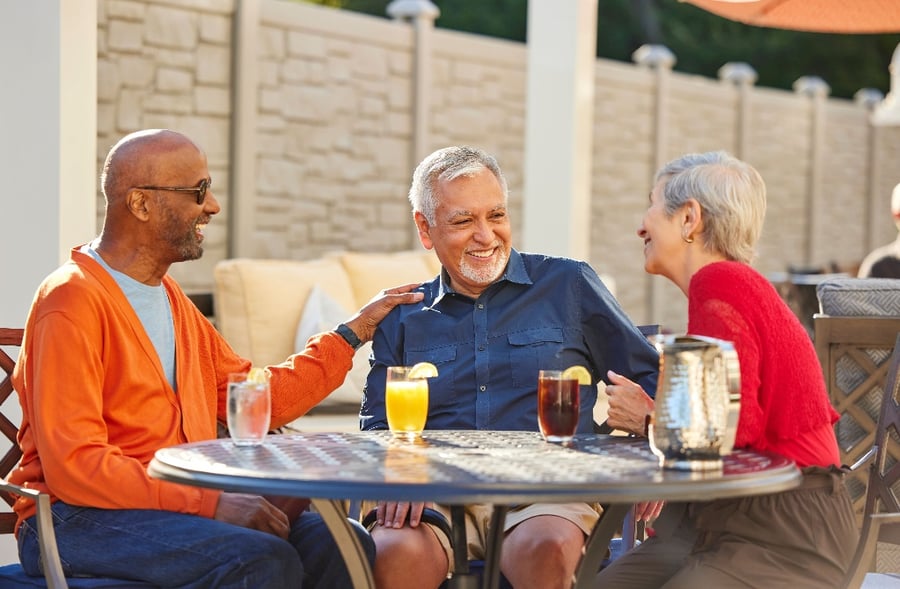
How Does Social Connection Carry the Weight of a Vital Sign?
According to research supported by industry experts including the VP of Engagement at The Arbor Company, Brandi Blizzard, and compiled in a comprehensive report from LifeLoop, the health outcomes tied to social connection are staggering:
-
Strong social relationships are associated with a 50% greater odds of survival. That's a bigger effect than many common medical interventions.
-
Social connection is linked to a 38% reduced risk of dementia, a finding that carries particular weight for families concerned about cognitive decline.
-
Higher social connectedness is associated with a 27% reduced risk of depression and an 18% reduced risk of anxiety.
These numbers represent a growing consensus across gerontology, public health, and behavioral science that social wellness belongs alongside blood pressure, cholesterol, and blood sugar as a measurable health indicator.
For families in areas like Doylestown, Chalfont, and Southampton who may be exploring memory care or personal care options, the takeaway is significant: the social environment where a loved one lives may influence their health trajectory as much as their medication list.
Why Does the Isolation Crisis Go Unnoticed?
If social connection is this powerful, isolation is the opposite, and it's far more common than most families realize.
Consider these data points:
-
Nearly 24% of adults age 65 and older are socially isolated.
-
43% of adults age 60 and older report feeling lonely.
-
Social isolation has been compared to the health impact of smoking up to 15 cigarettes a day.
-
Living alone increases mortality risk by 32%.
The challenge is that isolation rarely looks dramatic. It builds slowly. A parent in Warrington or Hatboro stops driving to lunch with friends. A widowed family member in Ivyland lets their club memberships lapse. The house stays clean, the medications stay organized, but the phone stops ringing, and the calendar empties out.
What makes this so difficult for families is that the health risks of living alone as we age don't announce themselves. There's no lab test for loneliness. No alarm goes off when someone hasn't had a meaningful conversation in four days. The decline is gradual, quiet, and easy to miss until it isn't.
Why Isn't Being Around People the Same as Being Connected?
One of the most important insights from current social wellness research is this: proximity alone doesn't solve the problem.
Moving a parent closer to family doesn't automatically create connection. Living in a neighborhood full of people doesn't prevent loneliness. Even attending a weekly event doesn't guarantee meaningful social engagement.
Connection requires design. It requires someone thinking carefully about how to match people with shared interests, how to create low-barrier entry points for participation, and how to support people across different levels of ability.
This is one of the key shifts happening in senior living right now. The best communities aren't treating social programming as entertainment. They're treating it as a health intervention with intentional structure, trained staff, and measurable outcomes. When daily engagement supports emotional wellness, it's because someone designed it to do exactly that.
That distinction matters whether a family is exploring personal care options near Richboro or memory care near Jamison.
How Are Senior Living Communities Already Delivering This?
Here's what often gets lost in the conversation about aging in place versus senior living: communities designed for older adults are already building the infrastructure that this research calls for.
Think about what it takes to maintain consistent social connection when living alone:
-
Someone has to plan activities.
-
Someone has to provide transportation.
-
Someone has to notice when a person withdraws.
-
Someone has to adapt programming for people with cognitive or physical limitations.
That's an enormous amount of coordination, and it's exactly what senior living communities do every day. From memory care neighborhoods supporting people living with Alzheimer's disease to personal care settings where residents maintain more independence, the framework for connection is already embedded in the daily rhythm.
This applies across every level of care. Wellness programs that support the whole person, including physical, cognitive, emotional, and social needs, reflect the same holistic approach that this body of research supports. Social wellness isn't a separate category. It's woven into everything.
What Can Families in the Warrington Area Do With This Information?
If you're reading this because you've noticed changes in a parent, such as fewer phone calls to friends, less interest in going out, or a growing sense that they're simply going through the motions, trust that instinct. The research validates what you're feeling.
Here are a few steps worth considering:
-
Pay attention to social patterns, not just physical health. Ask your parent who they talked to this week. When did they last leave the house for something other than a medical appointment?
-
Understand that willpower isn't the issue. Telling a parent to "get out more" doesn't address the structural barriers like transportation, mobility, hearing loss, or the loss of a social circle. Connection has to be made accessible.
-
Learn about what senior living communities actually offer. The reality often looks very different from what families imagine. Many senior living communities in Bucks County are designing their programs around exactly the kind of evidence outlined here.
-
Start the conversation early. You don't need to have all the answers. You just need to start asking questions of your parent, your family, and the communities in your area.
Social wellness isn't a luxury that gets added after the "important" health needs are addressed. It is the important health need that too many families overlook until it's already taken a toll.
For more on how staying socially and physically active supports healthy aging, download our free guide. It's a practical resource for families who want to understand what active, connected aging can look like.


.jpg?width=1500&height=1941&name=DOY-Everything%20You%20Need%20to%20Know%20About%20The%20Solana%20Doylestown1%20(1).jpg)