
When your parent is living with a chronic condition like heart disease or diabetes, every day brings a long list of must-dos: medications taken on time, blood sugar or blood pressure checks, the right meals in the right portions, and regular exercise. If you're managing all of this from a distance — or even from across town — you know how quickly things can slip through the cracks.
You're not alone in worrying. Many families in the West Chester, PA area face the same question: Is it safer for Mom or Dad to keep managing this at home, or would a senior living community do a better job of keeping them healthy?
The answer depends on your parent's specific needs, but understanding what assisted living offers for chronic disease management can help you make a more confident decision.
A note about terminology: In Pennsylvania, what most people call "assisted living" is officially known as "personal care." The services are very similar — help with daily tasks, medication management, and more. If you'd like to understand the distinction, this guide on the difference between personal care and assisted living in West Chester breaks it down clearly.
The Daily Challenges of Managing Chronic Conditions at Home
Heart disease and diabetes are two of the most common chronic conditions among older adults. Both require consistent, daily management — and both can become dangerous quickly when something is missed.
Here's what families often struggle with when a parent manages a chronic condition at home:
-
Medication complexity. Many seniors take multiple medications at different times of day. Missing a dose of blood pressure medication or taking too much insulin can lead to a medical emergency.
-
Dietary needs. Heart-healthy and diabetic-friendly diets require careful meal planning. When a parent lives alone, it's easy to skip meals, rely on processed foods, or eat portions that aren't appropriate.
-
Monitoring vital signs. Blood pressure, blood glucose, and weight all need regular tracking. Without someone there to help, readings get missed — and warning signs go unnoticed.
-
Social isolation. Chronic illness can make a parent less likely to leave the house, leading to loneliness and depression, which in turn worsen health outcomes.
-
Emergency response. If a diabetic episode or cardiac event happens at 2 a.m., who is there to help?
If any of these scenarios sound familiar, you're right to explore other options. It doesn't mean you've failed as a caregiver — it means you're looking for a better support system.
How Assisted Living Communities Support Chronic Disease Management
Assisted living (or personal care) communities are designed to provide exactly the kind of structured, daily support that chronic conditions demand. Here's how that typically works:
Medication Management
One of the biggest advantages of community living is professional medication oversight. Trained staff members ensure that medications are taken correctly and on schedule — every single day. They also watch for side effects and communicate changes to your parent's healthcare providers.
For a parent managing both heart disease and diabetes, this alone can be life-changing. No more pill organizers left untouched on the kitchen counter.
Nutrition-Focused Dining
Most assisted living communities employ dietary professionals who design menus with residents' health conditions in mind. That means heart-healthy, low-sodium options and diabetic-friendly meals are part of the regular dining program — not an afterthought.
Your parent gets nutritious, well-balanced meals three times a day, plus snacks, without the burden of grocery shopping or cooking. And because meals are served in a communal dining room, they also become a social activity.
Vital Sign Monitoring and Health Tracking
Staff can regularly check blood pressure, blood sugar levels, and weight. More importantly, they know your parent's baseline numbers and can spot concerning trends early — before a small change becomes a hospital visit.
This kind of consistent monitoring is nearly impossible to replicate at home unless you have a full-time caregiver.
Coordination With Healthcare Providers
Assisted living communities serve as a hub for your parent's care. Staff coordinate with physicians, specialists, pharmacies, and even visiting healthcare providers to make sure everyone is on the same page.
For families in the West Chester and Chester County area, this coordination means fewer missed appointments, better communication between providers, and a clearer picture of your parent's overall health.
Physical Activity and Wellness Programs
Exercise is a cornerstone of managing both heart disease and diabetes. But for many seniors living alone, staying active feels daunting or even unsafe.
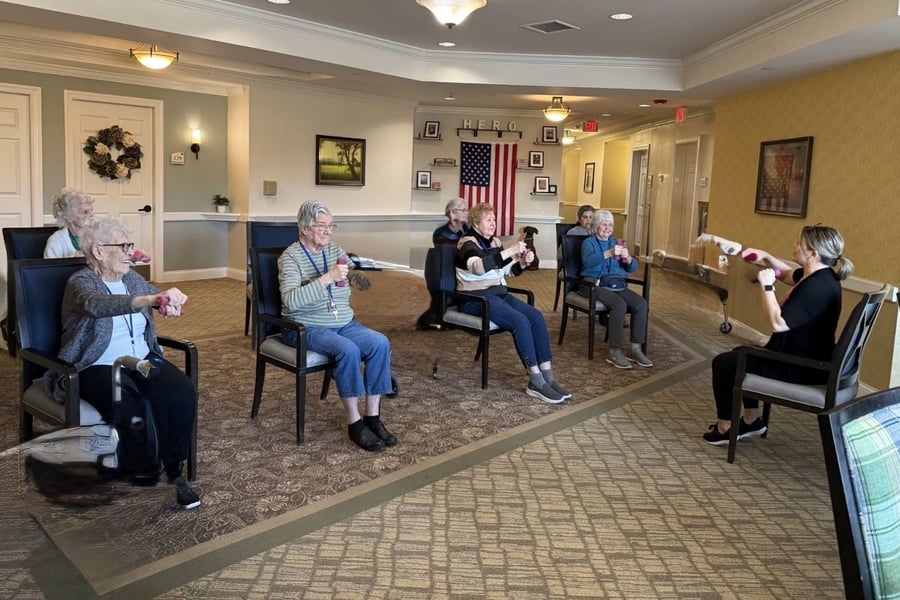
Assisted living communities typically offer structured fitness programs tailored to older adults, including options for residents with chronic conditions. Some communities even partner with rehabilitation providers to offer on-site physical therapy and wellness programming.
Assisted Living vs. Home Care vs. Skilled Nursing: Which Is Right?
This is one of the most important questions families wrestle with. Here's a simple framework to help you think it through:
| Option | Best For | Chronic Disease Support |
|---|---|---|
| Home care | Seniors who need occasional help but are mostly independent | Limited — depends on hours and caregiver training |
| Assisted living / Personal care | Seniors who need daily support with medications, meals, and monitoring | Strong — built into the daily routine |
| Skilled nursing | Seniors who need medical care around the clock | Most intensive — includes nursing staff 24/7 |
If your parent's chronic condition is stable but requires consistent daily management, assisted living often hits the sweet spot: enough support to stay safe and healthy, with enough independence to maintain quality of life.
Not sure whether your parent needs personal care or a higher level of skilled nursing? This comparison of personal care vs. nursing homes in West Chester can help you evaluate the right fit.
What to Look for When Touring Communities
If you're starting to visit assisted living communities in the West Chester, PA area, keep these chronic-disease-specific questions in your back pocket:
-
How do you handle medication management? Ask about staff training, protocols for missed doses, and how they communicate medication changes to families.
-
Can you accommodate special diets? Ask to see a sample menu and find out how they handle dietary restrictions for heart disease and diabetes.
-
How do you monitor residents' health? Find out how often vital signs are checked and how changes are communicated to you and to physicians.
-
What happens in a medical emergency? Understand the community's emergency protocols, including how quickly staff can respond and how they coordinate with local hospitals.
-
What fitness or wellness programs do you offer? Look for structured exercise options, especially programs designed for seniors with chronic conditions.
-
How do you coordinate with outside healthcare providers? A good community will actively partner with your parent's doctors, not just wait for you to relay information.
Bring this list on your tours. The answers will tell you a lot about how seriously a community takes chronic disease management.
You Don't Have to Figure This Out Alone
If you've been carrying the weight of your parent's chronic condition management — tracking medications, worrying about what they're eating, wondering if they're safe — it's okay to look for help. Exploring assisted living isn't giving up. It's giving your parent access to a team of people who can provide the consistent, expert support that chronic conditions require.
And it gives you something, too: peace of mind.
Worried about your aging loved one and their chronic health conditions? Our Complete Guide to Personal Care can help ease your concerns and guide you toward the best solutions. This comprehensive guide covers everything you need to know about personal care communities, from what they offer to how to make the transition. Download the guide today to learn about the benefits of personal care, what to expect, and how to find the right community to support your loved one’s health and well-being.