
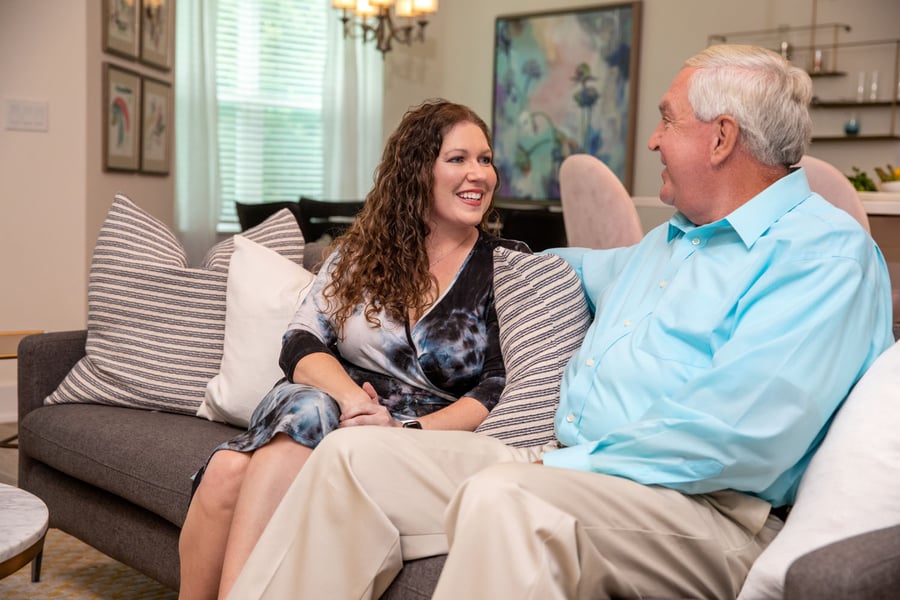
Let's start with something nobody tells you: there is no perfect way to have this conversation. There's no script that guarantees your parent will smile, nod, and say, "You're right, let's do it." But that doesn't mean you should avoid the conversation altogether. In fact, waiting too long often makes it harder for both of you.
If you're a family caregiver in the West Chester area trying to figure out how to bring up personal care with a parent, this guide will walk you through practical approaches, sample language you can actually use, and ways to manage the guilt that so many caregivers carry.
Start by Checking in With Yourself
Before you sit down with your parent, take a moment to examine what you're feeling. Most family caregivers experience a tangled mix of worry, sadness, relief, and guilt, sometimes all at once. You might feel like suggesting personal care means you've somehow failed. It doesn't.
The truth is, recognizing that your parent needs more support than you can provide alone is one of the most responsible things you can do. You're not giving up. You're making sure they get the kind of coordinated, consistent care that's difficult to manage from Malvern, Exton, or King of Prussia while also holding down a career and caring for your own family.
Here's a question worth sitting with: Is the guilt coming from what you actually believe, or from what you think others expect of you? Most caregivers find that once they separate those two things, the path forward becomes clearer.
Picking the Right Moment (and Skipping the Ambush)
Timing matters more than you might think. A rushed conversation during a holiday gathering or right after a health scare can feel reactive, and your parent may shut down before you've even made your point.
Instead, look for a calm, private moment. Maybe over coffee on a quiet Saturday morning or during a regular phone call when you're both relaxed. The goal is to create space for a genuine conversation, not a presentation.
A few practical tips:
-
Don't gather the whole family for an intervention. One-on-one is less intimidating.
-
Avoid leading with a crisis. Even if a recent fall or missed medication prompted your concern, frame the conversation around the future, not the incident.
-
Ask, don't tell. Open with curiosity: "How are you feeling about things at the house?" or "Is there anything that's been harder for you lately?"
If you're still unsure whether it's truly time, our guide 10 Signs Your Parent Could Benefit from Personal Care can help you assess the situation with clarity.
Words That Open the Door: Sample Scripts
The hardest part is often just knowing what to say first. Here are a few conversation starters that feel natural rather than rehearsed:
If your parent values independence:
"I've been thinking about how important it is to you to stay active and in control of your day. I'd love to explore some options in the Chester County area that could actually give you more freedom, not less."
If safety is the main concern:
"I worry about you being alone at night, and I know you don't love that I worry. What if we looked into a community where help is right there if you need it, but you still have your own space and your own routine?"
If loneliness is the issue:
"I've noticed you seem a little more isolated lately, and I hate that for you. Some of the senior living communities near West Chester have so much going on, from classes and outings to people to eat dinner with every night. Would you be open to just learning more?"
Notice that none of these scripts start with "I think you need to move." They start with your parent's experience and what they care about.
When Your Parent Says No (and They Probably Will)
Resistance is normal. Expect it, and don't let it derail you.
Your parent may say things like:
-
"I'm fine right here."
-
"You're trying to get rid of me."
-
"I don't want to live with a bunch of old people."
These responses come from fear: fear of losing control, fear of the unknown, fear that this is the beginning of the end. Your job isn't to win the argument. It's to keep the door open.
Try responses like:
-
"I hear you, and I'm not trying to push you into anything. Can we just agree to look into it together?"
-
"This isn't about what I want. It's about making sure you have the best quality of life possible."
-
"What would need to be true for you to feel good about this kind of change?"
Sometimes the conversation takes multiple attempts spread over weeks or months. That's okay. Planting the seed matters. And if your parent's biggest worry is what life will actually look like after a move, this honest look at what the first 30 days in senior living really look like may help ease their mind, and yours.
Getting Family Members Aligned
If you have siblings or other family members involved in your parent's care, the conversation can get complicated fast. One person may think it's too soon. Another may want to move forward immediately. Someone else may not be involved at all but has strong opinions anyway.
The most productive approach is to talk with family members before talking with your parent, so everyone is at least aware of the concerns. You don't need full agreement. You need enough alignment that your parent isn't getting mixed messages.
Some ground rules that help:
-
Designate a point person for the initial conversation with your parent (usually the family member with the closest relationship).
-
Share specific observations, not opinions. "Mom forgot to take her medication three times this week" is more useful than "I just feel like she can't handle it."
-
Respect different grief timelines. Some family members may need more time to accept the idea.
Navigating different opinions among siblings? Our guide Talking to Your Family About Senior Care and Living offers a framework for getting everyone on the same page while respecting your parent's voice.
What Choosing the Right Community Looks Like
Once your parent is open to the idea, even cautiously, the next step is exploring options together. In the West Chester and Chester County area, families have access to communities that offer everything from personal care to specialized memory care for those living with dementia.
At Arbor Terrace Willistown, we've seen countless families navigate this exact transition. What makes the biggest difference isn't a fancy brochure; it's the feeling your parent gets when they walk through the door. Our team is trained to support not just residents, but the families behind them. From tailored care plans to engaging daily activities, the goal is to help your parent feel comfortable and connected.
We also know that for many families in Downingtown, Berwyn, Media, and Glen Mills, proximity matters. Being close enough for regular visits makes the transition easier for everyone.
You're Not Doing This Wrong
If you've read this far, you care deeply about your parent's well-being. That care is exactly why this conversation feels so heavy. But having it, even imperfectly, is an act of love.
You don't need to have all the answers before you start talking. You just need to start.
For a deeper dive into how to approach these conversations, download our free guide, Talking to Your Parent About Senior Living.