Your parent's doctor just used a phrase you weren't expecting: "You might want to look into some extra support." Now you're up at midnight, searching terms like "personal care" and "nursing home" and the more you read, the more everything blurs together.
You're not alone. These two types of senior care are fundamentally different, but they're often lumped together in casual conversation. Understanding the distinction is one of the most important steps you can take as a family member planning ahead. Let's walk through what sets them apart so you can feel confident about what your parent actually needs, now or down the road.
What Is Personal Care, and Who Is It For?
Personal care is designed for older adults who are mostly independent but need help with some of the basics. Think of things like bathing, dressing, managing medications, or preparing meals. These are activities of daily living (often called ADLs), and when they start to become challenging, personal care steps in.
What makes personal care different from a clinical setting is the environment. Communities that offer personal care are built to feel comfortable and welcoming. Residents typically have their own apartments. They eat meals in a communal dining area, participate in social activities, and come and go with a level of freedom that matches their abilities.
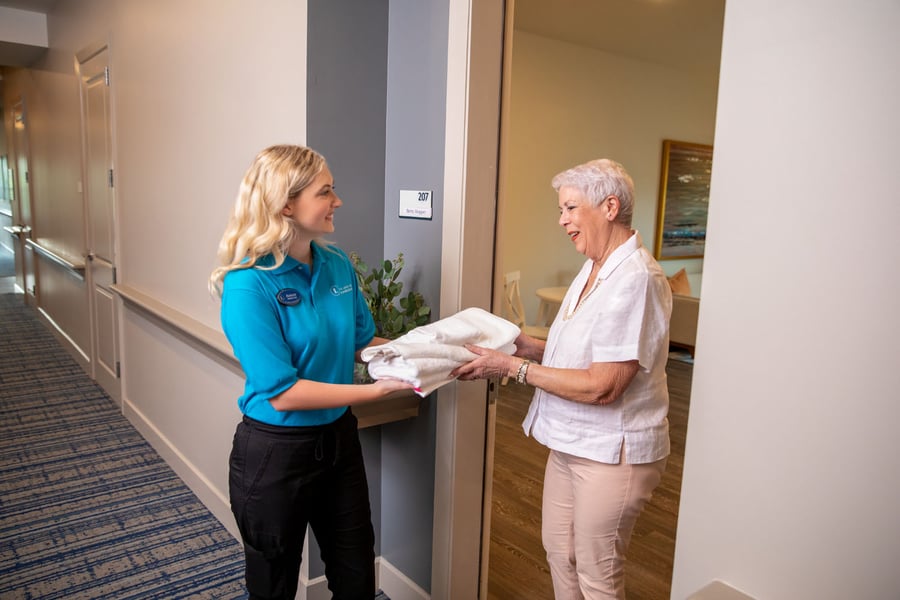
The staff in a personal care community includes trained caregivers who are available around the clock, but the focus is on helping residents maintain their routines and independence, not providing intensive medical treatment. If you're curious about what this actually looks like in practice, see what a typical day in personal care really looks like.
For many families in the West Chester, PA area, as well as surrounding communities like Malvern, Exton, and Media, personal care is the right fit when a parent is healthy overall but struggling with daily tasks or becoming isolated.
How Are Nursing Homes Different From Personal Care?
A nursing home, also called a skilled nursing home, serves a very different population. These communities are for people who need continuous medical supervision, often from licensed nurses or therapists, because of serious health conditions, recovery from surgery or hospitalization, or advanced physical decline.
In a skilled nursing home, you'll find clinical services like wound care, IV therapy, physical rehabilitation, and monitoring of complex conditions. The environment tends to feel more clinical because of the level of medical care provided. Residents often share living spaces, and the daily schedule revolves more around treatments and medical routines.
Skilled nursing homes are regulated differently than personal care communities, with stricter federal and state oversight because of the medical care involved. They're essential for people whose needs go well beyond help with daily activities.
Here's a straightforward way to think about it: if your parent needs help living, personal care is likely the right fit. If your parent needs help healing or managing serious medical conditions, skilled nursing may be necessary.
How Do Costs and Payment Work Differently?
Cost is often one of the first questions families ask, and the answer varies quite a bit between these two options.
Personal care communities in Chester County and the broader West Chester area typically charge a monthly rate that covers housing, meals, activities, and a certain level of care assistance. Costs can range depending on the level of support your parent needs, the size of their apartment, and the amenities offered. Most families pay for personal care through a combination of private funds, long-term care insurance, and veterans' benefits.
Skilled nursing homes tend to cost more than personal care, because of the clinical care involved. One other major difference: Medicare may cover short-term skilled nursing stays (usually following a hospitalization), and Medicaid can help with long-term costs for those who qualify.
Personal care, on the other hand, is generally not covered by Medicare. This is an important distinction that catches many families off guard.
If you're starting to think about the financial side of things, it helps to understand all the options available to you. Learn about the different ways families pay for senior living in West Chester.
What Questions Should You Ask About Your Parent's Needs?
So how do you know which type of care fits your parent right now or might fit in the future? Start by asking yourself a few honest questions:
-
Can your parent manage their medications safely? Forgetting doses or mixing up prescriptions is a common sign that personal care could help.
-
Are they keeping up with personal hygiene? Difficulty bathing, grooming, or dressing often signals a need for daily assistance.
-
Do they have a medical condition that requires ongoing clinical treatment? Conditions requiring regular nursing interventions point toward skilled nursing.
-
Are they socially isolated? If your parent is spending most of their time alone, especially in areas like Downingtown, Berwyn, or Broomall where driving may be their only way to stay connected, personal care can provide built-in community.
-
Have they had recent falls or hospitalizations? A single fall doesn't necessarily mean skilled nursing, but repeated incidents may suggest a need for more structured support.
Many families find that their parent falls clearly into one category when they look at the full picture. And if you want to understand the broader landscape of options explore all the senior care options available in West Chester, PA.
Why Does Planning Ahead Make Such a Difference?
If your parent doesn't need either level of care right now, that's great news — and it's also the best time to start learning. Families who research early tend to make calmer, more informed decisions when the time comes. You avoid the scramble of figuring everything out during a health crisis, and you give your parent a voice in the conversation while they're able to participate.
Having a clear understanding of the difference between personal care and skilled nursing also helps you talk with your parent's doctor, financial advisor, or other family members with confidence. You'll know the right questions to ask and the right terms to use.
No matter where you are in the process, knowledge is the best thing you can give yourself and your family. If you'd like a more detailed look at what personal care involves — including what to expect from the transition, the level of support available, and how to evaluate communities — download our complete guide to personal care for a full breakdown of what to expect. It's a helpful resource to have on hand, whether you need it now or years from now.