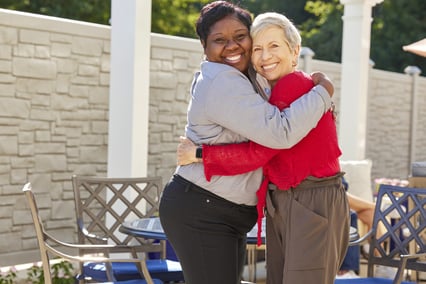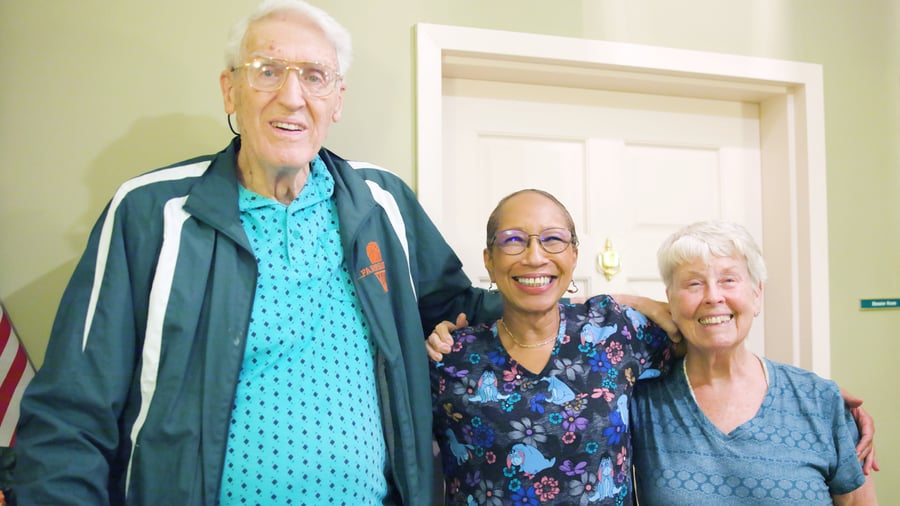
Picture this: it's a Tuesday morning, and you're sitting in a sunny dining room with a cup of coffee. The woman across the table is telling you about the time she sailed around the Florida Keys in 1972. You didn't know her name two weeks ago. Now she saves you a seat at breakfast.
This is the kind of thing that happens in senior living communities — quietly, naturally, and far more often than most people expect. If you've been thinking, "I'm too old to make new friends," you're not alone. But you might also be surprised by what's waiting on the other side of that worry.
Is It Normal to Feel Nervous About Moving to a New Senior Living Community?
Let's talk about what nobody wants to say out loud: moving somewhere new is scary. It doesn't matter if you're 25 or 85. Leaving a place you've known for years—your kitchen, your garden, your neighborhood — stirs up feelings that are hard to put into words.
You might wonder: Will people be friendly? Will I fit in? What if everyone already knows each other?
Those feelings are valid, and they deserve to be honored. Many people moving to a community in Fernandina Beach or the surrounding Amelia Island area carry those same worries. You may be leaving behind a neighborhood in Yulee, Callahan, or even across the state line in Kingsland or Saint Marys, GA. Wherever you're coming from, the anxiety of starting fresh is something almost every new resident shares.
The good news? Most senior living communities know this, and they've built systems to help. Many have resident ambassador programs made up of friendly, outgoing residents who volunteer to welcome newcomers. They'll introduce you around, sit with you at meals, and show you which activity room has the best afternoon light. It's not forced or awkward. It's just someone saying, "I remember how it felt. Let me help."
When you visit a community, don't be afraid to ask about how they help new residents settle in. Here are more great questions to bring along.
Why Does Friendship Come Easier in Senior Living?
There's a concept in social science called the "proximity effect." Researchers have known for decades that the single biggest predictor of friendship isn't shared hobbies or similar backgrounds — it's simply being near someone on a regular basis.
At your current residence, those hours of togetherness can be hard to come by. Days blur together, errands get harder, and the phone doesn't ring as often as it used to. The spaces between visits from family members or neighbors can feel long and empty.
In a senior living community, proximity does the heavy lifting. You see the same faces at meals, in the lobby, and during a morning walk through the courtyard. Conversations happen without having to plan them. Friendships grow in the in-between moments — waiting for an elevator, commenting on someone's puzzle, or sharing a laugh at a movie night.
If you're weighing whether community life might offer more connection than your current situation, this guide compares the two paths side by side.
How Do Shared Activities Help Build Friendships?
You don't have to be a social butterfly to make friends. In fact, some of the strongest bonds form through activities where talking isn't even the main point, like a painting class, a gentle fitness session, a gardening group, or a book club.
The beauty of structured activities is that they remove the pressure. You don't have to walk up to a stranger and introduce yourself. Instead, you're seated next to someone, working on the same project, and following the same instructor. The friendship builds itself around the shared experience.
Many of these activities are even more fun when you discover a friend who shares your enthusiasm. Here are 20 ideas to get started.
Why Is Friendship So Important for Older Adults?
This isn't just about feeling less lonely, though that matters enormously. Research consistently links strong social connections to better health outcomes for older adults.
The National Institute on Aging has linked social isolation to higher rates of heart disease, depression, and cognitive decline. Friendship isn't a luxury. It's a form of care that's just as important as nutritious meals, regular exercise, and good sleep.
When you share a laugh with someone over dinner, or look forward to seeing a familiar face at tomorrow's card game, your body and mind both benefit. For seniors exploring independent living, assisted living, or memory care near Fernandina Beach and Amelia Island, finding a community where these connections happen naturally can make all the difference in day-to-day well-being.
What if You're Not Ready to Dive In?
If you're reading this and still feeling unsure, that's okay. Nobody is asking you to become the life of the party. You can start small with a wave in the hallway, a compliment on someone's sweater, or accepting an invitation to sit at a table instead of eating alone.
Many residents at senior living communities near Nassau County and the greater Amelia Island area say the same thing: "I wish I'd done this sooner." Not because everything was perfect from day one, but because the friendships they found gave them something they didn't realize they were missing.
You deserve to be around people who are glad to see you. You deserve neighbors who notice when you're not at dinner. You deserve to laugh more.
Those friends are out there. You just haven't met them yet.
If you're still weighing whether senior living is the right move, this guide compares the realities of staying at your current residence versus moving to a community.