What You'll Learn
You've probably heard both terms, assisted living and memory care, used in the same breath during your research. Maybe a doctor mentioned one, a friend recommended the other, and now you're left sorting through websites and brochures trying to understand the distinction. Here's what makes it even more confusing: from the outside, these communities can look remarkably similar.
But the differences between assisted living and memory care matter enormously, especially when a loved one is living with dementia. Understanding what each option provides, and what it doesn't, can help your family make a confident, well-informed choice.
If you're exploring senior living communities in the Miami area, including neighborhoods like Coral Gables, Kendall, Coconut Grove, and South Miami, this comparison will help you see exactly where these two levels of care diverge.
What Does Assisted Living Cover, and Where Does Memory Care Pick Up?
Assisted living is designed for older adults who need help with daily tasks like bathing, dressing, medication reminders, and meals but who can still navigate their day with a level of independence. Residents typically have their own apartments, come and go as they please, and participate in activities on their own schedule.
Memory care, on the other hand, is built specifically for people living with Alzheimer's disease, dementia, or other cognitive conditions. It shares some surface-level similarities with assisted living, such as help with daily activities, meals, and social programming, but the underlying philosophy and structure are fundamentally different.
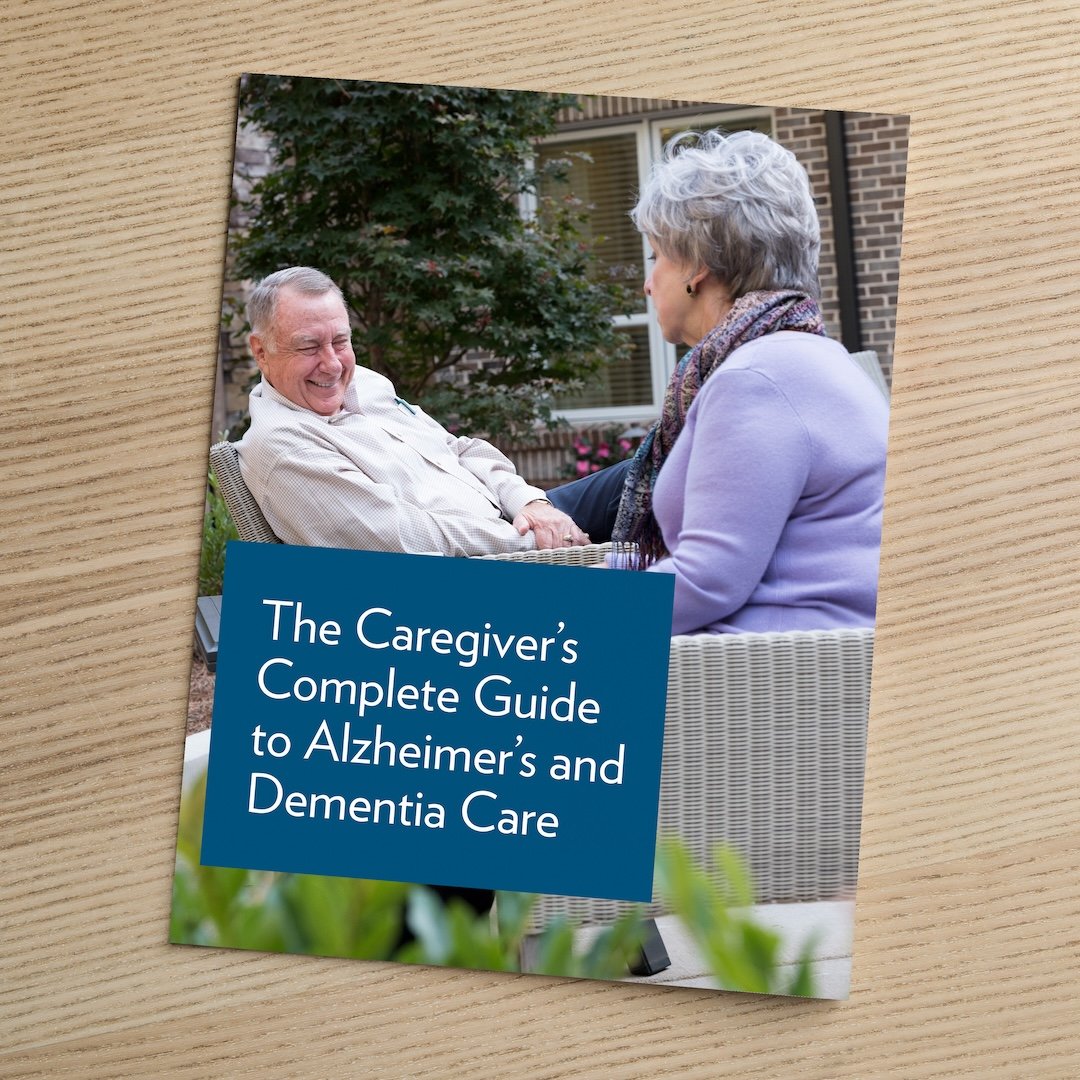
For a detailed comparison of dementia care options, download our free guide.
How Do Staffing and Training Differ Day to Day?
One of the most significant differences between assisted living and memory care isn't visible on a tour. It's in the training each team member receives.
In assisted living, staff members are trained to help with physical needs and general wellness. They're compassionate, skilled professionals. But their training typically doesn't go deep into dementia-specific communication techniques, redirection strategies, or how to recognize and respond to sundowning, agitation, or wandering behaviors.
Memory care staff receive extensive, ongoing training in these areas. They learn how to communicate with a person whose language skills are declining. They understand how to create calm during moments of confusion. And they know how to structure a day so that each activity supports cognitive engagement without causing frustration. A person living with dementia in the early or middle stages may need gentle guidance dozens of times a day, and that requires more hands, more patience, and more expertise.
If your family is still exploring what quality dementia support looks like, you can learn what to prioritize when evaluating memory care in Miami.
Why Do Safety Design and Structure Matter So Much?
Safety is often the factor that pushes families from considering assisted living to seriously exploring memory care. And it's not just about locked doors.
Assisted living communities are designed for people who can orient themselves in space, who know where their apartment is, how to get to the dining area, and when to take their medication. The environment assumes a baseline level of cognitive function.
Memory care communities are designed with a completely different set of assumptions. Hallways may follow circular paths so residents don't reach dead ends that cause confusion. Color-coded cues help with wayfinding. Outdoor spaces are enclosed so residents can enjoy fresh air safely. Exit doors are secured to prevent wandering.
These aren't restrictions. They're thoughtful design choices that allow residents to move freely within a space built to keep them safe. For families near Doral, Brickell, or Little Havana who are weighing dementia care options, this kind of environment can be the difference between constant worry and genuine peace of mind.
What Drives the Cost Difference?
Memory care typically costs more than assisted living, and it's worth understanding why, because the higher price reflects a meaningfully different level of support.
The primary cost drivers include:
-
Higher staffing ratios. More team members per resident means more attentive, responsive care.
-
Specialized training programs. Ongoing dementia education for every staff member adds cost but improves outcomes.
-
Secured environments. Building and maintaining a safe, thoughtfully designed space requires additional investment.
-
Therapeutic programming. Activities like music therapy, sensory engagement, and structured routines require planning, materials, and trained facilitators.
In the Miami area, assisted living costs generally range from $3,500 to $6,000 per month, while memory care can range from $5,000 to $8,000 or more, depending on the community and level of care needed. These numbers vary, so it's always worth asking for a detailed breakdown during your research.
The financial side of this decision is significant, and starting early makes a difference. Consider taking time to start planning financially for senior living as early as possible so your family has more options when the time comes.
How Do You Know Which Level of Care Fits Right Now?
This is the question at the center of everything. And the honest answer is: it depends on where your loved one is today and how quickly their needs are changing.
Assisted living may be the right fit if your loved one:
-
Has mild cognitive changes but can still follow routines independently
-
Doesn't wander or become disoriented in unfamiliar settings
-
Can participate in group activities without significant confusion
-
Needs help with daily tasks but not constant supervision
Memory care may be a better fit if your loved one:
-
Has been diagnosed with Alzheimer's disease or another form of dementia
-
Wanders, gets lost, or becomes confused about time and place regularly
-
Needs help with nearly all daily activities, including eating and toileting
-
Becomes agitated or anxious in unstructured environments
-
Has had safety incidents in a less-supervised setting
Some families find that a community offering both assisted living and memory care, along with a transitional program for early-stage cognitive support, provides the flexibility to adjust as needs evolve. For families in Coral Gables, Kendall, Coconut Grove, or Hialeah, having access to a full spectrum of care under one roof can simplify what is already a complex decision.
What Does Mirabelle Offer Families in Miami?
At Mirabelle in South Miami, families have access to independent living, assisted living, our Bridges program for early-stage cognitive support, and dedicated memory care, all within one community. That means if your loved one's needs change, they don't have to start over somewhere new. The familiar faces, the routines they've built, and the relationships they've formed can stay in place.
We know this decision involves your whole family. We're here to answer questions honestly, walk you through what daily life looks like at each level of care, and help you feel confident about whatever step comes next.
If you're navigating a recent diagnosis and want to understand the full picture, download our comprehensive guide to Alzheimer's and dementia care for families.