What You'll Learn
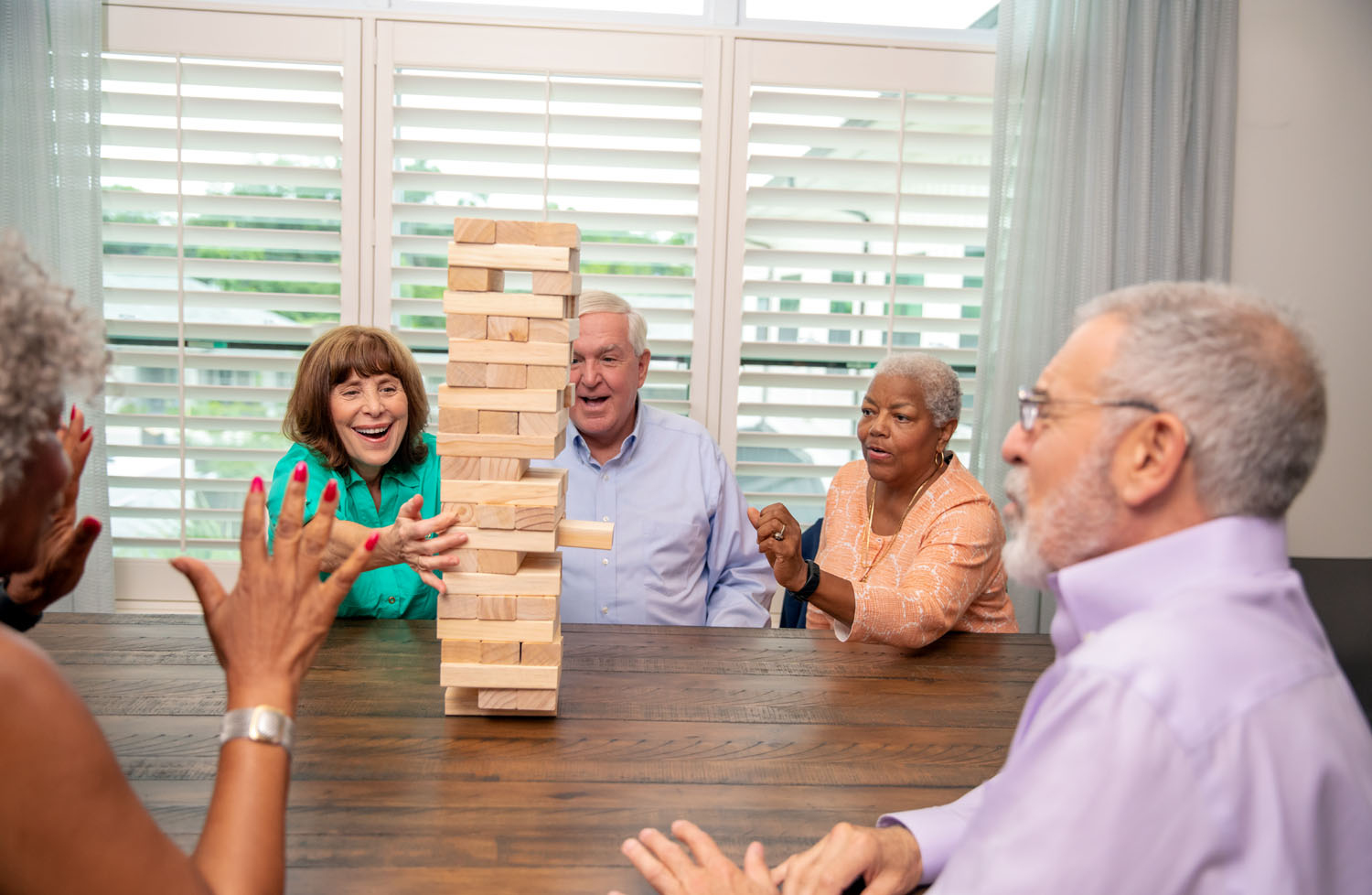
Quiet days can add up. Family calls when they can, but once the phone goes silent, the hours until bedtime can stretch on with no one to talk to. It isn't always unhappiness, exactly, but it can get hard to remember the last time you laughed with someone in the same room.
If that sounds familiar, you're not alone. And if moving somewhere new feels overwhelming, especially the part about meeting strangers, that feeling is completely understandable. But here's what many people discover when they take that step: the friendships that form in a senior living community are often the ones they never saw coming.
How Does Quiet Isolation Add Up When You're Not Looking?
Living independently can feel safe and comfortable. You know where everything is. You have your routines. But over time, the gaps between conversations can grow wider without anyone noticing.
A 2020 report from the National Academies of Sciences, Engineering, and Medicine found that more than one-third of adults over 65 experience loneliness, and nearly one in four adults aged 65 and older are considered socially isolated. The health effects are significant — researchers at Brigham Young University found that chronic loneliness can be as harmful to your health as smoking 15 cigarettes a day.
That's not meant to frighten you. It's meant to say: if you've been feeling disconnected, it's not a personal failing. It's a very common situation, and it's one that community living is designed to address.
If you're weighing whether staying where you are or moving to a community is right for you, this free guide can help you think through the full picture, including the social dimension.
Why Does Nobody Stay a Stranger for Very Long?
One of the most surprising things about life in a senior living community is how naturally connection happens. You don't have to sign up for a friendship. You don't have to be outgoing or the life of the party. You just have to show up — for a meal, a morning walk, or a cup of Cuban coffee in the courtyard.
In Miami, where warmth and culture run deep, senior living communities create spaces where people cross paths every single day. It might be sitting near someone during a music program and discovering you both grew up listening to the same songs. It might be a shared smile over dessert that turns into a standing dinner date.
Research published in the Journal of Personality and Social Psychology has shown that one of the strongest predictors of friendship is simple proximity — being near someone regularly. In a community setting, proximity is built into every hallway, every dining room, and every garden bench. Friendships don't require effort so much as they require opportunity. And community living is full of those.
What Helps When Everything Feels New?
Let's talk about the hardest part: those first few days.
Walking into a new place where you don't know anyone can feel overwhelming. Everything is unfamiliar, and it's okay to feel nervous about that. Almost everyone does.
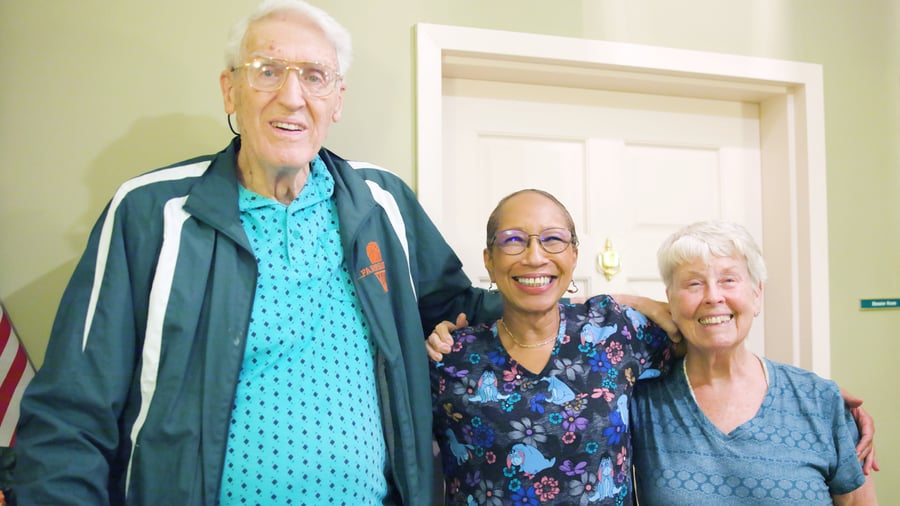
That's exactly why many senior living communities have resident ambassador programs. These are neighbors who've been in your shoes and volunteer to welcome new residents personally. They'll introduce you to people, show you where the best seats are, sit with you at meals, and answer the kinds of questions you might not think to ask the staff.
Having someone who simply says, "Come sit with us" can change everything about those early days. It takes the pressure off you to figure it all out on your own.
If you're exploring communities and wondering what to ask about social life during a visit, here are the questions that actually matter, including ones about how residents connect with each other.
How Does Shared Purpose Build the Deepest Bonds?
Sometimes the best friendships form not over small talk, but over something you care about together.
Community living offers more than social hours and game nights (though those are wonderful, too). Many communities organize activities that give residents a sense of purpose like gardening projects, volunteer efforts, creative workshops, and more.
In the Kendall area, for example, some communities have organized projects like helping shelter dogs find their forever homes — bringing people together around a shared mission. Sometimes the best friendships form when you're focused on helping someone else (even a four-legged someone).
These shared experiences create a kind of connection that's hard to build on your own. When you're working side by side with someone toward something meaningful, conversation flows. Trust builds. And before you know it, you've found your people.
What Does Friendship Look Like at This Stage of Life?
Let's set aside the idea that friendship has to look the way it did at 30 or 50. At this point in life, friendship can be quieter, simpler, and honestly, deeper.
It might look like:
-
A neighbor who saves you a seat at lunch every day
-
Someone who notices when you're not at breakfast and knocks on your door to check in
-
A walking partner who doesn't need to fill every moment with words
-
A group that gathers for coffee every morning and talks about everything and nothing
You don't need a packed social calendar to feel connected. You just need a few people who see you. People who know your name, remember your stories, and care whether you're having a good day.
A Harvard study that followed participants for more than 80 years found that the quality of close relationships was the single strongest predictor of health and happiness in later life. More than wealth, fame, or even genetics. It's not about having dozens of friends. It's about having people who matter to you, and to whom you matter.
What If You're Not Ready to Decide Today?
If you're reading this and still feeling unsure, that's perfectly fine. Nobody is asking you to pack a suitcase tomorrow. The fact that you're even thinking about it shows courage.
The worry about being too old to make friends, about walking into a place where no one knows you, about starting over somewhere unfamiliar is something that nearly everyone who moves to a senior living community experiences. And nearly everyone is surprised by what happens next.
In Miami's vibrant, culturally rich neighborhoods, from Coral Gables to Coconut Grove to Kendall, senior living communities are designed to welcome you from the very first day. With warm staff, welcoming neighbors, and a calendar full of ways to connect (or simply enjoy a peaceful afternoon on your own terms), it's a place where friendship finds you.
Curious what daily life in a senior living community actually looks like? This guide breaks it all down — no pressure, just helpful information whenever you're ready.