

There's a question that doesn't come up often enough when families talk about aging: How does your day feel?
Not how healthy you are. Not what medications you take. But how your average Tuesday afternoon actually feels, whether it's filled with something meaningful or whether the hours blur together with nothing to anchor them.
For older adults, the answer to that question can shape everything from sleep quality to long-term cognitive health. And the research is increasingly clear: daily engagement, not just occasional outings or special events but consistent, purposeful activity, plays a central role in emotional wellness for seniors.
Let's explore why that is and what it looks like in practice.
Why Does Having Somewhere to Be Matter So Much?
Most of us underestimate how much structure contributes to our emotional stability. A morning coffee ritual. A standing lunch with a friend. A class every Wednesday. These small commitments create a rhythm that keeps us oriented, not just in time, but in purpose.
When that rhythm disappears, as it often does after retirement or a health change, the effects can be subtle but significant. Research suggests that seniors who participate in consistent daily activities report higher levels of satisfaction and lower rates of depression and anxiety.
This holds true whether someone is living independently, receiving help with daily tasks in assisted living, or navigating memory-related changes. The specifics of engagement may look different, but the emotional benefit of routine remains constant.
How Does Physical Activity Affect Mood?
You've probably heard that exercise is good for your body. But what's less commonly discussed is how directly movement affects emotional health, especially for older adults.
Even light physical activity, such as a chair yoga class, a walk through a garden, or gentle stretching, triggers the release of endorphins and reduces cortisol, the hormone most associated with stress. Over time, regular movement can improve sleep, reduce symptoms of depression, and increase feelings of confidence and independence.
For seniors in the Miami area, where warm weather makes year-round outdoor activity accessible, staying active doesn't have to mean structured gym sessions. It can be as simple as a morning stroll, a water aerobics class, or tai chi in a courtyard.
Why Is Purpose in Retirement Not Optional?
One of the most persistent myths about aging is that retirement is the finish line, that after decades of work, the reward is doing nothing. For some people, a few weeks of that feels wonderful. But for most, the absence of purpose eventually becomes a source of distress.
Purpose in retirement doesn't need to resemble a career. It can be mentoring a younger person, tending a garden, volunteering with a local organization, or joining a book club. What matters is that the activity creates a sense of contribution, a feeling that your presence, your effort, and your ideas still matter.
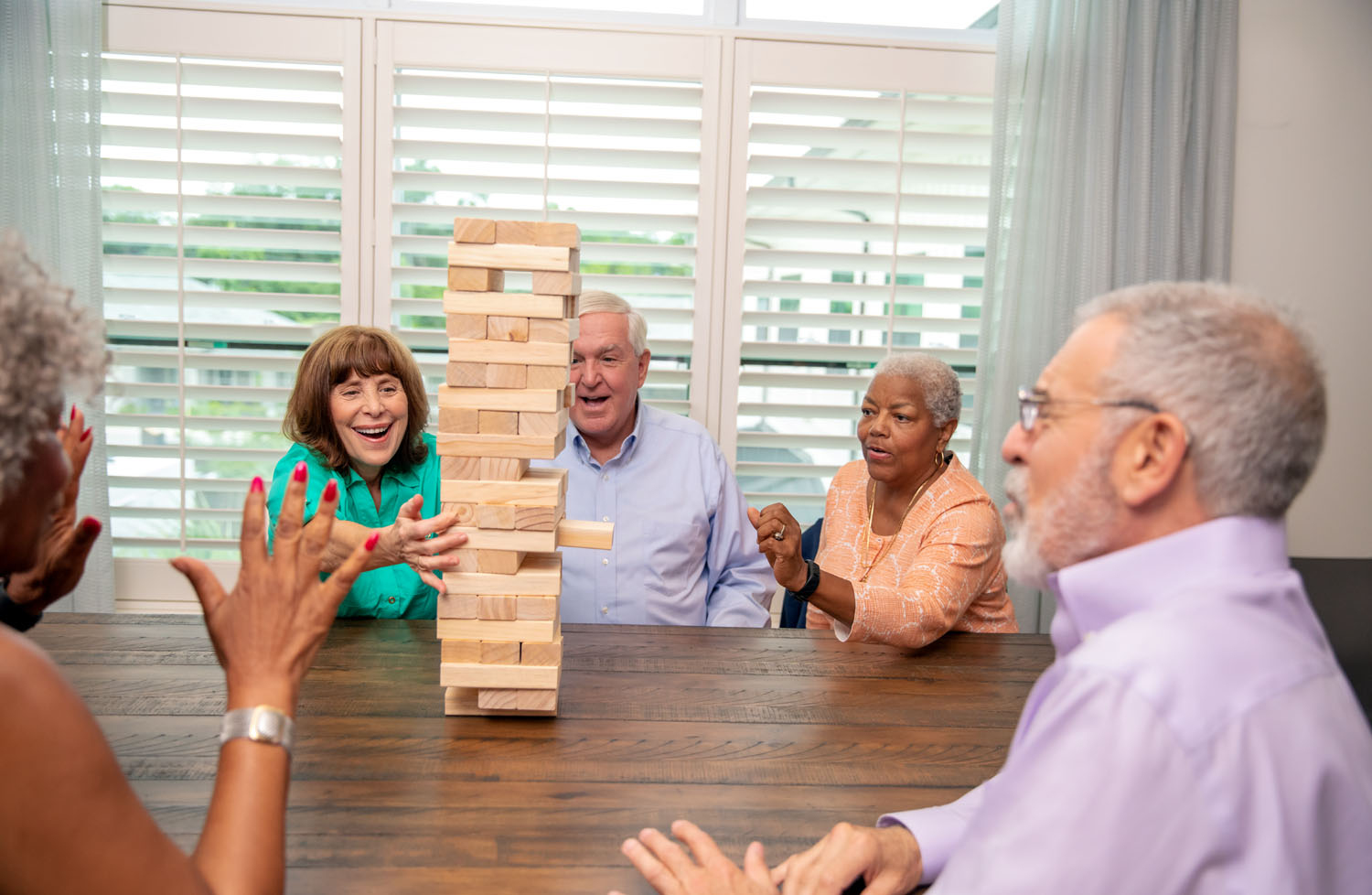
Senior living communities that prioritize meaningful engagement, not just entertainment, see measurable improvements in resident well-being. The distinction matters: entertainment is passive, while engagement asks something of you, and that asking is what creates emotional benefit.
For older adults in communities across South Florida, from Coral Gables to Coconut Grove, access to clubs, lifelong learning opportunities, creative arts, and volunteer programs provides pathways to purpose that adapt as interests and abilities change.
Curious what this looks like in practice? Here's what a month of activities looks like in independent living in Miami.
How Does Engagement Adapt Across Care Needs?
One common concern families have is whether meaningful engagement is still possible when a loved one needs more support, whether that's assistance with daily tasks or specialized memory care.
The answer is yes, but engagement needs to be tailored to the person.
In independent living, engagement might be self-directed: choosing from a calendar of outings, signing up for a class, or organizing a social group. The emphasis is on autonomy and exploration.
In assisted living, engagement often involves more coordination. Staff who know a resident's interests gently encourage participation, structured group activities build social bonds, and wellness routines support both physical and emotional health.
For a person living with dementia, engagement shifts further. Sensory activities, music therapy, familiar routines, and one-on-one interactions become especially important. Even small moments, such as folding towels, listening to a favorite song, or sitting in a garden, can create feelings of calm, connection, and competence. Early cognitive support programs in areas like Kendall, South Miami, and Doral are increasingly focused on this kind of tailored engagement, recognizing that cognitive care and emotional wellness are deeply connected.
The through-line across all levels of care is simple: every person benefits from having something to look forward to.
Why Is Connection the Foundation of Emotional Wellness?
It's tempting to think of social programming as a nice bonus, something that makes life more pleasant but isn't essential. But loneliness is linked to higher rates of heart disease, cognitive decline, and depression.
Connection, meaning regular, meaningful interaction with other people, isn't an amenity. It's infrastructure for healthy aging. Just as you wouldn't build a house without a foundation, you can't build emotional wellness without human connection.
For families in the greater Miami area, whether you're exploring options near Brickell, Little Havana, or Hialeah, understanding this connection between daily engagement and emotional health can help frame future decisions about care and living arrangements.
Learn more about how wellness programs in Miami senior living keep residents thriving.
What Can You Do Right Now?
Whether you're thinking ahead for yourself or keeping an eye on an aging parent, here are a few things worth considering:
-
Notice the rhythm. Is there a daily structure in place? If not, even small additions, like a regular phone call, a weekly outing, or a standing date for coffee, can help.
-
Watch for withdrawal. A decline in interest or participation is often one of the earliest signs of emotional distress in older adults.
-
Think beyond entertainment. Look for activities that ask something of the person: creativity, problem-solving, contribution, connection.
-
Prioritize consistency. One meaningful activity repeated weekly does more for emotional wellness than a packed calendar that changes constantly.
Supporting mental health in older adults doesn't require dramatic interventions. Often, it starts with a simple question: What are you looking forward to tomorrow?
If you'd like to learn more about how daily engagement supports emotional wellness in senior living, we invite you to explore the resources on our site, including guides, activity highlights, and insights from communities throughout South Florida.
For more ideas on staying active and engaged, download our free guide: Stay Active, Stay Young.