
Most families don't realize this until they're deep into researching senior living near Crabapple, GA: assisted living and memory care aren't just two price points on the same menu. They're fundamentally different models of support, designed for people at different stages of need.
If you're weighing these two options for a parent living with dementia, you're asking the right question. But the answer isn't always straightforward, because it depends on where your parent is right now and where they're likely to be in a year or two.
Let's break down the differences that matter most so you can have a more informed conversation with your family and with any community you're considering in the Alpharetta area.
How Do Staffing and Training Set These Options Apart?
Assisted living communities provide help with daily tasks like bathing, dressing, medication management, and meals. Staff members are trained to support residents who are mostly independent but need a hand with certain activities. It's a comfortable, social environment, and for many older adults, it's exactly the right fit.
Memory care operates on a different foundation. Staff receive specialized, ongoing training in dementia-specific communication techniques, behavioral support, and de-escalation strategies. The staff-to-resident ratio is typically much higher, often nearly double what you'd find in assisted living, because residents need more frequent check-ins and hands-on guidance throughout the day.
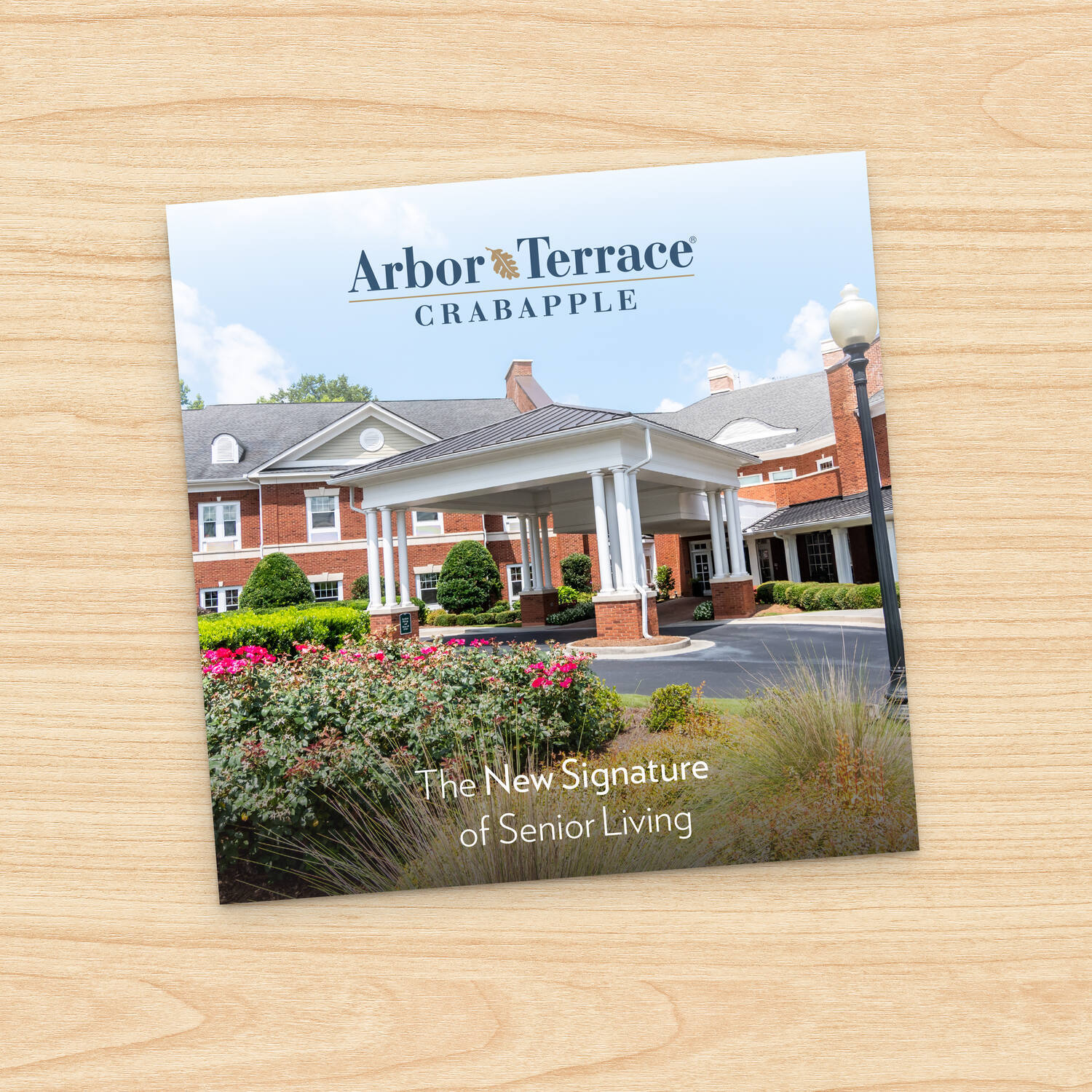
At Arbor Terrace Crabapple, both assisted living and memory care are available under one roof. Our memory care neighborhood is staffed by team members trained specifically to support people living with Alzheimer's disease and other forms of dementia. For families exploring our comprehensive guide to Alzheimer's and dementia care, this distinction in staffing is one of the most important factors to understand.
What Safety Features Protect Without Confining?
Safety is often the factor that pushes families from considering assisted living to exploring memory care. In a standard assisted living setting, residents come and go freely. That independence is a benefit, until a parent starts wandering, getting disoriented, or leaving the building without knowing where they're going.
Memory care communities are designed with safety woven into the architecture:
-
Secured entrances and exits that prevent unsupervised wandering
-
Circular floor plans that allow residents to walk freely without reaching dead ends or locked doors
-
Color-coded wayfinding and visual cues that help residents navigate their environment with less confusion
-
Alarm systems on exterior doors and 24-hour monitoring
These features aren't about restriction. They're about creating a space where a person living with dementia can move, explore, and feel comfortable without the risks that come with cognitive decline.
When you tour communities in Alpharetta or nearby areas like Roswell, Milton, or Johns Creek, pay attention to how safety is integrated into the design. If it feels institutional, that's a red flag. If it feels warm and intuitive, you're on the right track. For a deeper look at what to evaluate, read about evaluating memory care options in Alpharetta.
What Drives the Cost Difference?
Families in the Alpharetta area can expect assisted living to range roughly from $4,000 to $6,500 per month, depending on the community and the level of support needed. Memory care typically runs between $5,500 and $8,500 or more per month.
That gap isn't arbitrary. The higher cost of memory care reflects:
-
Higher staffing ratios, with more team members per resident, around the clock
-
Specialized training for every staff member who interacts with residents
-
Structured programming designed to engage cognitive function and reduce anxiety
-
Enhanced safety infrastructure built into the physical environment
-
Tailored daily routines that adapt to each resident's abilities and preferences
It's also worth noting that some families weighing these options are also comparing the cost of keeping a parent at a private residence with private caregivers. If that's part of your calculation, you may find it helpful to explore how assisted living costs compare to in-home care in Alpharetta.
Planning for these expenses can feel overwhelming, but it doesn't have to be paralyzing. Our guide to financial planning tips for senior living walks through practical strategies that many families in the area have found useful.
How Do You Know Which Level of Care Fits Right Now?
This is the question that keeps families up at night. Here are some honest guideposts:
Assisted living may be enough if your parent:
-
Has mild cognitive impairment but can still follow a daily routine with prompts
-
Recognizes familiar people and places most of the time
-
Doesn't wander or become disoriented in new settings
-
Can participate in group activities and social dining with minimal support
Memory care may be the better fit if your parent:
-
Frequently gets lost, even in familiar environments
-
Has experienced wandering episodes or attempts to leave unsupervised
-
Becomes agitated, confused, or anxious in unstructured settings
-
Needs consistent cueing and hands-on help throughout the day
-
Has been asked to transition out of a current assisted living community due to escalating needs
If you're not sure where your parent falls on this spectrum, you're not alone. Many families in Alpharetta, Sandy Springs, and Forsyth County find themselves somewhere in between. That's exactly why it helps to download our free guide to comparing dementia care options. It's designed to help you organize your thinking and share key information with other family members involved in the decision.
What Can Families Expect at Arbor Terrace Crabapple?
One of the advantages of Arbor Terrace Crabapple is that both assisted living and memory care are available in the same community. That means if your parent moves into assisted living and later needs the specialized support of our memory care neighborhood, the transition can happen without uprooting them from a place they already know, and from a team that already knows them.
For families exploring early-stage dementia care in Milton or cognitive care programs near Johns Creek, this kind of continuity matters. You're not just choosing an apartment. You're choosing a community that can grow with your parent's needs.
We know this decision involves your whole family. If you'd like to see firsthand how our assisted living and memory care neighborhoods compare, we'd welcome the chance to walk you through both. You can also use our dementia care checklist when touring communities. It's a practical tool that helps you ask the right questions and compare what you see.