
Imagine this: your parent still enjoys conversations, recognizes family, and can handle many daily tasks, but they've started leaving the stove on, missing medications, or getting confused about what day it is. They're doing too well for a structured memory care setting, yet they need more guidance than standard assisted living provides.
This in-between stage is more common than most families realize, and it can feel overwhelming to navigate. That's exactly the space a Bridges program is designed to fill.
If you're exploring early memory care support in Dacula or the surrounding areas like Buford, Lawrenceville, or Suwanee, understanding what Bridges offers can help you make a more confident decision for your family.
Why Does a Middle Ground Matter?
Senior care is often presented as a simple choice: assisted living or memory care. But cognition doesn't necessarily shift overnight. Between the point when someone first begins experiencing memory loss and the point when they need round-the-clock memory care support, there can be a long stretch that doesn't fit neatly into either category.
In a traditional assisted living setting, residents enjoy a high degree of independence. Staff can help with medications, meals, and personal care, but the environment isn't specifically designed for cognitive support. For a person experiencing early memory changes, this can mean falling through the cracks. They may withdraw from activities, feel frustrated by their own confusion, or face safety risks that a standard assisted living team isn't equipped to address proactively.
On the other end, a dedicated memory care neighborhood is built for people with moderate to advanced dementia. The structured routines, secured environment, and intensive programming can feel unnecessarily restrictive for someone who's still highly capable in many areas of daily life.
Bridges exists in the space between these two options. If you're weighing the broader landscape of senior care, it helps to start by understanding the differences between care levels before zeroing in on what Bridges specifically provides.
What Does a Bridges Program Look Like Day to Day?
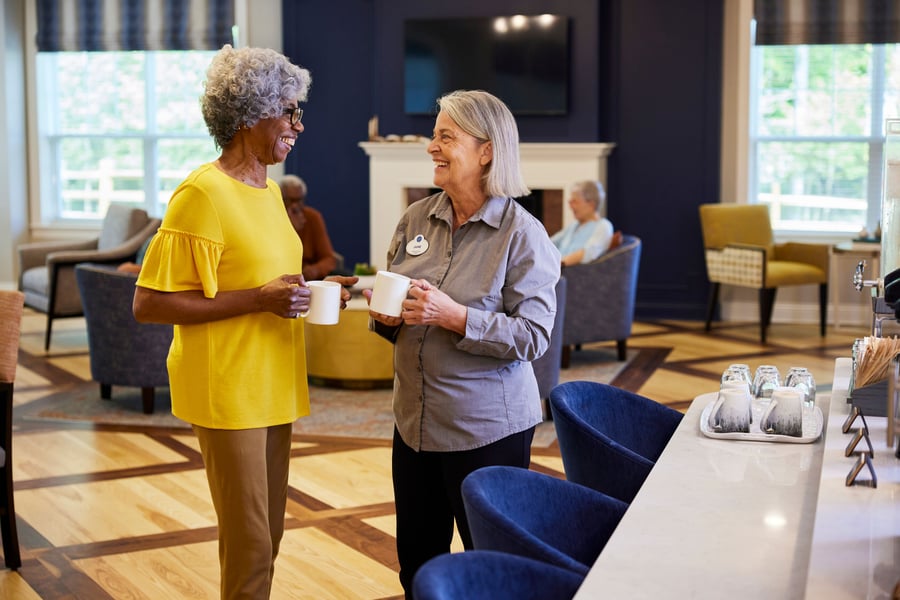
A Bridges neighborhood, like the one at Arbor Terrace Hamilton Mill in Dacula, GA, is a distinct living area within a larger senior living community. It's intentionally designed to feel warm and comfortable, not clinical.
Here's what typically sets a Bridges program apart:
-
Smaller group size. Bridges neighborhoods are often smaller than the broader assisted living community, which means less stimulation and more personalized attention from team members.
-
Tailored activities. Programming is designed to match the cognitive abilities of residents. Activities focus on engagement and purpose (think art projects, music, gardening, and reminiscence-based conversations) rather than passive entertainment.
-
Consistent routines with flexibility. Structure helps people with early memory loss feel grounded, but a good Bridges program also allows for personal choice throughout the day.
-
Trained team members. Staff in a Bridges neighborhood receive specialized training in early-stage dementia support. They know how to redirect gently, communicate with patience, and recognize when someone's needs are changing.
-
A dignified dining experience. Meals may include more cueing and support than in assisted living, but residents are encouraged to maintain as much independence as possible at the table.
The goal is to preserve what someone can do while providing a safety net for what's becoming more difficult.
How Can You Tell If Bridges Is the Right Fit?
Families in communities across Gwinnett and Hall counties, from Sugar Hill and Duluth to Braselton, Auburn, and Winder, often reach out when they've noticed gradual but unmistakable changes in a parent or spouse. The question isn't always "Does my loved one need help?" It's "What kind of help is right for them right now?"
Bridges may be a good fit if your loved one:
-
Has been diagnosed with mild cognitive impairment or early-stage Alzheimer's disease.
-
Is managing most daily tasks but occasionally needs reminders or redirection.
-
Has become more anxious, withdrawn, or confused in social settings.
-
Is living in assisted living but seems to be struggling more than the environment can support.
-
Doesn't yet need the level of structure that a full memory care neighborhood provides.
If you're unsure whether the changes you're seeing are typical aging or something more, recognizing the early signs that your parent needs additional help is an important first step.
What Does Bridges Mean for Families, Not Just Residents?
One of the most underappreciated aspects of a Bridges program is the support it offers to families. Early memory loss can be isolating: not just for the person experiencing it, but for the people who love them. You may find yourself second-guessing every decision, wondering if you're doing enough, or struggling to explain the situation to other family members.
A strong Bridges program includes:
-
Family education about what to expect as memory changes progress.
-
Open communication with care team members who know your loved one well.
-
A built-in transition path so that if your loved one eventually needs a higher level of memory care, the move can happen within the same community, with familiar faces and surroundings.
At Arbor Terrace Hamilton Mill, the Bridges neighborhood is part of a larger community that also offers assisted living, memory care, and independent living, including cottages. This means families in Dacula, Hoschton, Flowery Branch, and the broader Hamilton Mill area can find a long-term option rather than planning for multiple moves.
How Can You Make a Decision with Confidence?
Choosing the right level of care for someone you love is one of the most personal decisions a family can face. There's no single checklist that works for everyone. But knowing that a middle ground like Bridges exists, and understanding what it actually provides, can take some of the weight off your shoulders.
Here are a few questions worth asking when you visit a Bridges program:
-
What training do team members receive in early-stage cognitive support?
-
How are activities designed to match the abilities and interests of residents?
-
What does the transition look like if the needs of a resident increase over time?
-
How does the team communicate with families about changes they observe?
-
What is the staff-to-resident ratio in the Bridges neighborhood compared to assisted living?
For a deeper dive into understanding dementia and how to support your loved one, download our comprehensive caregiver's guide.