What if the best conversation you've had in months is waiting for you at a table you haven't sat down at yet?
It's a strange thought. Maybe even an uncomfortable one. Because right now, the idea of starting over somewhere new, learning new hallways, new faces, new routines, might feel overwhelming. And underneath all of that, there's a quieter worry that's harder to say out loud: What if nobody wants to talk to me? What if I don't fit in?
If you've felt that way, you're not alone. And you're not wrong for feeling it. But what actually happens when older adults move into a senior living community might surprise you, especially when it comes to friendship.
How Does Isolation Build When You're Aging at Home?
Here's something that happens so gradually you might not even notice it: the world gets smaller.
Maybe you stopped driving a few years ago. The neighbor who used to bring over tomatoes from her garden moved to be closer to her family. Your bridge group dissolved after two members passed away. The phone rings less often. Days start blending together.
A 2020 report from the National Academies of Sciences, Engineering, and Medicine found that more than one-third of adults aged 65 and older experience loneliness, and nearly one-fourth of adults 65 and older are considered socially isolated. The distinction matters: you can feel lonely even when people check in on you. It's the absence of casual, everyday connection, the kind that used to happen naturally, that leaves the biggest gap.
Unlike aging at home, where days can pass without meaningful interaction, community living in Decatur, GA, is designed around the kind of proximity and routine that gently invites connection back into your life.
How Does a Shared Meal Change Everything?
Forget organized socials and planned events for a moment. The friendships that form in senior living communities often start with something far simpler: breakfast.
When you eat meals in a shared dining area, you don't have to try to be social. You just are. Someone passes the sugar. Someone comments on the weather. Someone remembers you mentioned your granddaughter's recital yesterday and asks how it went.
Researchers have found that the single greatest predictor of friendship formation is repeated, unplanned interaction, what sociologists call "proximity" and "frequency." In a community setting, that happens organically. You see the same faces at meals, in the garden, in the lobby. Familiarity builds comfort. Comfort builds conversation. And conversation, slowly, builds friendship.
This isn't about forcing yourself to be outgoing. It's about being in a place where connection can happen on its own terms, even for the quietest person in the room.
What Happens When You First Move In?
One of the most thoughtful things many senior living communities do is pair new residents with someone who's already settled in. These resident ambassadors, people who volunteered because they remember exactly what those first days feel like, are there to say hello, show you where the good coffee is, and sit with you when the dining area still feels unfamiliar.
It's a small gesture that makes a profound difference. Having someone who chose to be there for you, not because it's their job, but because they wanted to, can turn a nerve-wracking first week into something manageable. Even enjoyable.
Communities that prioritize this kind of welcome understand something important: feeling known and valued in a new place isn't a luxury. It's the foundation for everything else, including friendship.
What Does Friendship Look Like at This Stage of Life?
Let's set aside the idea that friendship means what it meant at 30 or 50. You don't need to find someone to travel with, train for a marathon with, or talk to for hours on the phone every night.
Friendship at 80 or 85 can look like:
-
A wave from someone who saves your favorite seat in the activity area
-
A neighbor who knocks on your door to check in if you missed lunch
-
Someone who shares your love of old movies or crossword puzzles
-
A companion who simply sits nearby while you both read in comfortable silence
These connections may seem small, but research published in Personal Relationships journal suggests they carry enormous weight. Friendships, even more than family relationships, can be a strong predictor of health and happiness in older adults. Having people who choose to spend time with you, who enjoy your company simply because they like you, has a measurable effect on well-being.
Senior living in Decatur, GA, offers all kinds of opportunities for these moments, from group activities and walking paths to shared dining spaces and cozy common areas. But the real value isn't in the programming. It's in the people.
What If You're Still Not Sure?
That's okay. Truly.
No one is asking you to feel excited about change. It's completely natural to feel anxious about leaving the place you know, the routines you've built, the space that holds your memories. Those feelings deserve to be honored, not brushed aside.
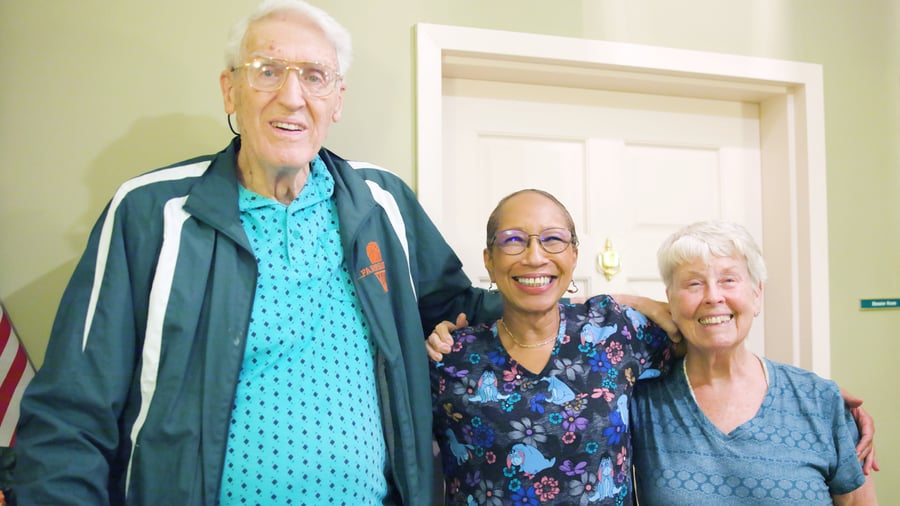
But consider this: the loneliness you might be experiencing right now isn't something you have to accept as permanent. And making a friend at 82 or 87 isn't some rare miracle. It happens every single day in communities across Decatur and beyond.
You don't have to be the most social person in the area. You don't have to join every activity or attend every event. You just have to be open to the possibility that someone down the hall might be glad you moved in.
Still weighing the decision? This free guide walks through what to consider.
You deserve connection. You deserve warmth. And the friend you haven't met yet? They might just be waiting for you to sit down.