
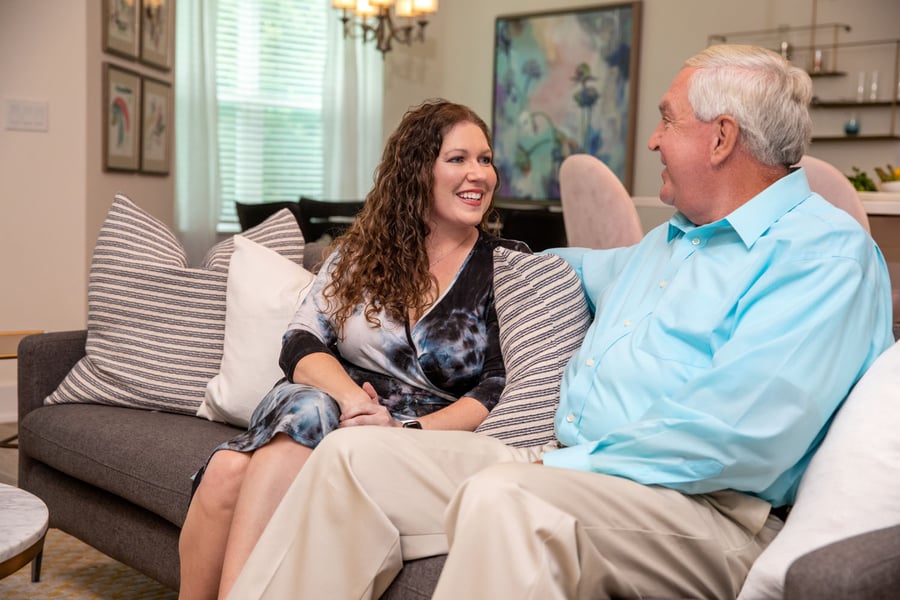
Your parent says everything is fine. The house looks tidy enough when you visit. The fridge has food in it. They answer the phone when you call.
But what's happening on the days you don't visit?
For families in the Glenview and North Shore area, the risks of aging at home alone aren't always dramatic. They're subtle. And that's exactly what makes them easy to miss.
What Is the Gap Between "Fine" and Thriving?
Most older adults don't want to worry their families. So when you ask how things are going, you hear "fine" or "I'm managing." But there's often a significant distance between managing and actually doing well.
There are often early warning signs hiding in plain sight that families miss during short visits. Maybe the mail is piling up. Maybe your parent has stopped cooking full meals and is relying on toast and canned soup. Maybe they've quietly stopped driving at night or attending the activities they used to love.
These aren't emergencies. But they are signals, and when no one is around to notice them day after day, they compound.
Here are a few questions worth asking yourself honestly:
-
When was the last time your parent had a full, balanced meal with someone else?
-
How many meaningful social interactions does your parent have in a typical week?
-
Would your parent tell you if they fell, or would they keep it to themselves?
Is Social Isolation a Health Risk or Just Loneliness?
One of the most underestimated risks of aging in place is social isolation. It's easy to think of loneliness as an emotional inconvenience rather than a medical concern. But the data tells a different story.
According to research developed with input from The Arbor Company leadership, social connection is one of the strongest predictors of health and well-being in older adults, on par with regular exercise and proper nutrition. The same research highlights that seniors who lack consistent social engagement face elevated risks for cognitive decline, depression, and even cardiovascular problems. You can explore the full findings here.
Research consistently shows that social connection isn't a luxury in older adulthood; it's a health necessity. Yet for many seniors living alone in Glenview, Wilmette, Lincolnwood, or Morton Grove, days can pass without a single face-to-face conversation. Phone calls help, but they aren't a substitute for the kind of daily, organic interaction that happens when you share a dining table, a walking path, or a morning activity with other people.
This is one area where the comparison of aging at home vs. senior living is starkest. In a senior living community, connection is built into the structure of every day. Meals are shared. Neighbors are steps away. Wellness programs and group activities create natural reasons to engage. That kind of social infrastructure simply doesn't exist when someone lives alone.
What Safety Concerns Go Beyond Falls?
When families think about safety concerns for aging parents, falls usually top the list, and for good reason. But safety gaps extend well beyond grab bars and non-slip mats.
Consider these scenarios:
-
Medication management. Missing a dose or doubling up can happen easily without a system in place, and the consequences can be serious.
-
Nutrition. Cooking for one is often uninspiring. Appetite decreases. Grocery shopping becomes harder. Over time, poor nutrition weakens the immune system and accelerates muscle loss.
-
Gradual health changes. Some health changes happen so gradually that they're easy to dismiss, until they aren't. Small shifts in balance, weight, cognition, or energy levels can signal something more serious, but without someone observing daily patterns, these changes often go unnoticed.
-
Emergency response. If something happens at 2 a.m., how quickly can your parent get help? A medical alert button is useful, but it requires the person to press it, and many seniors don't.
In a senior living community, trained team members are present around the clock. They notice when someone skips a meal, seems unsteady, or isn't acting like themselves. That kind of attentive, coordinated care is nearly impossible to replicate at home, even with regular visits from family or a part-time caregiver.
What Is the Emotional Weight on Families?
There's another dimension families often overlook: the toll that long-distance worry takes on everyone.
If you're the family member checking in by phone every day, coordinating doctor's appointments from across town, and lying awake at night wondering if your parent is okay, that weight is significant. It affects your own health, your relationships, and your ability to simply be a loved one rather than a full-time care coordinator.
If you're starting to wonder whether your parent would benefit from more support, this checklist can help you think it through.
Asking tough questions doesn't mean you've failed. It means you're paying attention.
What Questions Should You Ask Before Assuming It's Working?
Before settling on the assumption that aging at home is working well, consider sitting down with your parent, with siblings, or even just with yourself, and working through these questions:
-
Is my parent eating well? Not just eating, but eating nutritious meals regularly.
-
How often does my parent interact with someone in person? Weekly? Daily? Rarely?
-
Are there signs of declining hygiene, housekeeping, or personal care?
-
Has my parent had any unreported falls, near-misses, or health scares?
-
Am I confident my parent would ask for help if they needed it?
-
Is our current arrangement sustainable, for them and for me, over the next two to three years?
Honest answers to these questions can be uncomfortable. But they open the door to better decisions.
What Comes Next?
Aging at home works well for some seniors. But for many, the risks of aging at home alone, particularly the isolation, the nutritional gaps, and the safety blind spots, grow over time in ways that are hard to see from the outside.
The good news is that exploring options doesn't mean making an immediate decision. It means getting informed so that when the time comes, you're ready.
For a side-by-side look at what aging at home really involves compared to community living, download our free guide. It's a practical resource designed to help Glenview-area families weigh their choices with clarity and confidence.