What You'll Learn
Your family has been having the same conversation for weeks now. Around the kitchen table, over group texts, during late-night phone calls. Your parent's dementia diagnosis has changed everything, and now you're trying to figure out the right level of care. Is assisted living enough? Or does your parent need the specialized structure of memory care?
These two options overlap in some ways, but they're designed for very different needs. Understanding exactly where they diverge in staffing, safety, cost, and daily life can help your family move forward with clarity instead of guesswork.
Before diving into that comparison, it's worth noting that some families are still weighing whether in-home care or assisted living is the right starting point. If that's where you are, start there first.
What Does Assisted Living Provide, and Where Does It Have Limits?
Assisted living communities offer support with daily activities like bathing, dressing, medication management, and meals. Residents typically live in private or semi-private apartments and enjoy a calendar of social events, fitness programs, and outings. Staff members are available around the clock, but residents generally have a good deal of independence. They can come and go, eat when they choose, and manage much of their own routine.
For many older adults in Basking Ridge and surrounding areas like Martinsville and Somerset, assisted living is exactly the right fit. It provides structure and support without removing autonomy.
But here's the key distinction: assisted living is not designed for residents whose cognitive decline creates safety risks. If a parent is wandering, becoming disoriented in familiar spaces, or struggling to follow basic routines even with reminders, assisted living staff may not have the specialized training or environmental design to keep them safe.
How Is Memory Care Built Differently for Dementia?
Memory care isn't just assisted living with a few extras. It's a fundamentally different model of care, built around the specific challenges that come with Alzheimer's disease and other forms of dementia.
Here's what sets memory care apart:
-
Staffing ratios are higher. Memory care neighborhoods typically maintain lower resident-to-staff ratios, which means more hands-on support throughout the day and night. Staff members receive specialized training in dementia care techniques, communication strategies, and behavioral support.
-
The environment is purpose-designed. Secured entries and exits prevent wandering. Hallways are designed for easy navigation. Visual cues, like color-coded doors or familiar landmarks, help residents orient themselves. These aren't cosmetic choices; they're safety features woven into the architecture.
-
Daily programming is structured around cognitive engagement. Activities in memory care are designed to meet residents where they are cognitively, using music, art, sensory experiences, and routine to provide comfort and stimulation without causing frustration or anxiety.
For families exploring dementia care in Far Hills, NJ, Alzheimer's care in Warren, NJ, or memory care near Bridgewater, NJ, these differences matter deeply. A community with a dedicated memory care neighborhood creates an environment where a person living with dementia can feel safe, engaged, and understood.
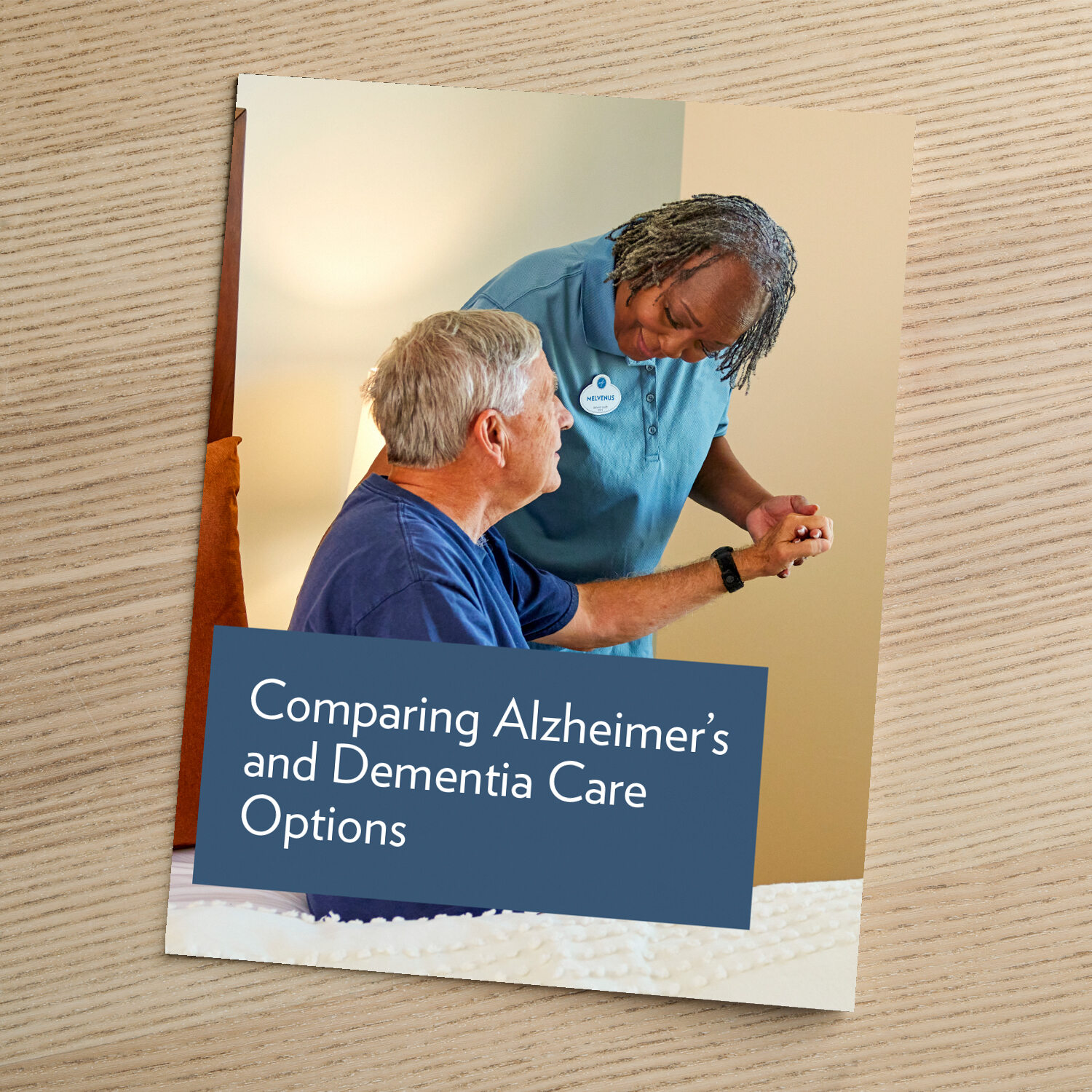
For a comprehensive look at all the dementia care options available to your family, download our free guide: Comparing Alzheimer's and Dementia Care Options.
What Drives the Cost Difference Between Assisted Living and Memory Care?
Memory care typically costs more than assisted living, and families understandably want to know why. The short answer: you're paying for a higher level of specialization.
According to the Genworth Cost of Care Survey, the national median cost for assisted living is around $5,350 per month, while memory care averages between $6,500 and $7,500 monthly. Costs in New Jersey tend to run higher than national averages.
That premium reflects:
-
More staff per resident, with specialized dementia training.
-
Secured environments with monitoring technology.
-
Tailored programming designed for cognitive support.
-
More intensive personal care, including help with eating, toileting, and mobility as dementia progresses.
It's important to look beyond the monthly number and ask what's included. Some communities bundle most services into one rate, while others charge separately for things like medication management or incontinence care. Always ask for a complete cost breakdown when comparing options.
Once you understand the cost differences, building a financial plan that accounts for your family's specific situation is an essential next step.
What Are the Signs Your Parent May Need Memory Care Instead of Assisted Living?
This is often the hardest part for families. You want to believe that a lighter level of support will be enough. But delaying the transition to memory care can put your parent at risk and add enormous stress to your own life as a caregiver.
Consider memory care if your parent is:
-
Wandering or attempting to leave their current living situation, especially at night.
-
Unable to follow daily routines even with prompts and reminders.
-
Experiencing significant personality or behavioral changes, such as agitation, aggression, or sundowning.
-
At risk during everyday tasks like cooking, bathing, or managing medications.
-
Becoming increasingly isolated because they can no longer participate in social activities independently.
If you're experiencing more difficult caregiving days than manageable ones, that's also a signal worth paying attention to. Caregiver burnout doesn't just affect you. It affects the quality of care your parent receives.
What Does Arbor Terrace Basking Ridge Offer Families?
Arbor Terrace Basking Ridge provides assisted living, a Bridges neighborhood for early-stage cognitive support, and a dedicated memory care neighborhood, all within one community. This means families in Basking Ridge, Bernardsville, Bedminster, and the surrounding area have access to a full spectrum of care as their loved one's needs evolve.
The Bridges neighborhood at Arbor Terrace Basking Ridge is specifically designed for residents with mild cognitive impairment or early-stage dementia who aren't yet ready for a full memory care environment but benefit from additional cognitive support and structure. It's a level of care that many communities simply don't offer, and it can make a meaningful difference during a critical window.
For families who determine that memory care is the right fit, we've put together a guide on how to choose a memory care community in Basking Ridge that walks you through what to look for during tours and what questions to ask.
What's Your Next Step?
Choosing between assisted living and memory care isn't a decision you have to make alone or all at once. The team at Arbor Terrace Basking Ridge is here to help you think through your parent's specific needs, walk you through each level of care, and answer the questions that keep you up at night.
Schedule a visit to see our assisted living, Bridges, and memory care neighborhoods in person. Or, if you'd like to do more research first, download our free guide: Comparing Alzheimer's and Dementia Care Options for a deeper look at what's available for your family.