

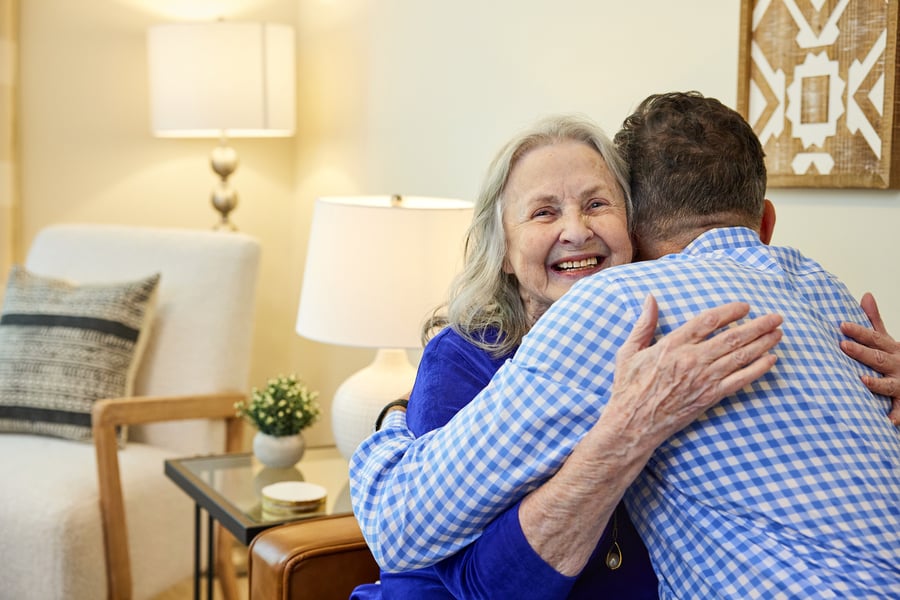
Many family caregivers in the United States live more than an hour away from the person they help care for. If you're one of them, checking your phone between meetings, wondering if your parent in Basking Ridge, NJ, ate lunch or made it to a doctor's appointment, you already know how isolating that distance can feel.
But here's what matters: being far away does not mean you're failing. Distance changes how you care, not whether you care. This guide is designed to help you stay meaningfully involved in your parent's well-being, no matter how many miles separate you.
Reframe the Guilt Before It Takes Over
Let's start with the hardest part. If you're the family member who moved away for work, for a partner, or for any reason at all, you may carry a quiet weight every single day. That weight has a name: guilt.
Guilt tells you that good caregivers are physically present. It whispers that phone calls aren't enough, that you should have moved closer, that your sibling who lives twenty minutes away is doing the "real" work.
None of that is true.
Long-distance caregivers contribute in ways that are essential: researching medical options, managing finances, coordinating insurance, and providing emotional support during difficult transitions.
Name the guilt. Acknowledge it. Then set it aside so it doesn't prevent you from being effective.
Recognizing when a parent needs more help than any single family member can give is itself an act of love, not an abdication of responsibility.
Assemble a Trusted Team on the Ground
You can't be there every day, but you can make sure the right people are. Building a reliable local network around your parent, whether they're living independently in Somerset County or receiving support from a senior living community, is the single most impactful thing a long-distance caregiver can do.
Consider who should be on that team:
-
A geriatric care manager. These professionals (sometimes called aging life care experts) can serve as your eyes and ears locally. They assess needs, attend medical appointments, and provide regular updates. For families in the Basking Ridge or Bernardsville area, your parent's primary care physician may be able to recommend one.
-
A primary care physician you can communicate with. Make sure your parent has signed a HIPAA release so you can speak directly with their doctor.
-
Trusted neighbors or local friends. A neighbor who checks in casually, noticing if the newspaper is still on the porch at noon or if the trash wasn't taken out, provides a layer of awareness that technology alone cannot replicate.
-
A local family member or friend with a key. Even if you're the primary decision-maker, having someone who can physically get into the house during an emergency is critical.
Document contact information for everyone on the team and share it in a group thread or shared document. Coordination falls apart when people don't know who's responsible for what.
Use Technology Wisely, Not as a Substitute for Connection
Technology can close the gap between you and your parent in meaningful ways, but it works best when you use it intentionally rather than piling on every gadget available.
A few tools worth considering:
-
Video calling (FaceTime, Zoom, or Google Meet) lets you see facial expressions, notice changes in appearance, and simply be "present" during a meal or conversation.
-
Medication management apps like Medisafe can send reminders to your parent and alerts to you if a dose is missed.
-
Fall-detection wearables provide peace of mind, especially for a parent living alone in areas like Warren, Bridgewater, or Bedminster, NJ.
-
Smart devices like a video doorbell, motion-activated lights, or a smart speaker for voice-activated calls can add safety without making your parent feel surveilled.
The key is matching the technology to your parent's comfort level. A device they refuse to wear or a tablet they find confusing doesn't help anyone. Start simple and add only what's genuinely useful.
Make Visits Count, but Don't Turn Every Trip Into an Inspection
When you live far from a parent, every visit feels loaded with pressure. You want to fix things, organize the medicine cabinet, deep-clean the kitchen, and have three overdue conversations, all in a long weekend.
Resist the urge to turn visits into checklists.
Instead, try dividing your time intentionally:
-
One portion for practical tasks. Schedule a doctor's appointment during your visit. Review bills, check the home for safety hazards, and update legal documents.
-
One portion for observation. Simply spend time with your parent. Cook together. Watch a show. Go for a drive through Basking Ridge. You'll notice more about their cognitive and physical health during relaxed moments than during a formal assessment.
-
One portion for just being family. Not every interaction needs to be about caregiving. Your parent doesn't want to feel like a project.
If your parent has recently moved to a senior living community, understanding what the first 30 days typically look like can help you set realistic expectations for what you'll see and what's perfectly normal during an adjustment period.
Talk to Siblings Before Resentment Builds
Family dynamics around caregiving can be one of the most challenging parts of the entire experience, especially when one sibling lives close to a parent and another lives across the country.
The sibling nearby may feel overburdened. The one far away may feel excluded from decisions. Both perspectives are valid, and both can fester into resentment if no one speaks up.
A few ground rules that help:
-
Divide roles by strength, not geography. The long-distance family member can own financial management, insurance coordination, and research. The local sibling can handle in-person appointments and social check-ins.
-
Schedule regular family calls, not just when there's a crisis. A monthly check-in keeps everyone aligned.
-
Acknowledge what each person contributes. Saying "thank you" goes further than you'd think.
Get the Legal and Financial Pieces in Order Early
One area where long-distance caregivers can add enormous value is organizing the financial and legal landscape before a crisis forces decisions under pressure.
Make sure these essentials are in place:
-
Durable power of attorney (both financial and healthcare).
-
A healthcare proxy or advance directive.
-
Access to bank accounts, insurance policies, and tax documents, ideally through shared digital storage.
-
An understanding of what long-term care costs in the Basking Ridge area, including assisted living and memory care options in nearby communities like Mendham, Far Hills, or Martinsville.
For a comprehensive walkthrough of these legal essentials, this legal planning guide is a valuable starting point, especially if you need to get critical documents organized for remote access.
You're Closer Than You Think
Long-distance caregiving isn't about being perfect or being present for every moment. It's about being intentional: building the right support network, using tools wisely, showing up with purpose when you visit, and communicating openly with your family.
If you're not sure where to start with discussing how to get your parent the best care possible for their needs, this resource on talking to your family about senior care can provide a framework for productive discussions.