What You'll Learn
It's never too late to make new friends. For older adults in and around Malvern, PA, a move to a senior living community can open the door to new connections, even if it's been years since you last introduced yourself to someone.
If you've started to feel like the window for making friends has closed, that's completely understandable. But it's a feeling that can turn out to be wonderfully wrong.
What Do the Hours Between Meals Really Look Like?
When you live alone, loneliness doesn't always announce itself. It shows up in the long stretch between lunch and dinner. It's the sound of a television filling a room because silence feels too heavy. It's realizing you haven't laughed out loud in a week.
When a loved one lives alone, it's easy to miss the slow creep of isolation. Those quiet hours between meals, the evenings without conversation: these are the gaps that often go unnoticed.
Research from the National Academies of Sciences, Engineering, and Medicine found that more than one-third of adults aged 45 and older feel lonely, and nearly one-fourth of adults aged 65 and older are considered socially isolated. The health consequences are serious: prolonged isolation carries risks comparable to smoking 15 cigarettes a day, according to former U.S. Surgeon General Dr. Vivek Murthy.
But what often gets overlooked is that the solution doesn't require becoming the most social person in the room. It just requires proximity, routine, and a little bit of openness.
Why Does Proximity Do What Willpower Can't?
There's a concept in social psychology called the "propinquity effect." It simply means that the more often people cross paths, the more likely they are to form a bond. You don't need to plan a friendship. You just need to be around people regularly enough for connection to happen on its own.
That's exactly what senior living communities in the West Chester, PA, area provide: not forced socializing, but a natural rhythm of shared spaces and daily life. Sitting in the same dining room each morning. Passing the same neighbor in the hallway. Joining a gardening group or a book discussion because it sounds interesting, not because you're trying to meet someone.
Staying active isn't just about physical health. It's one of the most reliable paths to forming new friendships. This handbook explores how vibrant living keeps you connected, sharp, and social.
You don't have to be outgoing to make friends in a senior living community. When neighbors, shared meals, and activities are part of your everyday routine, connecting with people can start to feel easy and natural. You don't have to be a joiner. You just have to live somewhere that puts people gently in your path.
What Helps When Everything Feels New?
Let's be honest about the hardest part: the first few days.
Everything is unfamiliar. Your things aren't quite where they should be. The hallways are new. You don't know anyone's name. It can feel overwhelming, and that's completely understandable.
Many communities throughout Chester County and the surrounding areas, from Downingtown to Exton to Berwyn, have recognized this and created resident ambassador programs. These are fellow residents, not staff members, who volunteer to be a welcoming presence for newcomers.
They might knock on your door that first morning and walk with you to breakfast. They might save you a seat. They might simply stop by to say hello and share a few tips about the best spot to sit in the garden.
It's a small gesture, but it changes the entire experience of moving in. Instead of walking into a room full of strangers, you walk in with someone who already knows the way.
This matters especially for people who are naturally reserved. You don't have to be the one to make the first move. Someone is already prepared to meet you halfway.
Does Friendship at 80 Look Different Than Friendship at 30?
There's a misconception that friendship requires a packed social calendar, long outings, or years of shared history. At this stage of life, friendship often looks quieter than that, and that's what makes it so comfortable.
It might be the person who sits across from you at dinner three nights a week and always asks how your grandchildren are doing. It might be the neighbor who waves when you pass their door. It might be someone in a painting class who quietly slides the blue paint your way because they noticed you were looking for it.
A Harvard study that followed adults for more than 80 years found that the quality of relationships, not the quantity, was the strongest predictor of health and happiness in later life. One or two meaningful connections can make a profound difference.
In-home care can address medical and daily living needs, but it rarely fills the social void. If you're weighing the options, here's how personal care and in-home care compare in West Chester.
What if You're Not Sure You're Ready?
If you're reading this and thinking, "I'm just not sure I could do that," that's okay. Nobody expects you to feel enthusiastic about leaving a place you've known for decades. That hesitation is natural, and it deserves to be respected.
But consider this: the people who end up forming the deepest friendships in senior living communities are often the ones who were most reluctant to move. They're the ones who said, "I'll never fit in," and then found themselves lingering after lunch because the conversation was too good to leave.
You don't have to be ready for everything at once. You just have to be willing to sit down at the table.
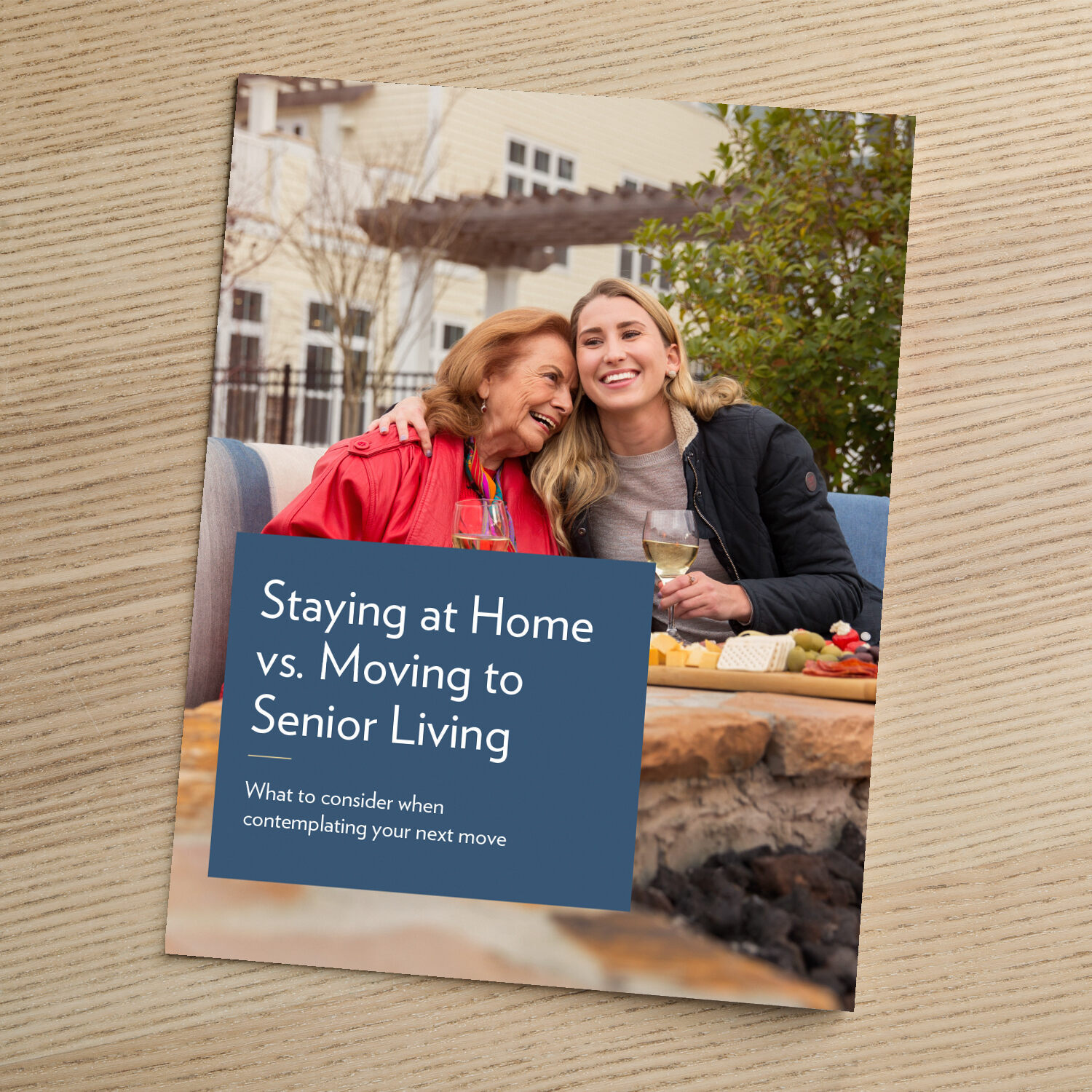
If you're still weighing whether community living is the right step, this guide walks through the differences between staying where you are and moving to senior living. It's a helpful place to start, with no pressure and no commitment, just honest information to help you and your family think things through.