
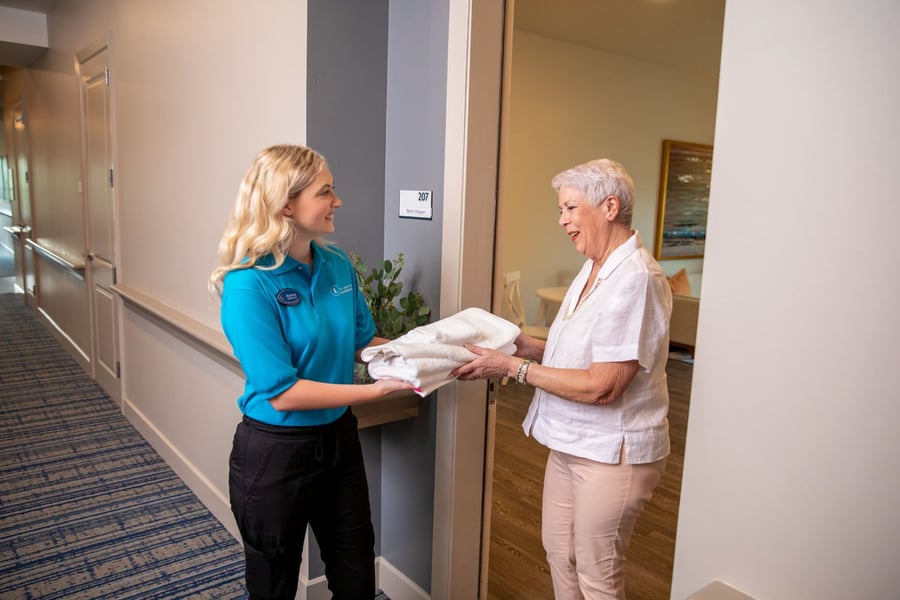
For families in search of a memory care community for their loved one with Alzheimer’s or dementia, it’s likely a familiar concept that establishing a consistent routine can be one of the most powerful tools in supporting their well-being. While many family caregivers understand the benefits of such structure, the transition into a memory care community can still raise questions, such as: Will my loved one feel disoriented? Will the care feel impersonal? Will routines still play a meaningful role in their day-to-day life?
Understanding exactly how professional memory care communities implement these routines can help ease these common anxieties around caregiving and community living. Let’s explore the critical role routine plays in enhancing the lives of residents and address some concerns you might face.
Why Routine Matters in Memory Care
Routine at its core is a vital framework for daily life that creates a sense of predictability for individuals. For seniors navigating Alzheimer’s or dementia, even small disruptions in their routine can trigger behavioral challenges. That’s why most memory care communities prioritize consistent daily rhythms that promote emotional comfort and cognitive engagement.
In professional settings, the benefits of routine extend beyond basic care. Research shows that structured days can reduce agitation, slow cognitive decline, and even promote feelings of accomplishment. These outcomes are particularly important for families who have struggled to maintain structure at home or who are concerned about the unpredictability that often comes with progressing memory loss.
For instance, memory care communities like Arbor Terrace Willistown meticulously design routines that include both cognitive stimulation and emotional support, significantly enhancing residents’ sense of security and well-being.
What Routines Look Like in a Memory Care Community
In most memory care communities, daily routines are thoughtfully designed to support not only physical health but also emotional well-being and mental engagement. And because every resident is different, routines are personalized based on their unique preferences and past experiences.
Here’s a closer look into what might a typical day might include:
-
Morning routines that mirror residents’ past habits, whether that’s enjoying coffee by the window or listening to their favorite music playlist during breakfast.
-
Engaging activities such as art classes, gardening, or music therapy to stimulate cognition and spark creativity.
-
Therapeutic programs that focus on motor skills, sensory engagement, and emotional connection.
-
Meal times that are not just nutritionally balanced, but social and familiar, often shared with consistent tablemates.
-
Quiet time or rest periods that help reduce overstimulation and allow the brain to recharge.
-
Evening wind-down routines that promote calm and prepare the body and mind for a good night’s sleep.
What makes these routines work so well is that they’re paired with individualized care plans; so every moment, from breakfast to bedtime, reflects who that person is and what makes them feel most at ease. Learn more about how personalized care plans are created to meet residents where they are.
Easing Anxiety for Families Through Structure
A common concern for families is the fear that moving to a memory care community might feel impersonal or too clinical. But you can rest assured that most memory care communities go out of their way to create a warm and homelike environment where (through personalization) routines are tailored to fit already existing routines and are never forced.
For families who have felt the emotional weight of caregiving at home, it can be such a relief to know that their loved one is thriving in a stable, supportive space. With the addition of consistent caregivers, familiar meal routines, and engaging activities, the stress that often comes with change or unpredictability is greatly reduced for both residents and their families.
Routines also play a huge role when it’s time for a transition. If you’re feeling uncertain about how your loved one might adjust to a memory care setting, take a look at our tips for making the transition easier.
Creating Safe and Familiar Environments
One thing to remember is that correctly applied structure in memory care should be “built” right into the environment. For example, thoughtfully designed spaces help residents feel more grounded and supported throughout their day. You’ll often find clear visual cues, calming colors, and secure yet welcoming layouts that make it easier for individuals with memory loss to navigate their surroundings with confidence. These features may seem simple, but they play a big role in reinforcing daily routines and reducing confusion or anxiety.
Curious what to look for? Check out the essential security features that help bring comfort and stability to memory care communities in West Chester.
Personalized, Predictable, and Purposeful Dementia Care at Arbor Terrace
If you're considering memory care and want to ensure that your loved one's emotional and cognitive needs are fully met, start by exploring communities that provide the right stability your loved one needs.
At Arbor Terrace Willistown, we believe that a consistent routine paired with deeply personalized care makes all the difference.
Here, residents aren’t just following a schedule, but rather living a life that feels familiar and full of purpose. From morning coffee rituals to daily meaningful activities, everything is designed to meet your loved one where they are.
We know the decision to move into memory care can feel overwhelming. But it’s a helpful reminder that understanding how structure and routine help ease anxiety and encourage the well-being of your loved ones can bring you true peace of mind.
If you’re ready to take the next step, download our free Dementia Care Checklist. It’s a helpful tool to guide your search and ensure you're asking all the right questions along the way!