
How To Recognize Dementia and Help Your Loved One Cope and Thrive
Schedule Your Tour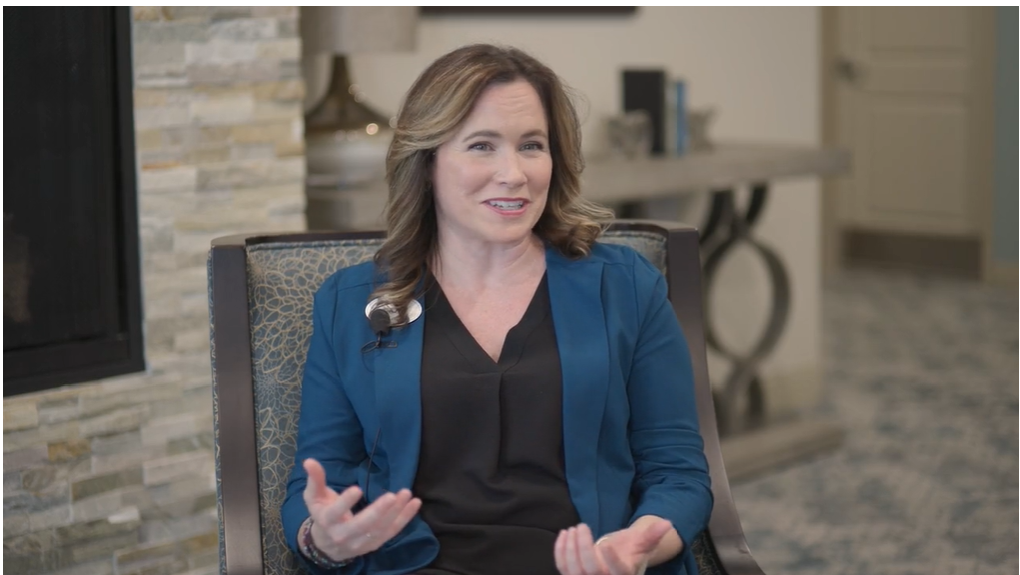
We sat down with AJ Cipperly, Vice President of Memory Care for The Arbor Company, and asked her if she could share some insights about dementia with us. In this video, she shares crucial warning signs and valuable tips on how to make communication with your loved one easier.
By using some of the communication and connection tips AJ describes, and by adapting your approach a little, it can make a big difference for everyone involved, and most importantly help your loved one with dementia cope easier.
Watch the video to see AJ’s full interview and hear all of her insights.
Are you interested in touring our memory care community, or do you have questions about how we at Arbor Terrace Lakeway structure our memory care program?
Simply fill in the form on the right, and someone will be in touch with you shortly!
Video Transcript
Normal aging, you know, we forget things every now and then. We might miss an appointment or miss paying a bill because we're so stressed out or we're just not focused what do we need to do - that's normal. But if we're constantly doing those things, missing bills, getting into financial trouble, you know, falling for scams, like giving someone a large amount of my money - that's a pretty clear warning sign, something's not right.
If the person's getting lost in familiar places. So not necessarily going somewhere new, but if I get in the car to go around to the corner store, which I've done for the past thirty years, and now all of a sudden, I'm getting lost doing that - not normal. Could be something going on. Misplacing things, we all do that. But, you know, again, doing it to the point where it's interfering, you know, with how I live my life, putting things, my car keys in the oven, or the freezer, not throwing away food. And so my refrigerator is full of food that's gone bad.
A person can probably cover really well for a while like, talking to a family member on the phone for thirty minutes once a week. But the family comes to visit and they stay there and they find all these things, like, oh, wow. Yeah. Something's going on with mom. Because this is very different than how she is normally.
If a person's talking about having being worried about their memory, I mean, that probably is an indicator, things are probably okay because they're aware of it. But, you know, noticing when a person starts to pull away from things that they're typically involved in. Being a part of groups, you know, going to being a part of clubs or, you know, leading this group or, you know, doing the bake sale, things that they've always done. Now, they're not doing so much anymore. Could be an indicator something's going on.
Maybe hearing things about having some fender benders, you know, maybe there's a couple more dents in the car that wasn't, you know, that wasn't there last week. Or even them just talking about it, not so much that it was their fault, but, you know, there's never any good drivers around here. You know, that could also typically be a warning sign.
Personality changes. So, very quick to anger, you know, being more and more emotional. Certainly, that could also be a sign of depression, so we have to be very aware of that and not confuse dementia with depression because they can mimic each other. But, those those quick mood changes, and personality changes could also be warning signs as well.
Communication is really important. And it's important to understand that, you know, their comprehension may be changing. You know, they're really good at maybe acting like they understand. And we typically want to provide information, you know, at the rate that we're getting that feedback. You know, somebody's nodding their head and agreeing, and so we continue moving forward provided that information. The challenge is all that may not be getting in.
I'm just kind of being pleasant and agreeing with you. Right? Because I wanna cover that, you know, that I don't understand. So slowing down is really key. Not slowing down to the point that we're, you know, very obvious about it, but sharing one, you know, concept at a time, you know, slowing down making sure that they're getting what we're saying before we move on to the next thing.
When we are talking with them, making sure that we're making eye contact, so if we're getting up and moving around the room, as we're still talking to them, we're probably not gonna do a good job of conveying that information. Making sure we're facing them in the front, eye contact, slowing down on our delivery of even our speech, right, and make making sure we're enunciating our words, all those things, can be very helpful, helpful when we're communicating with somebody with dementia.
So if I'm trying to communicate with you and share information, and there's some overhead music that's loud, you know, maybe there's conversations happening over here. Maybe there's a TV on that's, it could be low, but there's, you know, visual images happening. It's very, very distracting for that person. And so what's gonna happen is I'm probably not gonna get what you're giving to me. And so it's really important to try and minimize those distractions. If I'm gonna, if I need to have a really important conversation with you, taking you into a place that's quiet. Where there isn't all those things going on, where we can close the door, or we can be in an area that all those things aren't going on is gonna be super helpful.
You know, people living with dementia are doing the best they can. You know, they have this brain that's changing.
And, you know, a lot of times with dementia, well, all the time pretty much, it isn't, we don't have a lot of visual cues that there's something wrong, right? And typically, it isn't till the end of this disease that people look sick. Right, I mean, other diseases, you know, there's some visual cues that we get that we look at the person and, oh, they're sick, but not with dementia.
And so what that means is, you know, we expect them to still, you know, be able to communicate and understand and do the things that, you know, that we expect. When in reality, their brain's changing, and that's not allowing them to still be able to do the things that they used to do. And so I think just really, you know, trying to educate ourselves about that and understand, okay, I may have to approach this person a little differently.
Not that I'm going to necessarily treat them differently, but in order to successfully connect with them, I may have to, you know, use my brain that's intact to help them who, you know, has the brain that's not working the way it's supposed to.