When the research into senior living options for a parent begins, two terms will inevitably keep coming up: assisted living and memory care.
If you're a family member in the Manassas, VA area trying to figure out which option fits your parent's needs right now, this comparison will help you see what each level of care actually looks like. From staffing and safety to costs and daily routines, here's what you need to make a confident decision.
What Does Assisted Living Cover?
Assisted living is designed for older adults who are mostly independent but need regular help with daily activities like bathing, dressing, medication management, and meals. Residents typically live in private or semi-private apartments and have access to common areas, scheduled activities, and dining areas.
The key word here is support. Assisted living provides a framework of assistance while encouraging residents to maintain as much independence as possible. Staff members are available around the clock, but residents generally move freely throughout the community, manage portions of their own schedules, and make choices about how they spend their day.
For many families in Gainesville, Haymarket, Centreville, and the broader Northern Virginia region, assisted living is the right starting point. This is especially true when a parent needs help with physical tasks but is still oriented to time, place, and routine.
If you're also weighing whether in-home care might work as a first step, a full cost breakdown of home care vs. assisted living in Manassas can help you see how those options compare financially.
Where Does Memory Care Begin?
Memory care is a specialized form of senior living built specifically for people living with Alzheimer's disease or another form of dementia. While it shares some similarities with assisted living, such as meals, housekeeping, and personal care assistance, the differences run much deeper.
Here's what sets memory care apart:
-
Environment design. Memory care communities are built with intentional layouts that reduce confusion and prevent wandering. Secured entrances, circular hallways, visual cues, and calming color palettes are standard.
-
Staffing ratios. Memory care typically has a higher ratio of staff to residents. Caregivers are trained in dementia-specific communication techniques, behavioral redirection, and engagement strategies.
-
Structured programming. Activities in memory care aren't just recreational; they're therapeutic. Programs are designed to stimulate cognition, encourage social connection, and provide a sense of purpose, even as abilities change.
-
Safety infrastructure. Beyond secured exits, memory care communities often include features like motion sensors, emergency call systems, and staff protocols tailored to the unpredictable nature of dementia.
For a closer look at the specific safety and design features families should evaluate, our guide on what to look for in memory care in Manassas walks through the details.
How Do Costs Compare, and What Accounts for the Difference?
One of the most common questions families across Woodbridge, Bristow, Nokesville, and Fairfax ask is: Why does memory care cost more than assisted living?
The national median cost of assisted living is roughly $4,500 to $5,000 per month, according to the Genworth Cost of Care Survey. Memory care typically runs $1,500 to $3,000 higher per month, though costs in Northern Virginia can vary based on the community and level of care needed.
It's not that assisted living is a lesser option. Memory care requires a fundamentally different infrastructure. The higher cost covers the specialized training, the additional staff hours, the secured environment, and the tailored programming that a person living with dementia needs to be safe and engaged.
If the cost difference feels overwhelming, a practical guide to financial planning for senior living can help your family think through funding options, from veterans' benefits to long-term care insurance.
How Can You Tell Which Level of Care Fits Right Now?
This is the question that matters most, and the one that often causes the most tension within families. One family member thinks Dad is fine in assisted living. Another is certain he needs memory care. Here are some concrete signals that can help guide the conversation:
Assisted living may be the right fit if your parent:
-
Needs help with daily tasks but can follow a general routine.
-
Benefits from social activities and can participate with minimal prompting.
-
Is oriented to their surroundings most of the time.
-
Can communicate needs and preferences clearly.
Memory care may be necessary if your parent:
-
Wanders or attempts to leave the community, especially at night.
-
Has difficulty recognizing familiar people or places.
-
Becomes agitated, anxious, or aggressive in unstructured environments.
-
Requires constant cueing or redirection throughout the day.
-
Has experienced falls or safety incidents related to confusion.
Dementia is progressive, and what works today may not work six months from now. Families in Dumfries, Clifton, Chantilly, Warrenton, and across the Bull Run/Sudley area often find that the decision isn't a one-time event. It's an ongoing conversation that evolves alongside their parent's needs.
If you're currently managing dementia care or navigating a transition, our caregiver's complete guide to Alzheimer's and dementia care offers broader support for the decisions ahead.
What Does Arbor Terrace Manassas Offer Families?
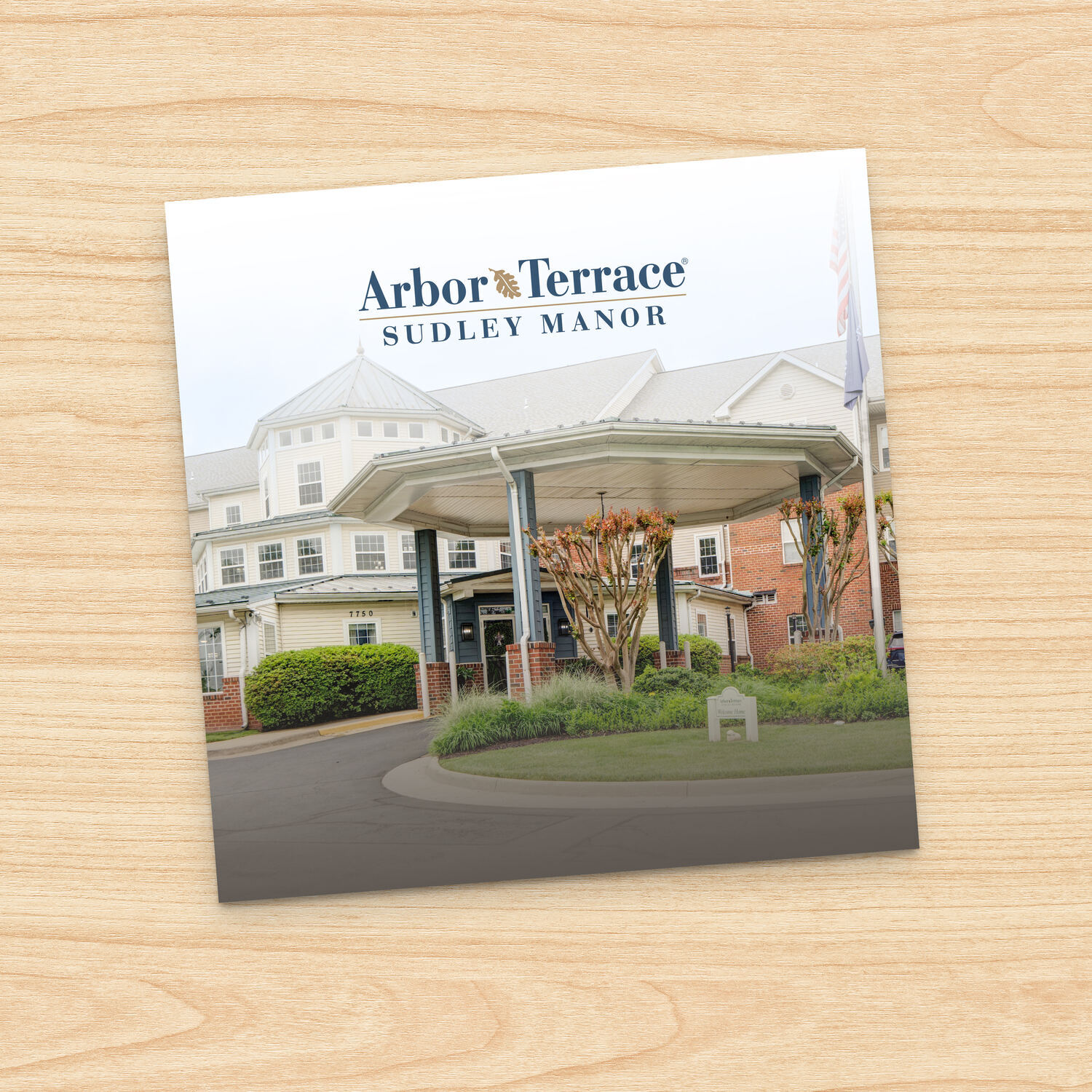
At Arbor Terrace Sudley Manor, we offer both assisted living and memory care under one roof. For families navigating the space between these two levels of care, that matters because it means your parent doesn't have to move to a completely new community if their needs change over time.
Having both options available means we can work with your family to find the right level of care now and adjust as things evolve. No guesswork. No scrambling to find a new community later.
What Is a Next Step You Can Take Today?
Comparing dementia care options is easier when you have the full picture in front of you, and when you can share it with the other family members involved in the decision. Download our free guide, Comparing Alzheimer's and Dementia Care Options, for a detailed comparison you can review together.