What You'll Learn
Your family has been doing the research, comparing communities along the North Shore, asking questions during tours, and probably keeping a running list of pros and cons on a shared spreadsheet. But one question keeps coming back: What's the actual difference between assisted living and memory care, and how do you know which one your parent needs?
It's not always obvious. Both options offer support with daily living. Both provide meals, social activities, and a safe environment. But when a parent is living with dementia, the details matter enormously, from how staff are trained, to how the building is designed, to what shows up on the monthly invoice.
Here's a clear, honest comparison to help your family move forward with confidence.
What Does Assisted Living Cover, and Where Does It Reach Its Limits?
Assisted living is designed for older adults who need help with daily tasks like bathing, dressing, medication management, and meals, but who can still navigate much of their day with relative independence. Residents typically have their own apartments, come and go from activities on their own schedule, and enjoy a lifestyle that balances support with autonomy.
For many families in Highland Park, Glencoe, Deerfield, or Winnetka, assisted living is the right starting point, especially if a parent's cognitive changes are mild and manageable. Staff are available around the clock, and care is tailored to each resident's needs.
But assisted living communities aren't built to manage the progression of Alzheimer's disease or other forms of dementia. As cognitive decline advances, a resident may begin to wander, become disoriented, or need more hands-on guidance throughout the day than assisted living can safely provide.
That's where memory care begins.
How Is Memory Care Structured Differently?
Memory care isn't just assisted living with extra supervision. It's a fundamentally different model of support, designed specifically for people living with dementia.
Here's what sets it apart:
-
Physical environment. Memory care neighborhoods are designed with features like secured entrances and exits, simplified floor plans that reduce confusion, and visual cues that help residents orient themselves. Every detail, from lighting to signage to outdoor spaces, is intentional.
-
Staffing ratios. Memory care communities typically maintain higher staff-to-resident ratios than assisted living. That means more team members available to provide one-on-one support, redirect residents who become agitated, and offer consistent routines.
-
Specialized training. Caregivers in memory care receive ongoing training in dementia-specific communication, behavioral management, and engagement techniques. At Arbor Terrace Highland Park, for example, the memory care neighborhood is staffed by team members trained to meet residents where they are, adapting their approach as needs change.
-
Purposeful programming. Activities in memory care aren't just recreational, they're therapeutic. Programs like Dining with Dignity® focus on preserving independence at mealtimes, while structured daily routines help reduce anxiety and confusion.
If you're evaluating communities along the North Shore, whether in Evanston, Wilmette, Skokie, or Bannockburn, understanding what North Shore families should prioritize when evaluating memory care can help you compare options more effectively.
How Do the Costs Break Down?
Families often want a straightforward answer: How much more does memory care cost than assisted living? The honest answer is that it depends on the community, the level of care, and the region, but nationally, memory care typically costs 20–40 percent more than assisted living.
On the North Shore, where the cost of living is already higher, it's especially important to plan ahead. Our financial planning guide for North Shore families walks through strategies for budgeting for either level of care, including options many families overlook.
If your family is also weighing whether in-home care might be a more affordable alternative, it's worth comparing the full picture. You can read more about how assisted living costs compare to in-home care in Highland Park to see how those numbers stack up over time.
How Do You Know When It's Time to Move Beyond Assisted Living?
This is the part that keeps families up at night. Your parent might be doing well in assisted living right now, but how do you know when they need memory care?
Some signs to watch for:
-
Wandering or exit-seeking behavior. If your parent has tried to leave the community or gotten lost in familiar hallways, the physical environment of assisted living may no longer be safe.
-
Increased agitation or confusion. Sundowning, repeated questions, or difficulty recognizing family members can signal that your parent needs a more structured setting.
-
Declining ability to participate in daily life. When getting dressed, eating meals, or following a conversation becomes significantly harder, the higher staffing and specialized programming in memory care can make a meaningful difference.
-
Safety incidents. Falls, medication errors, or conflicts with other residents may indicate that the level of support needs to increase.
None of these signs, on their own, means memory care is necessary tomorrow. But together, they paint a picture that's worth discussing with your parent's care team and physician.
To help organize your thinking, you can use our dementia care checklist to evaluate whether memory care is the right fit.
What Can Families Expect at Arbor Terrace Highland Park?
One of the reasons families from across the North Shore, from Riverwoods and Bannockburn to Evanston and Skokie, choose Arbor Terrace Highland Park is that the community offers both assisted living and memory care under one roof. That means if your parent's needs change over time, they don't have to move to a completely new community. Their care team already knows them, and the transition can happen with far less disruption.
The memory care neighborhood at Arbor Terrace Highland Park provides a boutique experience: smaller resident groups, higher staff ratios, secured outdoor spaces, and daily programming built around each person's abilities and preferences. Meanwhile, residents in assisted living enjoy a supportive, active lifestyle with the freedom to set their own pace.
This isn't a decision you need to make alone. The team at Arbor Terrace Highland Park can walk you through what each level of care looks like in practice, answer your questions about costs, and help your family figure out the right fit, not just for today, but for what's ahead.
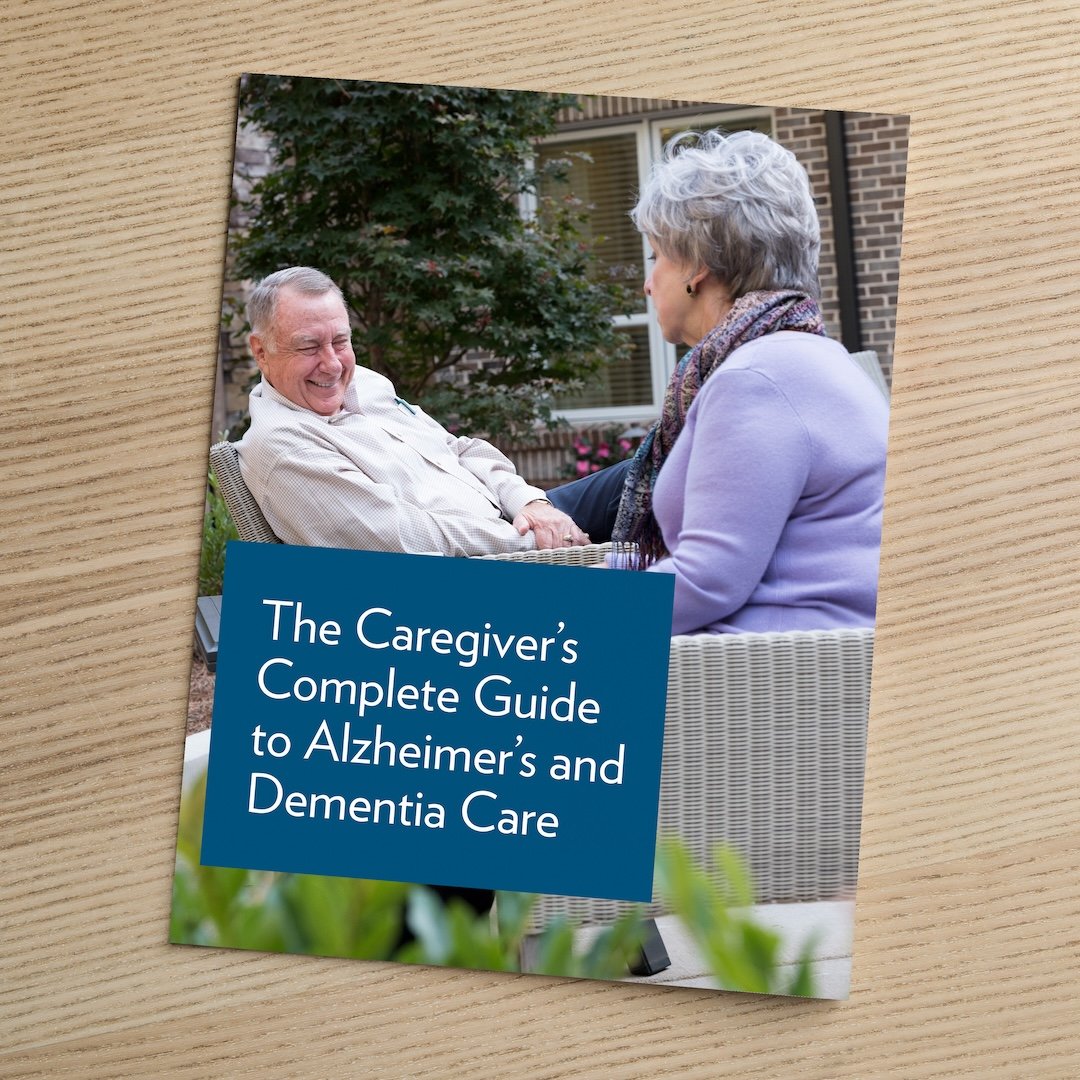
Ready to take the next step? Schedule a conversation or visit with the team at Arbor Terrace Highland Park. For a deeper understanding of dementia care, download our comprehensive guide to Alzheimer's and dementia care: it's a resource you can share with everyone involved in the decision.