
When the World Health Organization released its first-ever guidelines on reducing cognitive decline in 2019, the message was clear and surprisingly hopeful: lifestyle habits matter more than most people realize—even well into your 70s and 80s. The guidelines didn't focus on medications or genetic testing. Instead, they pointed to everyday choices around food, movement, sleep, and human connection.
For families across Highland Park, Glencoe, Deerfield, and the broader North Shore, that's empowering news. It means there are meaningful steps older adults can take—starting today—to support cognitive wellness, regardless of age.
Here are five evidence-based habits that can help protect and nourish brain health over time.
Habit One: Build a Brain-Protective Plate
The link between nutrition and cognitive function has grown stronger with every passing decade of research. One of the most studied dietary patterns is the MIND diet—a hybrid of the Mediterranean and DASH diets developed specifically with brain health in mind by researchers at Rush University Medical Center in Chicago.
The MIND diet emphasizes leafy greens, berries, nuts, whole grains, fish, poultry, olive oil, and beans—while limiting red meat, butter, cheese, pastries, and fried food. In a study published in Alzheimer's & Dementia, participants who closely followed the MIND diet lowered their risk of Alzheimer's disease by up to 53%. Even those who followed it moderately saw a 35% reduction.
The takeaway isn't about perfection. It's about consistent, small shifts: adding a handful of blueberries to breakfast, swapping butter for olive oil, or enjoying salmon once or twice a week.
Habit Two: Move Your Body—Your Brain Will Thank You
Exercise isn't just about cardiovascular fitness or strong bones. It triggers the release of a protein called brain-derived neurotrophic factor (BDNF), which supports the growth and survival of neurons. Think of BDNF as fertilizer for your brain—it helps existing connections stay healthy and encourages new ones to form.
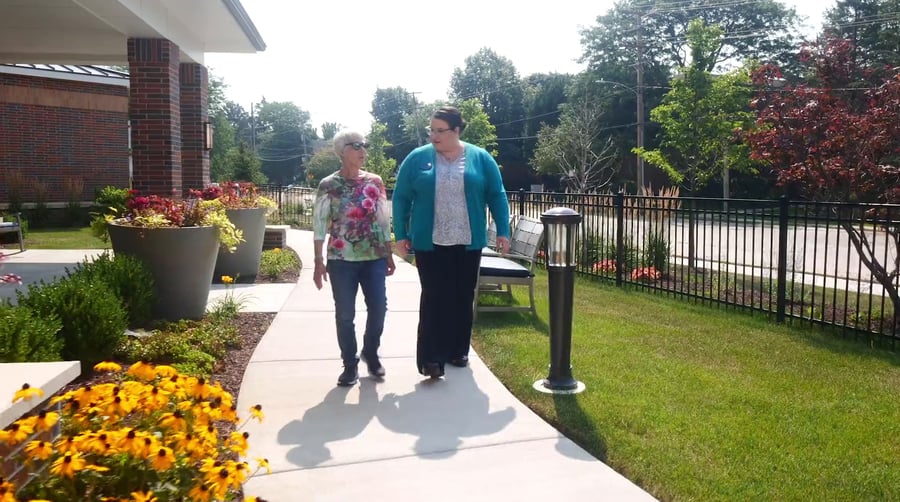
A 2022 meta-analysis published in The British Journal of Sports Medicine found that regular physical activity was associated with a 28% lower risk of dementia and a 45% lower risk of Alzheimer's disease. And the activity doesn't have to be intense. Walking, swimming, tai chi, chair yoga, and gardening all count.
For seniors across Highland Park, Winnetka, Wilmette, and Skokie, the North Shore offers beautiful opportunities for outdoor movement—lakefront paths, park districts, and community fitness programs designed for older adults. The key is consistency, not intensity.
Want more ideas for staying active as you age? Explore our handbook on staying active and vibrant as you age.
Habit Three: Give Your Brain Something It Hasn't Tried Before
Cognitive stimulation is often reduced to a simple prescription: "Do crossword puzzles." But the research tells a more nuanced story. It's not just about keeping your brain busy—it's about exposing it to novelty and complexity.
A study from the University of Texas at Dallas found that older adults who learned a demanding new skill—like digital photography or quilting—showed greater improvements in memory than those who did familiar, low-effort activities like watching documentaries or socializing casually. The difference wasn't effort alone; it was the challenge of learning something unfamiliar.
This could look like picking up a new language through an app, taking a watercolor class at a community center in Evanston or Riverwoods, learning to play an instrument, or joining a book club that pushes you into genres you wouldn't normally choose. The point is to stretch—gently but consistently.
Habit Four: Protect Your Social Connections Like They're Medicine
Loneliness isn't just an emotional experience—it's a neurological one. The National Academies of Sciences, Engineering, and Medicine reported that social isolation is associated with a 50% increased risk of dementia in older adults. That statistic puts loneliness roughly on par with smoking as a health risk.
The brain is wired for connection. Conversation requires memory retrieval, emotional processing, active listening, and real-time problem-solving—all of which exercise cognitive systems simultaneously. A weekly phone call with a grandchild, a regular coffee date with a neighbor in Bannockburn, volunteering at a local library, or participating in a faith community all serve as cognitive engagement.
For families thinking ahead about an active senior lifestyle in Highland Park or the surrounding North Shore communities, it's worth considering how daily social infrastructure plays into long-term brain health. Environments that naturally weave social interaction into everyday life—through shared meals, group activities, and common spaces—can make a meaningful difference.
Habit Five: Treat Sleep and Stress as Non-Negotiable
Sleep and stress are often treated as afterthoughts in brain health conversations, but they're foundational. During deep sleep, the brain activates its glymphatic system—a waste-clearance mechanism that flushes out toxic proteins, including beta-amyloid, which is linked to Alzheimer's disease. Chronic sleep deprivation essentially means the brain never fully completes its nightly housekeeping.
The National Sleep Foundation recommends seven to eight hours for older adults, though quality matters as much as quantity. Maintaining a consistent bedtime, reducing screen time in the evening, and keeping the bedroom cool and dark can all improve sleep quality.
Stress plays a similarly powerful role. Chronic stress floods the brain with cortisol, which over time can damage the hippocampus—the brain region most responsible for memory. Mindfulness meditation, deep breathing, gentle stretching, spending time in nature along the North Shore lakefront, and even listening to music have all been shown to lower cortisol levels meaningfully.
The goal isn't to eliminate stress entirely—that's unrealistic. It's to build habits that help your body return to a calm baseline more quickly and more often.
Small Steps, Sustained Over Time
No single habit is a silver bullet for cognitive wellness. But taken together—nourishing food, regular movement, mental challenge, social connection, and restorative sleep—these five pillars create a strong foundation for brain health well into your 70s, 80s, and beyond.
The most encouraging part? It's never too late to start. Even small, consistent changes can make a measurable difference in how the brain ages.
If you're beginning to think about what healthy aging looks like—for yourself or someone you love—exploring these habits is a wonderful place to begin. For a practical, visual overview of strategies that support cognitive wellness, download our free guide to keeping an older mind sharp