What You'll Learn
You might not believe this, but some of the strongest friendships in senior living start with something as simple as, "Is this seat taken?"
Not a formal introduction. Not a name tag mixer. Just two people sitting near each other at the right moment, over coffee, during a card game, or while watching the birds outside a common area window.
If you've been thinking about moving to a senior living community in Norwood, NJ, one worry might be circling your mind more than any other: Will I know anyone? Will anyone want to talk to me? That feeling is completely understandable. And it's far more common than you might think.
Let's talk about what actually happens when people move into a community, because it almost never looks the way you'd expect.
What Happens When the Hours Quietly Disappear at Home?
Before we talk about friendship, let's talk about what life can start to look like when you're living alone.
Maybe you used to have neighbors you'd chat with over the fence. Maybe your best friend lived ten minutes away. But over the years, the circle gets smaller. People move. People pass away. Driving becomes harder, especially in winter. The phone rings less often.
A 2020 report from the National Academies of Sciences, Engineering, and Medicine found that more than one-third of adults over 45 experience loneliness, and nearly one-quarter of adults aged 65 and older are considered socially isolated. Those aren't just statistics. They describe afternoons that stretch on without a single conversation, evenings where the TV is the only voice in the apartment.
The hardest part? Most people don't talk about it. They say, "I'm fine." They don't want to worry their families.
If you're weighing whether staying at home or moving to a community is the right choice, it's worth considering how each option shapes your daily social life. For a closer look at that comparison, this guide on in-home care vs. assisted living in Norwood can help you think it through.
Why Does Nobody Stay a Stranger for Very Long?
Here's what makes senior living communities different from, say, moving to a new neighborhood at any other stage of life: the opportunities to connect are woven right into your day.
Breakfast in a shared dining area. An afternoon watercolor group. A book discussion. A walk through the garden. These aren't activities you have to sign up for weeks in advance or drive across town to attend. They're happening right where you live.
Research from the University of Kansas found that it takes roughly 50 hours of time spent together for acquaintances to become casual friends, and about 200 hours to become close friends. In a community setting, where you're naturally crossing paths with the same people at meals, in hallways, and during activities, those hours add up without anyone having to force them.
You don't have to be outgoing. You don't have to be the person who tells stories at the dinner table. Sometimes friendship starts because you both showed up to the same puzzle in the common area three days in a row.
Want to see what a typical day actually looks like in a community like this? Here's a look at the daily rhythm that creates those natural moments of connection.
What Does That First Week Actually Feel Like?
One of the things many people don't realize about senior living communities is that they've thought carefully about what that first week feels like.
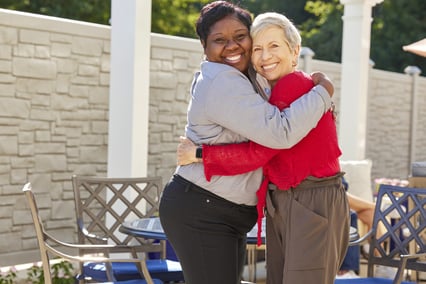
Many communities in Bergen County have resident ambassador programs. These are current residents who volunteer to welcome newcomers. They might stop by to say hello, invite you to sit with them at dinner, or walk you to an activity so you don't have to find the space on your own.
It's a small thing, but it makes an enormous difference. Having someone who remembers what it felt like to be new, someone who can say, "I was nervous too, and now I can't imagine being anywhere else," takes the edge off those first uncertain days.
You won't have to figure everything out by yourself. That's a promise most good communities take seriously.
Does Friendship Need to Look the Way It Used To?
Let's set aside the idea that making friends means becoming inseparable or spending every waking minute together. At this stage of life, friendship often looks quieter, and that's perfectly fine.
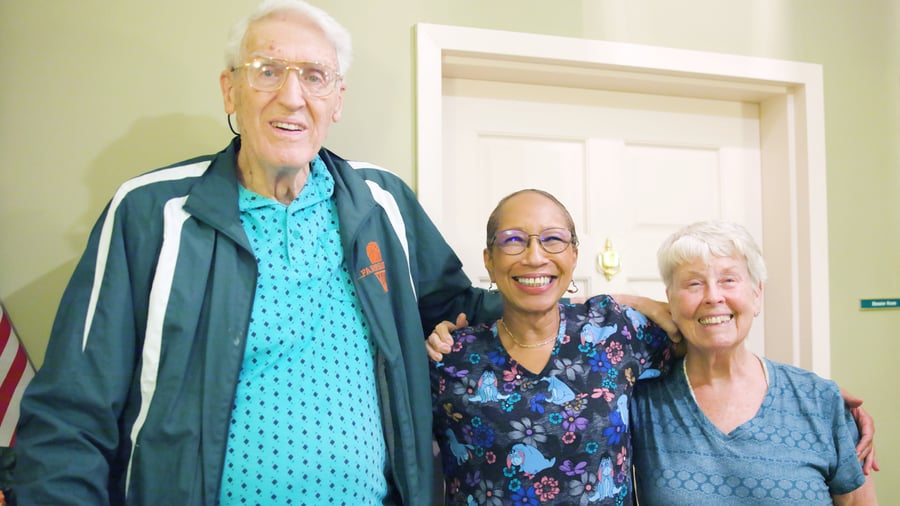
It might be the woman who saves you a seat at lunch every Tuesday. The gentleman who always asks about your grandchildren. The neighbor who knocks on your door to see if you'd like to watch the evening news together.
A study published in the Journal of Social and Personal Relationships found that older adults who maintained even a small number of meaningful friendships reported higher levels of well-being than those with larger but more superficial social networks. Quality matters far more than quantity.
And friendship at this stage carries health benefits that are hard to ignore. The Harvard Study of Adult Development, one of the longest-running studies on happiness, found that strong social connections are one of the most powerful predictors of both physical health and longevity. People with close friendships tend to experience less cognitive decline, lower rates of depression, and even better heart health.
Staying socially active and physically engaged go hand in hand. If you'd like to explore that connection further, this guide to staying active and vibrant is a helpful resource.
What If You're Still Not Sure?
Here's something worth remembering: almost everyone who moves into a senior living community feels nervous at first. That feeling doesn't mean it's the wrong decision. It just means it's a big one.
You don't have to walk in ready to be social. You can take your time. Eat a quiet breakfast. Sit in a sunny corner with a book. Join one activity and skip the rest. There's no schedule you're required to follow, no personality test you need to pass.
But most people find that, sooner or later, a conversation happens. Someone at the next table makes a comment about the weather in Norwood, or asks if you've tried the soup. And before long, you're not the new person anymore. You're someone's friend.
If you're still weighing whether community living is right for you or your family, this free guide comparing senior living and staying at home can help you think through the decision at your own pace.
The friendships waiting for you in senior living aren't the ones you planned for. They're the ones that happen when you least expect them, and they might just be the best part of the whole experience.