When families across the North Shore start comparing assisted living or memory care communities, they tend to focus on the same things: staffing ratios, apartment layouts, dining menus, and proximity to where they live. Those details matter. But there's a question that often gets lost in the shuffle, and it might be the most important one of all:
Will my parent actually be healthier here than they are right now?
It's not a hypothetical. A growing body of longevity research shows that structured, whole-person wellness programming can meaningfully improve quality of life for older adults. Not just maintain it. Improve it.
That's a powerful distinction, and it's worth understanding what makes it possible.
Why Does Wellness Deserve Its Own Column on Your Comparison Sheet?
Most families create some version of a pros-and-cons list when evaluating communities near Highland Park, IL or surrounding areas like Winnetka, IL, Wilmette, IL, and Skokie, IL. Cost, location, and care services get their own rows. But wellness programming often gets lumped in with "activities," a vague category that could mean anything from a weekly movie screening to a full-time certified fitness trainer on staff.
Those are not the same thing.
An activities calendar fills time. A wellness program builds capacity. The distinction matters because wellness infrastructure, including professional staff, intentional programming, and dedicated spaces, is what separates a community where residents stay engaged from one where they slowly disengage.
Think of it this way: if your parent needed physical therapy after surgery, you wouldn't settle for a community that handed them a resistance band and wished them luck. The same logic applies to ongoing wellness. Structure, expertise, and consistency make the difference.
How Does Professional Fitness Programming Strengthen the Body?
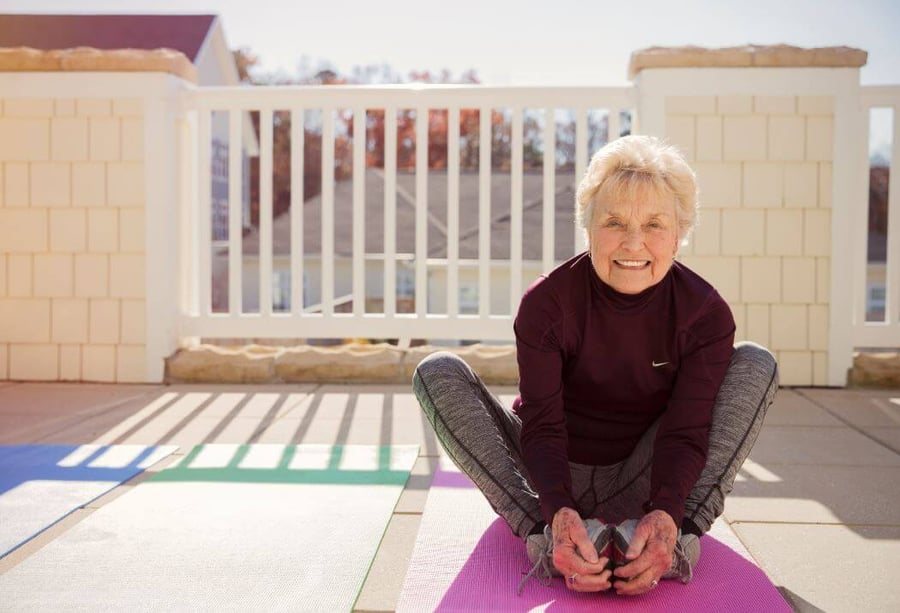
Physical fitness in senior living should go far beyond a treadmill in a back hallway. The best programs are led by certified fitness professionals who understand the specific needs and goals of older adults, including people living with arthritis, balance challenges, or recovering from a hospital stay.
Here's what to look for:
-
Certified trainers who design exercise programs tailored to each resident's abilities and goals, not one-size-fits-all group classes alone.
-
Functional fitness focus, meaning exercises that directly support daily life: getting out of a chair, carrying groceries, and walking confidently without a walker.
-
Progressive programming that adjusts over time as residents get stronger or their needs change.
-
Variety, including chair yoga, strength training, balance classes, walking clubs, and water-based exercise where available.
-
Partnerships with physical therapy providers so rehabilitation and fitness work hand in hand.
For families exploring an active senior lifestyle in Highland Park, IL and nearby communities like Riverwoods, IL and Bannockburn, IL, this kind of physical programming should be non-negotiable. If you'd like to dig deeper into how staying active supports long-term health, our free guide, Stay Active, Stay Young: A Senior's Handbook to Vibrant Living, is a helpful starting point.
What Does Cognitive Wellness With Real Depth Look Like?
Cognitive health is about more than keeping busy. It's about keeping the brain challenged, stimulated, and connected to new learning. That matters whether your parent is living with early-stage dementia or is simply looking for a community that takes brain health seriously.
Effective cognitive wellness programming includes:
-
Music therapy programs led by trained professionals, which research has shown can reduce anxiety and improve recall in people living with Alzheimer's disease and other forms of dementia.
-
Social gaming and recreation, such as trivia groups, strategy card games, and collaborative puzzles, that combine cognitive challenge with social interaction.
-
Health education sessions where residents learn about nutrition, sleep, medication management, and brain health.
-
Creative expression through art, writing workshops, and storytelling, activities that activate different neural pathways than routine daily tasks.
The key distinction? These aren't drop-in diversions. They're part of an intentional framework designed to support cognitive vitality over time.
If you're interested in practical habits that complement this kind of programming, take a look at five brain health habits worth building in your 70s and 80s. Many of them align with what the best communities already incorporate into daily life.
How Do Connection, Purpose, and Belonging Nurture the Spirit?
Here's the wellness dimension that surprises most families: emotional and spiritual well-being may be the strongest predictor of longevity in older adults.
Strong social connections and a sense of purpose may be linked to lower rates of cognitive decline, heart disease, and depression.
So what does spiritual and emotional wellness look like in a senior living community?
-
Reflection and spiritual programs, including meditation groups, chaplain visits, interfaith services, and quiet spaces for contemplation.
-
Resident-led clubs and interest groups that give people a role and a reason to show up.
-
Robust engagement programs designed to foster genuine friendships, not just proximity.
-
Volunteer and mentorship opportunities that keep residents connected to purpose.
-
Staff trained to recognize and respond to emotional needs, such as loneliness, grief, and transition anxiety, not just physical ones.
This is the piece that separates a high-quality assisted living community on the North Shore from one that simply checks the care boxes. When spirit and connection are woven into daily life, residents don't just live in a community; they belong to one.
For a closer look at how wellness fits into everyday routines rather than existing as a separate program, read about what daily life in assisted living looks like on the North Shore.
How Should You Evaluate Wellness When You Visit?
When you tour a community, whether it's in Evanston, IL, Highland Park, IL, or anywhere else, bring these questions with you:
-
Who leads your fitness programming? Look for certified professionals, not just activity aides.
-
How do you tailor wellness to individual residents? A good answer involves assessment, goal-setting, and regular check-ins.
-
Can I see a full month's calendar? Look for variety across physical, cognitive, social, and spiritual categories, not the same rotation every week.
-
How do you support residents living with dementia in your wellness programs? Memory care should include adapted wellness, not exclusion from it.
-
What happens when a resident doesn't want to participate? The answer reveals how much the community invests in motivation, encouragement, and meeting people where they are.
Wellness programming isn't a luxury feature. It's the infrastructure that determines whether a resident maintains their health or gradually loses ground. The right community makes getting stronger the default, not the exception.
Take the Next Step
If you're exploring assisted living or memory care options for a loved one on the North Shore, we'd love to help you understand what whole-person wellness looks like in practice. Schedule a tour and you can see firsthand how we prioritize wellness at Arbor Terrace Highland Park.