

Your mom mentions she's been skipping meals because cooking feels like too much effort. Your dad admits he hasn't refilled his prescriptions in weeks. These small revelations can send you spiraling into research mode, searching for care options late at night, trying to figure out what kind of help your parent actually needs.
One of the most common points of confusion? The difference between personal care and a skilled nursing home. They sound similar, and people often use the terms interchangeably, but they serve very different needs. Understanding the distinction can save you time, money, and stress and help you find the right fit for your parent.
What Is Personal Care?
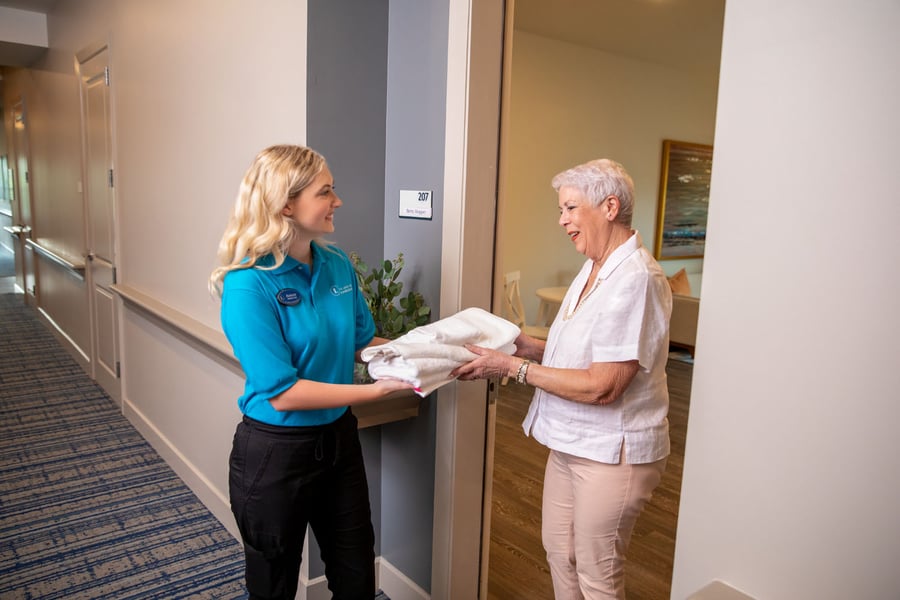
Personal care is a residential option for older adults who are mostly independent but need daily support. Think of it as a helping hand with the things that have become harder over time.
Residents in personal care communities typically receive help with:
-
Bathing, dressing, and grooming
-
Medication reminders and management
-
Meal preparation and nutrition
-
Light housekeeping and laundry
-
Transportation to appointments
The environment in a personal care community tends to feel more residential than clinical. Residents usually have their own apartment, eat meals in a shared dining area, and participate in social activities and outings. Staff are available around the clock, but the focus is on helping residents maintain as much independence as possible.
If you're curious about what a typical day looks like, you can see what daily life in personal care actually looks like for a closer look.
In Pennsylvania, including communities in the Exton, West Chester, and Paoli areas, personal care is a licensed level of care regulated by the state. This means communities must meet specific staffing, safety, and care standards.
What Is a Skilled Nursing Home?
A skilled nursing home provides a much higher level of medical care. These communities are designed for people who need 24-hour medical supervision from licensed nurses and cannot manage daily life even with assistance.
Residents in skilled nursing may need:
-
IV therapy, wound care, or ventilator support
-
Rehabilitation after surgery or a hospital stay
-
Management of complex medical conditions
-
Full assistance with all activities of daily living
-
Ongoing monitoring by registered nurses
The atmosphere in a skilled nursing home is more clinical. Spaces are often shared, and the schedule revolves around medical routines. While many skilled nursing home work hard to create a comfortable atmosphere, the priority is medical care, not lifestyle enrichment.
What Are the Key Differences?
Here's a quick comparison to help you see where the two options diverge:
| Personal Care | Skilled Nursing | |
|---|---|---|
| Level of care | Help with daily activities | 24/7 skilled medical care |
| Staff | Caregivers and aides | Licensed nurses and medical professionals |
| Environment | Residential | Clinical |
| Independence | Encouraged and supported | Limited by medical needs |
| Typical resident | Needs help but is fairly independent | Requires ongoing medical intervention |
| Average cost | Generally lower | Generally higher due to medical staffing |
| Common payment | Private pay, long-term care insurance | Medicare (short-term), Medicaid, private pay |
For families researching senior care options in Chester County, PA, including areas like Exton, Malvern, Downingtown, and West Chester, it helps to know that many communities offer multiple levels of care under one roof. This means your parent may be able to start in personal care and transition to a higher level of support if their needs change. To explore all senior care options available in Exton, take a look at our broader guide for families.
How Do You Know Which One Your Parent Needs?
This is the question that keeps so many family caregivers up at night. Here are some practical ways to assess the situation.
Personal care may be the right fit if your parent:
-
Forgets to take medications or skips meals
-
Has trouble with bathing, dressing, or mobility but doesn't need medical equipment
-
Feels isolated or lonely living alone
-
Has had a minor fall or close call that concerns you
-
Could benefit from social engagement and a structured routine
-
Is living with early-stage memory changes
A skilled nursing home may be more appropriate if your parent:
-
Needs daily wound care, injections, or catheter management
-
Is recovering from a major surgery or hospitalization
-
Has a complex medical condition requiring frequent nursing assessment
-
Cannot transfer, eat, or perform basic functions without full assistance
-
Needs rehabilitation services like physical or occupational therapy on a daily basis
If you're noticing early signs like missed medications, a messier-than-usual house, or weight loss, but your parent doesn't have serious medical needs, personal care with daily assistance is often the better starting point. Many families in the Exton, PA area find that this level of support gives their parent the help they need while preserving their dignity and routine.
Want to explore this further? Download our free guide to help you recognize when a parent may benefit from personal care support.
How Can You Take the Next Step Without the Pressure?
If you're reading this, chances are you're still in the early stages of thinking about what's best for your parent. That's a good place to be. The more you understand now, the more confident you'll feel when the time comes to make a decision.
Here are a few things you can do right now:
-
Talk with your parent's doctor about their current care needs and how they might change over time.
-
Have an honest conversation with your parent about what kind of help they'd be open to.
-
Research the options in your area so you know what's available before a crisis forces a rushed decision.
-
Learn the financial landscape, including what insurance covers and what you'd pay out of pocket.
Understanding the difference between personal care and skilled nursing is one of the most valuable things you can do for your family. It takes the guesswork out of a process that can feel overwhelming.
For a deeper look at what personal care involves and whether it might be the right fit, get our complete guide to personal care. It's a helpful resource for families who want to feel informed and prepared, on their own timeline.