.svg)

What You'll Learn
Your parent in East Memphis or Germantown probably isn't lying when they say the week was fine. They're just not telling you the whole story, because they may not even realize it themselves.
The slow fade from independent to isolated doesn't announce itself. It shows up in skipped meals that no one notices, in afternoons that blur together without purpose, and in a growing distance between your parent and the life they used to live. The risks of aging at home alone aren't always emergencies. More often, they're absences of connection, of structure, of someone noticing when things shift.
This post is about those absences, and why they matter more than most families think.
Why Is "No Crisis" Not the Same as "Doing Well"?
Most families gauge how a parent is doing by what hasn't happened. No falls. No hospital visits. No panicked phone calls at midnight. And when nothing dramatic has occurred, it's easy to conclude that everything is working.
But absence of crisis is not the same as presence of well-being.
Consider what a typical weekday might look like for an older adult living alone near Cordova or Bartlett. They wake up, make coffee, maybe watch the news. Lunch might be crackers and cheese because cooking for one feels pointless. The afternoon stretches out with no plans, no visitors, no reason to leave the house. By evening, they've spoken to no one in person.
That might not be terrible if it's just a single day. But stack fifty of those days together, and you start to see the toll. Small changes in routine can reveal a lot about how your parent is really doing if you know what to look for.
Why Is Social Connection Infrastructure, Not an Amenity?
When families think about aging in place risks, they tend to focus on physical safety: grab bars, medication management, and fall prevention. Those things matter. But there's a less visible threat that research increasingly shows is just as serious.
Social isolation among older adults carries significant health risks. It's linked to higher rates of cognitive decline, depression, heart disease, and even premature death. And it doesn't require someone to feel lonely. Structurally being alone for most of the day is enough to trigger these effects.
The research on what daily connection does for overall wellness is hard to ignore. Yet when a parent lives alone, social interaction becomes something that has to be sought out rather than something that happens naturally. And as mobility decreases or driving becomes less comfortable, especially navigating Memphis traffic along Poplar Avenue or Summer Avenue, those opportunities shrink.
This is where the comparison of aging at home vs. senior living becomes most striking. In a community setting, connection is built into the day. Meals happen together. Activities create natural touchpoints. Neighbors become familiar faces. That structure isn't a luxury; it's the foundation that keeps people engaged and well.
What Gaps Are Staying Silent?
Safety concerns for aging parents tend to surface only after something goes wrong. But the warning signs are often there long before the emergency. They're just quiet.
Nutrition gaps. When someone lives alone, cooking often feels like too much effort for just one person. Meals shrink to toast, canned soup, or nothing at all. Over weeks and months, poor nutrition contributes to muscle loss, weakened immunity, and cognitive changes. You might not notice during a visit if the fridge has food in it, but having food and eating balanced meals are two different things.
Medication drift. A pill organizer on the counter looks reassuring. But is it filled correctly? Is it being used consistently? Without someone checking in daily, doses get doubled or skipped, and the effects may not become apparent until a doctor's visit reveals a problem.
Environmental hazards. The rug that's been in the hallway for twenty years. The dim lighting on the staircase. The bathtub without a non-slip surface. These risks don't change day to day, so they become invisible to the person living with them.
What Is the Cost to the People Doing the Worrying?
There's another dimension to this that families rarely talk about: the weight on the adult children and family members managing everything from a distance.
If you're coordinating pharmacy pickups, scheduling doctor's appointments, checking in by phone multiple times a day, and making the drive from Collierville or Lakeland every weekend to assess how things look, you're doing the work of a part-time caregiver, whether or not you call it that.
That kind of sustained vigilance takes a toll. Research consistently shows that family caregivers experience higher rates of anxiety, sleep disruption, and burnout. And the hardest part is often the uncertainty: Is this enough? Am I missing something? What if something happens on a Tuesday afternoon when no one is there?
These aren't irrational fears. They're reasonable responses to a situation that was never designed to be managed remotely.
What Questions Are Worth Asking This Week?
Before assuming the current arrangement is working, consider asking yourself and your parent these questions:
-
How many hours a day does my parent spend without any face-to-face interaction? If the answer is more than eight, social isolation may already be affecting their health.
-
What did they eat yesterday? Not what's in the fridge, but what did they actually eat for breakfast, lunch, and dinner?
-
When was the last time they left the house for something other than a medical appointment? Errands and doctor visits aren't social engagement.
-
Would they tell me if something was wrong? Many older adults minimize problems to avoid being a burden or to protect their independence.
-
Am I measuring how they're doing by how they sound on the phone, or by what their daily life actually looks like?
This is the kind of honest inventory that helps families move from hoping things are fine to knowing where things actually stand.
What Comes Next?
Recognizing these gaps doesn't mean you've failed. It means you're paying closer attention than most families do. And there's a meaningful difference between a parent who is managing alone and one who is genuinely thriving, surrounded by people, supported by structure, and living with purpose built into each day.
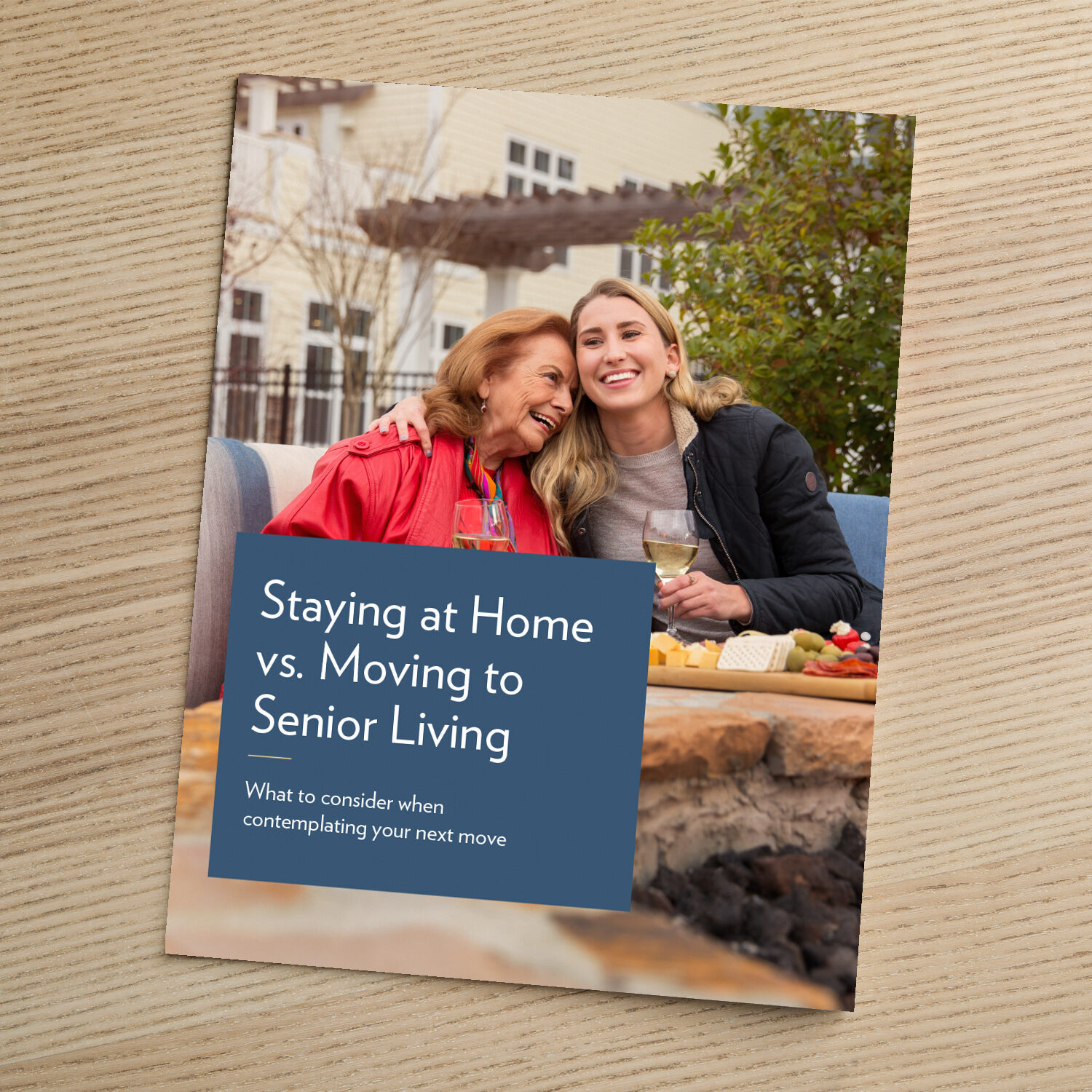
If you're weighing whether your parent's current situation is truly working, this free guide walks through the comparison side by side. It's a straightforward look at what staying at home actually involves versus what life in a community can offer, for your parent and for your family.