

Imagine two buildings sitting next to each other on the same street. One looks like a cozy apartment complex with a garden out front. The other resembles a small hospital. Both serve older adults, but in very different ways, for very different reasons.
If you're starting to think about what the future might look like for an aging parent, even if that future is still years away, understanding the difference between assisted living and a skilled nursing home is one of the most useful things you can do now. These two terms get mixed up constantly, but they represent distinct levels of care, cost, and daily experience.
Let's break it down so you feel informed and prepared, whenever the time comes.
What Is the Core Difference Between Assisted Living and Skilled Nursing?
The simplest way to think about it: assisted living helps with daily life, while a skilled nursing home provides ongoing medical care.
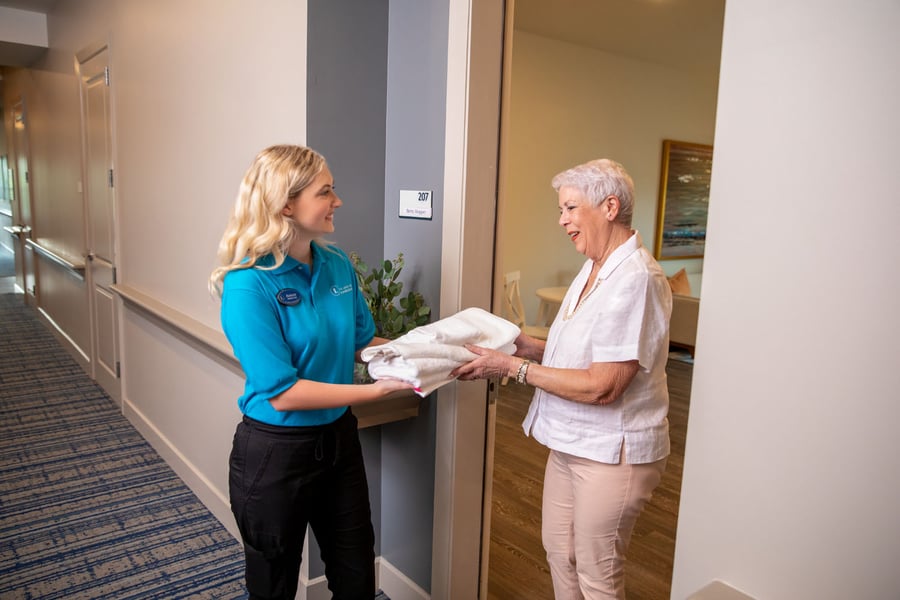
Assisted living communities are designed for seniors who are mostly independent but need a hand with everyday tasks, such as bathing, dressing, managing medications, or preparing meals. Residents typically live in their own private apartments, maintain their own routines, and have access to social activities, dining programs, and wellness support.
Skilled nursing homes serve people who require round-the-clock medical attention. This might include seniors recovering from surgery, those managing complex chronic conditions, or individuals who need specialized therapies like wound care or IV medication. Licensed nurses and medical professionals are on-site at all times.
Think of it this way: if your parent needs someone to remind them to take their blood pressure medication each morning, that's likely an assisted living situation. If your parent needs a nurse to administer injections and monitor vitals multiple times a day, that points toward skilled nursing.
What Does Everyday Life Feel Like in Each Setting?
This is where the difference becomes vivid, and it's often what matters most to families.
Assisted living communities are built around comfort and independence. Residents decorate their own spaces, choose when to eat, join group outings or exercise classes, and come and go with a level of freedom that reflects their abilities. The atmosphere tends to feel residential and social, more like a neighborhood than a clinical setting. Here's what a typical day in assisted living actually looks like.
Skilled nursing homes, by contrast, are structured around medical routines. Apartments are often shared, meals follow a set schedule, and much of the day revolves around treatment plans, therapy sessions, and clinical monitoring. The environment can feel more institutional, not because the staff don't care, but because the priority is medical stability.
Neither setting is inherently better. They simply serve different needs. Understanding which environment matches your parent's situation is the key.
How Do Families Pay for Each Option?
Cost is one of the biggest sources of confusion, partly because assisted living and skilled nursing homes are funded so differently.
Assisted living is most often paid for through private funds, such as savings, retirement income, long-term care insurance, or sometimes veterans' benefits. Assisted living tends to cost less than nursing home care.
Skilled nursing homes are considerably more expensive. However, Medicare may cover short-term skilled nursing stays (typically after a qualifying hospital stay), and Medicaid can help cover long-term skilled nursing costs for those who qualify.
One important note: Medicare does not generally cover assisted living. This is a common misconception that catches families off guard.
Learn more about how families in Gambrills pay for senior living for a deeper look at payment options in the area.
What Other Senior Care Options Exist Beyond These Two?
Assisted living and skilled nursing are just two points on a broader spectrum. Depending on your parent's needs, other options might be worth understanding:
-
Independent living or 55+ communities serve active seniors who want a maintenance-free lifestyle with built-in social opportunities, popular throughout Anne Arundel County for retirees near Crofton, Bowie, and Annapolis.
-
Memory care is a specialized form of assisted living designed for people living with Alzheimer's disease or other forms of dementia. These communities offer secure environments and structured programming tailored to cognitive needs. If your loved one is showing signs of memory loss, here are the signs that may point to memory care.
-
Bridge care or short-term stays offer temporary support, after a hospital discharge, for example, without a long-term commitment.
For a broader look at senior care options near Gambrills, see our local guide for families.
Knowing where your parent falls on this spectrum, and understanding that their needs may shift over time, helps you plan proactively rather than scrambling during a crisis.
How Can You Start Thinking About What's Right for Your Family?
You don't need to have all the answers right now. But asking a few honest questions can help you gauge where things stand:
-
Can your parent manage daily tasks safely? Getting in and out of the shower, cooking meals, and remembering medications: if these are becoming difficult, assisted living may be worth exploring.
-
Are there serious or complex medical needs? Conditions requiring continuous nursing supervision, such as advanced COPD, post-stroke rehabilitation, or complex wound management, typically call for skilled nursing.
-
Is isolation a growing concern? Many families in the Gambrills, Crofton, and Davidsonville area notice that a parent who once had an active social life is now spending most days alone. Assisted living communities are specifically designed to address this.
-
How quickly are things changing? A sudden decline, such as a fall, a hospitalization, or a new diagnosis, might require nursing-level care immediately. Gradual changes often point toward assisted living as a supportive next step.
If you're noticing early signs that your parent could use more support, download our free guide: 10 Signs Your Parent Could Benefit from Assisted Living for a helpful checklist.
Why Does Planning Ahead Pay Off?
The families who feel most confident about senior care decisions are usually the ones who started learning early, well before a crisis forced their hand. Even if your parent is doing well right now, understanding the difference between assisted living and skilled nursing puts you in a stronger position for whatever comes next.
Take your time, gather information, and involve your parent in conversations when possible. The more you know now, the less overwhelming it will feel later.
Want to keep learning? Download The Complete Guide to Assisted Living for a comprehensive look at what assisted living offers, how it works, and how to evaluate whether it's the right fit for your family.