
Here's something that catches a lot of families off guard: assisted living and nursing homes aren't two names for the same thing. They serve different people, provide different levels of care, and feel very different on a day-to-day basis. But unless you've had a reason to look into senior care before, there's no reason you'd know that.
If you're starting to think ahead about a parent (maybe nothing urgent, just a growing awareness that things could change) understanding the distinction now can save you a lot of stress later. You won't have to make rushed decisions based on incomplete information.
For a broader overview of all senior living options, explore our Senior Living Demystified guide. But for now, let's break down these two specific options so you can see exactly how they compare.
What Is Assisted Living Built For?
Assisted living is designed for older adults who are mostly independent but need regular help with certain daily activities. Think of tasks like bathing, getting dressed, managing medications, or preparing meals. These are things that have become more challenging over time; not because of a major medical crisis, but because of the natural changes that come with aging.
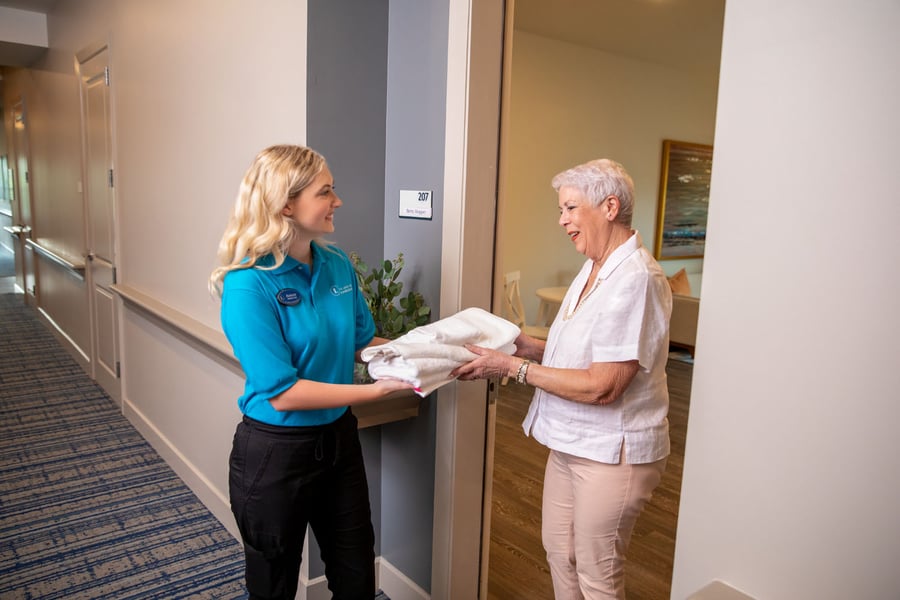
Residents in assisted living typically live in their own apartment or suite. They have their own space, their own furniture, and a daily routine that feels comfortable and personal. Communities usually offer shared dining, activity calendars, fitness classes, and social events. The goal is to support someone's independence while providing a safety net.
Staff members are available around the clock, but they aren't providing constant medical supervision. Instead, they step in when needed; reminding someone to take their medication, helping with mobility, or being there in case of an emergency.
What Is a Skilled Nursing Home Built For?
Skilled nursing homes exist for people who need a much higher level of medical care. This includes 24-hour nursing supervision, complex wound care, IV therapy, ventilator management, or rehabilitation after surgery or a stroke.
The environment reflects this level of care. Living spaces may be shared. The daily schedule often revolves around medical treatments and therapy sessions. Licensed nurses and physicians are on-site or on-call at all times. It's closer to a healthcare setting than a residential community.
A skilled nursing home is the right choice when someone's health requires ongoing, professional medical attention that simply can't be provided in a less clinical setting. Many people enter a skilled nursing home temporarily (for rehab after a hospital stay, for example) and then transition to a lower level of care once they've recovered.
How Do the Costs Compare?
This is one of the most common areas of confusion, so let's be direct about it.
Assisted living is primarily paid for out of pocket by residents and their families. Costs vary widely based on location, the size of the apartment, and the level of care needed. But in general it tends to cost less than nursing home care. Some long-term care insurance policies cover assisted living, and in certain states, Medicaid may offer limited assistance, but Medicare generally does not cover it.
Skilled nursing homes are usually significantly more expensive, Medicare does cover short-term skilled nursing stays (typically up to 100 days following a qualifying hospital stay), and Medicaid is the primary payer for long-term skilled nursing care for those who qualify financially.
Understanding these payment structures early, even years before you might need them, gives you time to plan and explore options without financial pressure.
What About Staying at Home?
Sometimes, families exploring assisted living and skilled nursing are also wondering whether their parent can simply stay where they are with some extra help. That's a completely valid question, and it's worth thinking through honestly.
In-home care can work well for a period of time, but it has limits. An aide might visit for a few hours a day, but they aren't there at 2 a.m. when someone gets confused and tries to leave the house. There's also the isolation factor, living alone without regular social interaction can take a serious toll on both mental and physical health.
If you're weighing whether your parent can remain where they are, our guide to staying at home vs. moving to senior living can help you think through the pros and cons.
How Do You Start Sorting Out What Fits?
You don't need to have all the answers right now. But asking a few key questions can help you get a clearer picture of what your parent might need, today or down the road:
-
Can your parent handle daily tasks with minimal help? If they need some assistance with bathing, dressing, or medication management but are otherwise doing well, assisted living is likely the better fit.
-
Does your parent require ongoing medical treatment or skilled nursing? If a physician has recommended 24-hour nursing care, or if your parent is recovering from a major medical event, a skilled nursing community is probably the answer.
-
What does your parent value most? For someone who prizes their independence and social connections, the residential feel of assisted living may be far more appealing than a clinical environment.
-
What can your family realistically manage financially? Understanding costs and payment options early helps you avoid surprises and make more informed choices.
There's no single right answer for every family. The right choice depends on your parent's specific health needs, preferences, and circumstances.
Keep Learning at Your Own Pace
If you're reading this well before any big decision needs to be made, you're already doing something valuable. Families who understand their options ahead of time tend to feel more confident and less overwhelmed when the moment comes to act.
You can download our Complete Guide to Assisted Living for a deeper look at what assisted living offers, including what daily life looks like and what questions to ask when evaluating communities.