
What You'll Learn
It's a fair question, and one that catches many families off guard. When you start looking into assisted living or memory care, the assumption is often that your loved one needs more help, not that they might actually get stronger. But research consistently shows that older adults in communities with comprehensive wellness programming experience measurable improvements in physical function, cognitive engagement, and emotional health.
So if you're comparing senior living options right now, wellness programming deserves more than a passing glance. Here's what to look for and why it matters more than you might think.
What Is the Difference Between an Activities Calendar and a Wellness Strategy?
Almost every senior living community will hand you an activities calendar during a tour. You'll see bingo, movie nights, maybe a craft session. Those things are fine. But they're not wellness programming.
True wellness programming is intentional, coordinated, and designed around the whole person: body, mind, and spirit. It's not a list of things to do. It's an infrastructure built to help residents maintain and even build strength, stay mentally sharp, and feel connected to something meaningful.
Here's a simple way to think about it: an activities calendar fills time. A wellness strategy improves health.
When you're touring communities, ask who designs the wellness programming. Is there a dedicated wellness director? Are programs adapted based on residents' changing needs? Is there a philosophy behind the schedule, or is it just a collection of events?
The answers will tell you a lot about whether a community treats wellness as a priority or an afterthought.
Why Does Professional Fitness Guidance Change Everything?
One of the most common concerns families have is that their loved one will become more sedentary after moving into a community. At the previous residence, there was at least the walk to the mailbox or the effort of making meals. What happens when those daily tasks are handled by someone else?
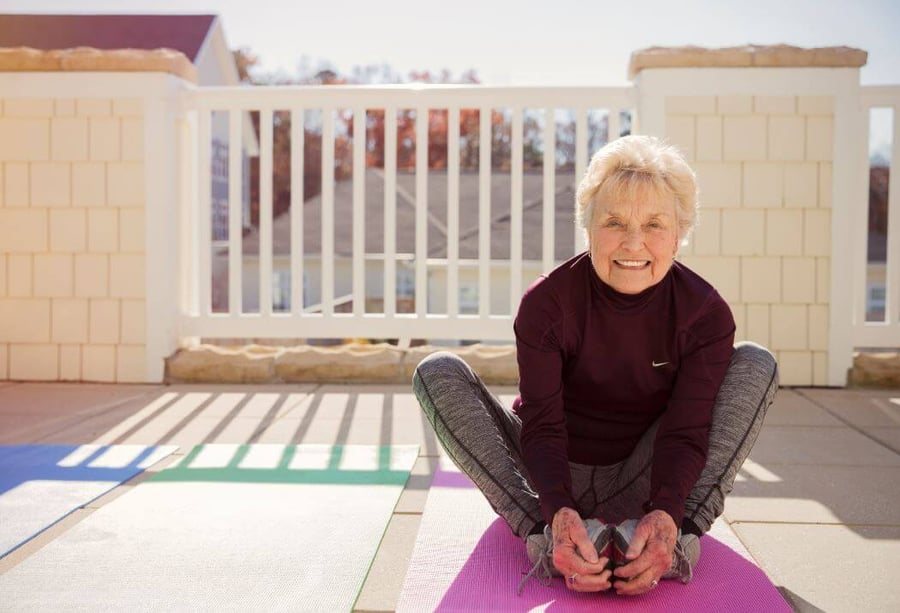
In communities with strong wellness programming, the answer is: residents actually move more, not less. That's because they have access to certified fitness trainers who understand how to work with older adults safely and effectively.
This isn't about running on treadmills. It's about functional fitness: exercises that help with balance, flexibility, and the kind of strength that makes it easier to get out of a chair, walk confidently, or recover from a fall.
Many communities offer group exercise classes like chair yoga, tai chi, or resistance band training, along with one-on-one sessions tailored to each resident's abilities. Some communities also partner with physical therapy providers, so residents can receive rehabilitative care on-site without the hassle of off-campus appointments.
For a closer look at how structured fitness programming supports seniors, download our guide to fitness programming.
The key thing to evaluate: Is fitness programming led by trained professionals, or is it a space with equipment and no guidance? That distinction makes all the difference in outcomes.
How Does Cognitive Wellness Go Beyond Crossword Puzzles?
Cognitive health is about more than crossword puzzles. While word games have their place, meaningful cognitive wellness involves varied, challenging activities that stimulate different areas of the brain.
Look for communities that offer programs like:
-
Music therapy. Research from Johns Hopkins has shown that music activates nearly every region of the brain simultaneously, supporting memory, language, and emotional processing.
-
Lifelong learning programs. Lectures, discussion groups, or classes on topics from history to current events keep the mind engaged in ways that passive entertainment cannot.
-
Social gaming and strategy-based recreation. Card games, trivia, and collaborative problem-solving all provide cognitive benefits wrapped in social interaction.
Explore our visual guide for practical strategies to keep an older mind sharp.
Why Does Emotional and Spiritual Health Predict Longevity?
This is the piece that often gets overlooked during a family's search, and it may be the most important one.
In a senior living context, spirit doesn't necessarily mean religion (though many communities offer chaplain services and worship opportunities for those who want them). It means:
-
Belonging. Feeling like part of a community, not just a resident in a building.
-
Purpose. Having roles, responsibilities, or creative outlets that give shape to the day.
-
Reflection. Access to quiet spaces, meditation groups, or spiritual programming that supports inner life.
When you visit a community, notice whether residents seem engaged with each other and with staff. Are there clubs or resident-led groups? Do people have choices about how they spend their time? The emotional atmosphere of a community is harder to measure than a fitness center, but it's just as important.
Discover practical tips for staying vibrant and active in our free handbook. It's a great resource for families who want to understand what active, engaged senior living can look like and what questions to bring along on your next community visit.
What Questions Should You Ask About Wellness Programming?
As you compare communities, here are specific questions to ask about wellness programming:
-
Who leads your fitness programs? Look for certified trainers with experience in senior fitness.
-
How do you adapt programs for different ability levels? Wellness should meet residents where they are, whether they're walking independently or using a wheelchair.
-
What does cognitive programming look like beyond games? Ask for examples of music therapy, learning programs, or structured brain health initiatives.
-
Do you have on-site physical therapy partnerships? This signals a commitment to rehabilitative care, not just maintenance.
-
How do you support residents' emotional and spiritual well-being? Listen for specific programs, not vague assurances.
-
Can residents help shape the programming? Communities that invite resident input tend to have higher engagement and satisfaction.
The best wellness programs aren't static. They evolve based on resident feedback, emerging research, and the specific needs of the people living there.
What Is the Next Step?
If you're exploring senior living options for someone you love, wellness programming is one of the most meaningful factors to weigh. It's the difference between a place where your loved one is cared for and a place where they're supported to live fully. Schedule a tour at an Arbor Company community near you and we will show you how we make wellness a top priority.