
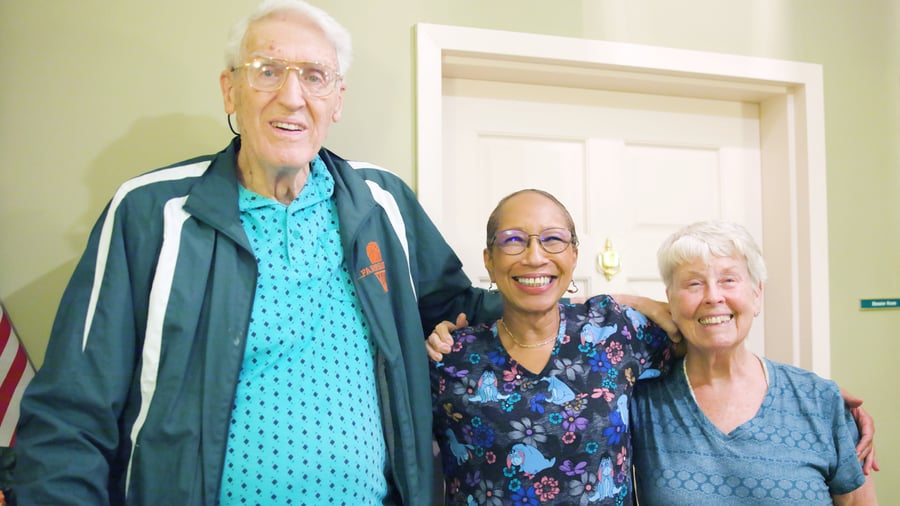
You can make new friends in senior living at any age, and it doesn't take an icebreaker game or an awkward mixer. Friendships can start with something as simple as an open chair at the dining table or a conversation about the mystery novel you both just finished.
If you feel too set in your ways for new friendships, or if many of the people you're closest to have moved away, the idea of starting over can feel exhausting. But friendship doesn't always announce itself. Sometimes it just pulls up a chair.
If you're feeling anxious about the social side of moving to a senior living community, you're not alone. That worry is one of the most common concerns people share. And it's also one of the first to fade.
Do Friendships Have an Expiration Date?
There's a quiet belief many people carry: that the ability to make close friends belongs to an earlier chapter of life. But research tells a very different story.
A landmark study published in Personal Relationships found that older adults often form friendships that are more emotionally satisfying than those made earlier in life. Why? Because with age comes a clearer sense of what matters. There's less pretense, less competition, and more openness to genuine connection.
The quality of friendships, not the quantity, is often the strongest predictor of well-being among adults over 75. Even one or two meaningful connections can make a profound difference in mood, energy, and outlook.
So no, there's no age limit on friendship. The desire for companionship doesn't fade with time. What often fades is the opportunity, and that's exactly what community living restores.
What Happens When You're No Longer Isolated?
Here's something that's easy to overlook: when you're living alone, you may not realize how small your world has gotten. Maybe you stopped driving a few years ago. Maybe the neighbors you used to visit with have moved. Maybe the phone rings less often than it used to.
This kind of isolation doesn't happen all at once. It creeps in slowly, and it can feel normal even when it's not. Understanding the difference between staying at home and the built-in social connections that come with community living can help put things in perspective.
In a senior living community, the structure of daily life naturally brings people together. You share meals. You pass each other in hallways. You sit near the same people during a movie night or a morning stretch class.
Psychologists call this the "mere exposure effect": the simple idea that the more often we see someone, the more comfortable and connected we feel with them. You don't have to be outgoing. You don't have to join every activity. Just being present in shared spaces does much of the work for you.
How Do Shared Interests Become Shared Lives?
One of the most natural ways friendships develop is through doing something you already enjoy, alongside someone else who enjoys it, too.
Maybe it's a book club, a gardening group, or a weekly card game. Maybe it's a watercolor class you wandered into because the door was open. These low-pressure moments, where the focus is on the activity, not on "making friends," are where the strongest bonds tend to form.
When your hands are busy and the conversation flows naturally, friendship stops feeling like an effort. It just happens.
Staying active isn't just good for your body; it's one of the best ways to build a social life that feels natural and enjoyable. If you're curious about how activity and connection go hand in hand, this guide to staying active and vibrant is a helpful place to start.
What Is a Resident Ambassador?
One of the most thoughtful things many senior living communities do is pair new residents with someone who already lives there: a resident ambassador. This is a neighbor who volunteers to be a familiar, friendly face during those first days and weeks.
A resident ambassador might knock on your door to walk with you to lunch. They might introduce you to the people at their table, or simply check in to see how you're settling in. They remember what it felt like to be new, and they want to make it easier for you.
This kind of welcome goes a long way. It takes the pressure off that first week, when everything still feels unfamiliar. You don't have to figure out where to sit, what to do, or who to talk to. Someone is already there, ready to help you feel comfortable.
Many communities also have welcoming committees and social coordinators who pay close attention to new residents, making sure no one feels overlooked. The goal isn't to overwhelm you with activity. It's to make sure you know you belong.
Why Is Friendship Good for Your Health?
This isn't just about having someone to talk to, though that matters enormously. Research consistently shows that social connection has measurable effects on physical and mental health.
A well-known study from Brigham Young University found that strong social relationships were linked to a 50 percent greater likelihood of survival, a benefit comparable to quitting smoking. The National Institute on Aging has also linked social isolation and loneliness in older adults to higher risks of depression and a weakened immune system.
Research shows that strong social connections are linked to reduced cognitive decline, and there are other ways to keep your mind sharp, too.
Friendship, it turns out, is one of the most powerful things you can do for your well-being. And in a community setting, it's woven into the fabric of everyday life.
What if You're Not Ready Right Away?
If the idea of moving somewhere new still feels overwhelming, that's okay. Change is hard, especially when it involves leaving a place full of memories. No one expects you to walk through the door ready to be the life of the party.
What most people find is that connection happens in its own time. A wave in the hallway. A shared laugh during dinner. A conversation that catches you off guard because it felt so easy.
You get to go at your own pace. And when you're ready, the people around you will be glad you're there.
If you're beginning to picture what a move might look like, this checklist for moving to a senior living community can help you feel more prepared, one step at a time.