
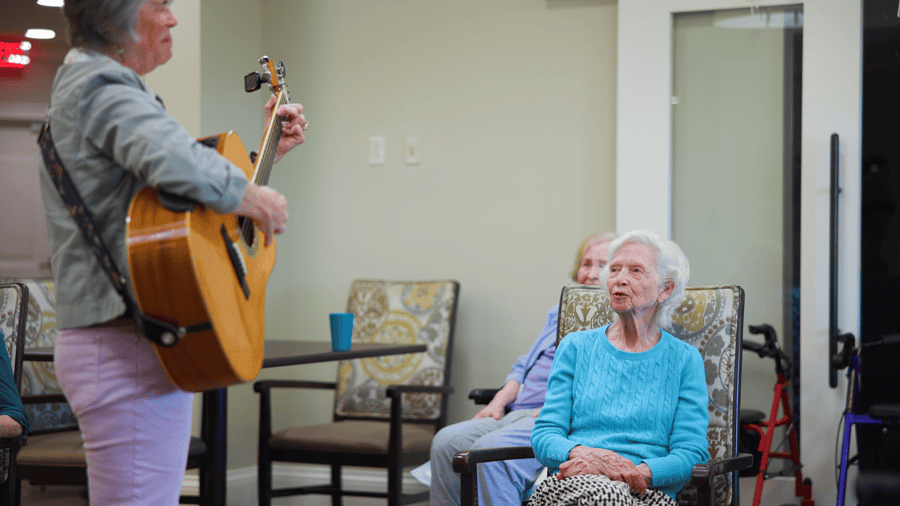
Volunteering doesn't stop when someone moves into a senior living community. In many ways, it gets easier. Througought our communities, residents find built-in ways to give back, from welcoming new neighbors to serving causes they love, with staff handling the logistics. Volunteer opportunities at a senior living community also reach outward, giving students, families, and neighbors meaningful ways to connect with older adults.
What "Volunteering" Really Means in Senior Living
Volunteering in senior living covers two connected ideas. The first is residents giving their time and talents — to each other, to their community, and to causes beyond the campus. The second is people from the outside coming in to spend time with residents and lend a hand.
Both matter, and both are good for everyone involved. A growing body of research shows that staying connected to others is a form of medicine.
Why Volunteering Matters More Than You Think
Loneliness isn't just an uncomfortable feeling. It's a health issue. The U.S. Surgeon General's 2023 advisory found that roughly half of U.S. adults report experiencing loneliness, and that weak social connection is linked to a meaningfully higher risk of heart disease. Among older adults, chronic loneliness and isolation can raise the risk of developing dementia by about 50 percent.
Volunteering pushes back against all of that. It trades empty hours for purpose, and it puts a person in regular contact with others. That feeling of "someone is counting on me" can be just as powerful as anything else on the calendar.
3 Things to Know About Volunteering at a Senior Living Community
1. Giving back is built in, not an add-on.
At The Arbor Company, community service is one of the seven dimensions of our Engaged Lifestyle programming. That means chances to help others are woven right into the monthly calendar. Residents don't have to arrange rides or hunt down organizations alone — the community helps make it happen.
2. Some of the best volunteering happens between neighbors.
Through our Resident Ambassador Program, residents volunteer to welcome newcomers. A Community Life Ambassador greets each new resident within the first day, makes introductions, and walks with them to that first activity. It's a small act of service that can change how someone feels about their new home.
3. Residents keep serving the causes they love.
Moving doesn't mean giving up a lifelong passion. Residents continue delivering meals, knitting for hospitals, mentoring students, or serving on nonprofit boards. Those who prefer to help closer to home can make calls, stuff envelopes, or lead a club.
Lesser-Known Insights About Senior Volunteering
Most families focus on the care a community provides. Fewer realize how much residents give back, and how much that giving fuels their well-being.
- The volunteer often gains more than the recipient. Volunteering is tied to lower rates of depression and anxiety, plus more structure and meaning in the day.
- Purpose is a health strategy. Feeling needed is linked to better outcomes as we age, which is why our teams treat engagement as seriously as nutrition or fitness.
- Joy counts too. Through the Arbor Dreams program, teams help residents fulfill long-held wishes — a reminder that giving and receiving happiness go hand in hand.
How You Can Volunteer With Older Adults
Spending time with residents is one of the most rewarding ways to give back, and you don't need any special training to start. Communities welcome all kinds of visitors, from high school and college students earning service hours to retirees looking for a meaningful routine. Faith groups, scout troops, garden clubs, and local businesses often pitch in, too.
The key is to bring what you already enjoy. If you play an instrument, a short afternoon concert can light up a whole room. If you love cards, crafts, or gardening, those simple shared activities tend to spark the warmest conversations.
Even a little time goes a long way. Reading aloud, helping with a tricky phone setting, or joining residents for lunch can brighten an ordinary day. Some volunteers come every week, while others help with a single seasonal event like a holiday party or a spring planting day.
Not sure where to begin? A few ways to jump in:
- Share a hobby or talent like music, art, baking, or a favorite game
- Help residents stay connected with phones, tablets, or video calls
- Lend a hand at seasonal celebrations and community events
- Write letters, read together, or simply visit for good conversation
The best first step is to call the community nearest you and ask what they need most. Every community is a little different, so a quick conversation helps match your time and talents where they'll mean the most. Many are glad to walk you through what a first visit looks like.
Key Takeaways
- Volunteering doesn't end in senior living — it often becomes easier and more frequent.
- Loneliness is a serious health risk, and giving back is a proven way to push against it.
- At The Arbor Company, community service is built into our Engaged Lifestyle programming.
- Residents give back through programs like Resident Ambassadors and by serving causes they love.
- Outside volunteers, students, and groups are a welcome part of community life.
Finding Connection Through Giving Back
Whether you're a resident hoping to stay involved or a family member looking to give back, volunteer opportunities at a senior living community open a path to connection, purpose, and joy. Offering your time, or receiving someone else's, is one of the simplest ways to feel at home.
Want more ideas for staying active and engaged in retirement? Download our free guide, The Busy Person's Guide to Recreation in Retirement, to explore all the ways life keeps growing in a senior living community.
