
Holistic memory careWhen families in Gambrills, Crofton, and Odenton begin searching for memory care, they're not only looking for a safe place, but also searching for a community that sees their loved one as a complete person with a lifetime of experiences, preferences, and memories. Here at Arbor Terrace Waugh Chapel, we take it a step further by understanding that memory care should honor every dimension of who someone is, so we can always put their wants and needs first.
True holistic memory care recognizes that, in addition to clinical support, a person living with Alzheimer's disease or dementia needs an environment that can nurture their mind, body, spirit, and emotional connections. This whole-person approach is proven to be very effective in transforming daily life into something meaningful and even joyful. Don’t just take our word for it though—let’s take a quick dive into this topic together!
Understanding Holistic Memory Care
Holistic memory care at its core goes far beyond the expected management of symptoms. It's a comprehensive philosophy that views each resident as a unique individual deserving of complete, fully encompassing care, regardless of where they are in their memory journey.
In more traditional settings, care might focus primarily on safety and basic needs, and while these are essential, they're just the foundation. Holistic Alzheimer's care builds upward, addressing how someone thinks, moves, feels, and finds meaning in each day.
In fact, we believe so fully in this philosophy, that at Arbor Terrace we've built our entire approach around it. You can rest assured that our team will always create environments where residents can thrive across all dimensions of wellness.
Three Key Dimensions of Whole-Person Memory Care
Physical Health and Daily Comfort
It’s no secret that physical wellness forms the foundation of quality of life for residents experiencing memory changes. That’s why our approach includes specialized support that maintains strength, mobility, and overall health without feeling clinical or restrictive.
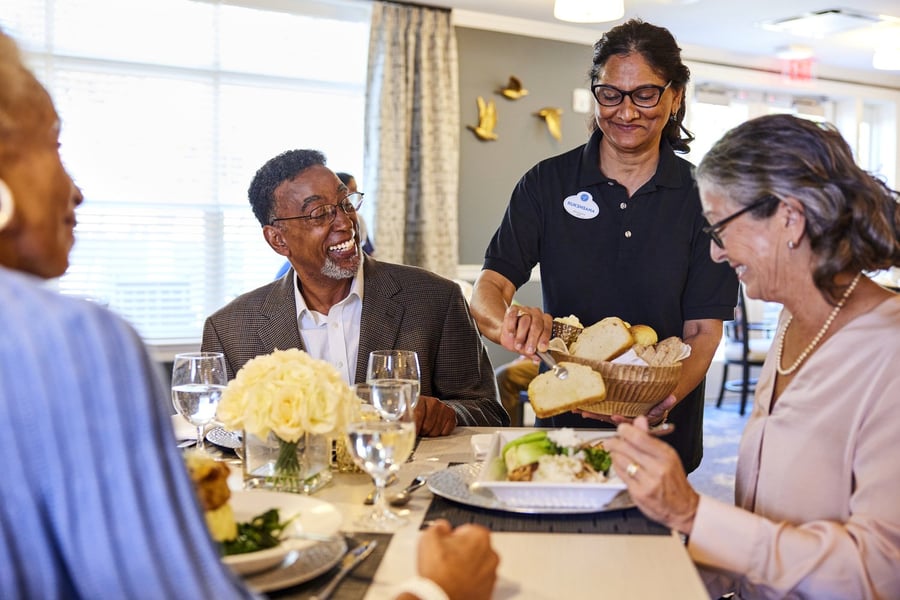
Our Dining with Dignity® program exemplifies this perfectly. This award-winning approach recognizes that nutrition challenges often accompany dementia. Instead of focusing on what residents can't do, our culinary team adapts meals to preserve both independence and enjoyment. Food is prepared in appetizing, manageable portions, and dining environments remain calm and pleasant. Mealtimes also become excellent opportunities for social connection rather than sources of stress.
Physical fitness programming complements nutritional support beautifully. Our certified senior fitness trainers lead activities specifically designed for residents with memory challenges, such as gentle movement classes, balance exercises, and walking programs that build strength while providing meaningful engagement.
Cognitive Function and Purpose
Cognitive engagement doesn't stop when someone receives a dementia diagnosis. In fact, purposeful mental stimulation becomes even more crucial. The key is creating failure-free environments where residents can participate successfully.
Our Evergreen Memory Care neighborhood provides the structured, evidence-based programs needed to promote cognitive wellness. Activities are specifically designed around each person's retained abilities and interests. Someone who loved gardening might participate in our sensory garden programs, or a former teacher might enjoy reading groups adapted to their current abilities.
For residents in earlier stages of memory loss, our Bridges neighborhood offers something truly special. This innovative program bridges the gap between assisted living and comprehensive memory care, so residents receive targeted cognitive support while maintaining greater independence.
In addition to these methods, our brain fitness activities, ranging from music therapy (which activates multiple areas of the brain) to art programs, reminiscence groups, and hands-on creative projects, are all designed to engage residents at their level while providing genuine feelings of enjoyment and accomplishment.
Honoring Emotional Wellbeing and Spiritual Fulfillment
Perhaps the most overlooked aspect of traditional memory care is emotional and spiritual wellness. Yet these needs don't diminish with cognitive changes, they often intensify.
That’s where our Deep Connections® philosophy comes into focus, putting relationships at the heart of everything we do. Our dedicated team members take the time to learn each resident's life story, preferences, and what brings them joy. This is essential. When caregivers understand that one resident lights up hearing big band music, or that another finds peace in morning walks through our courtyard, they can create moments of genuine connection throughout each day.
This emotional support also extends to managing the very real feelings that accompany memory loss, such as confusion, frustration, and anxiety. Our specialized training in dementia care helps our team respond with validation and patient techniques that reduce stress during an emotional time.
As for spiritual wellness, we understand it looks different for everyone. For some, it means participating in religious services or prayer groups. For others, it's finding meaning in nature, creativity, or service to others. We support residents in maintaining the spiritual practices and connections that have always mattered to them.
Lesser-Known Insights About Holistic Memory Care
The Power of Routine in a Homelike Setting
Many families don't realize how profoundly predictable routines impact someone with dementia. Our Evergreen neighborhood is thoughtfully designed to support natural daily rhythms. For example, we set up visual cues to help residents navigate independently, common areas are arranged to encourage spontaneous social interaction, and even our lighting adjusts throughout the day to support healthy sleep-wake cycles.
How Sensory Experiences Unlock Communication
When traditional communication becomes challenging, sensory engagement opens new pathways for connection. Gentle hand massage, familiar scents, favorite textures, and nostalgic music can all reach someone when words no longer can.
Family Involvement as Part of the Care Team
Families are never seen as just “visitors” at Arbor Terrace Waugh Chapel—they're partners in care. That’s why we ensure regular communication is established to keep you connected to your loved one's daily life. Our family education programs also can help you understand changing behaviors and learn effective communication techniques with your loved one. Some families even participate in care activities when visiting, strengthening their bond in meaningful ways.
Modern communication platforms make it easy for families across Maryland and beyond to stay involved. Photo sharing, activity updates, and transparent communication about care needs are all excellent uses of technology that can help you feel connected even when you can't visit in person.
What Makes Arbor Terrace Waugh Chapel Different
Located in the heart of Gambrills, our community serves families throughout Anne Arundel County with a commitment to excellence that's been recognized repeatedly. We're honored to be named Best Memory Care Community in Annapolis—validation from families like yours that our holistic approach truly makes a difference.
We combine the personalized attention of a close-knit community with the resources and expertise of The Arbor Company, a trusted name in senior living for more than 30 years. This means you get local care with national quality standards and support.
Additionally, our specialized neighborhoods provide the right level of support whether your loved one is experiencing early-stage memory changes or needs comprehensive dementia care. The flexibility to transition between levels of care as needs evolve means they can stay in a familiar community surrounded by team members who know and love them.
Answering Some Frequently Asked Questions
What's the difference between regular memory care and holistic memory care in Gambrills?
Holistic memory care addresses the complete person—mind, body, spirit, and emotions—rather than just managing symptoms. At Arbor Terrace Waugh Chapel, this means specialized programs for cognitive engagement, customized nutrition, physical wellness, emotional support, and opportunities for spiritual fulfillment all working together. Traditional memory care might focus primarily on safety and basic assistance, while our approach nurtures quality of life across every dimension.
How do you keep residents with dementia engaged and active?
We offer diverse programming that meets residents where they are. This includes music therapy, art classes, sensory activities, gentle fitness programs, gardening, cooking demonstrations, and social events—all adapted for various cognitive abilities. Our certified senior fitness trainers and engagement team ensure they design activities around each person's interests and retained abilities, helping seniors feel truly cared for.
Can my loved one transition from the Bridges neighborhood to Evergreen Memory Care if their needs change?
Absolutely. One of the greatest benefits of Arbor Terrace is our continuum of care. If someone begins in our Bridges neighborhood for early-stage memory support and later needs more comprehensive care, they can move to our Evergreen Memory Care neighborhood while staying in the same community. This continuity means they keep familiar faces, surroundings, and relationships, which provides tremendous comfort during transitions.
How do you handle challenging behaviors associated with Alzheimer's disease?
Our team receives specialized training to understand that behaviors are often communication. Rather than reacting to difficult moments, we work to understand what's causing distress—whether that means unmet needs, environmental triggers, or frustration. We use validated techniques, maintain calm environments, and focus on connection and redirection rather than confrontation. Our structured routines and familiar settings also significantly reduce anxiety and confusion that can lead to challenging behaviors.
What role can family members play in their loved one's care at your memory care community?
Families are essential partners in care at Arbor Terrace Waugh Chapel. You're always welcome to visit, participate in activities, and spend quality time with your loved one. We keep you informed through regular updates, photos, and open communication about care needs. Many families find that participating in familiar activities together—like looking at photo albums, taking walks, or sharing meals—strengthens their connection. We also offer family education programs to help you better understand and support your loved one throughout their journey.
Find Peace of Mind at Arbor Terrace
Choosing memory care for someone you love is one of the most difficult decisions you'll face. The relief of knowing they're safe and well-cared for often comes with complicated feelings about what this change means.
We understand these emotions because we've walked alongside hundreds of families making similar decisions. What we've learned is that the right community doesn't just care for your loved one, but also supports your entire family through the journey.
At Arbor Terrace Waugh Chapel, whole-person memory care means honoring the person seniors have always been while supporting who they are now. And it means partnering with families to ensure your loved one experiences the dignity, comfort, and quality of life they deserve.
You don't have to navigate this alone. Our team is here 24/7 to answer questions, share resources, and help you understand what holistic memory care looks like in practice. Schedule a tour of Arbor Terrace to see our Evergreen Memory Care and Bridges neighborhoods firsthand. Meet our compassionate team, experience our homelike environment, and discover how our holistic approach could be the right fit for your family!
Download Our Free Guide: Where to Turn to in the Early Stages of Dementia